
40 years sharing ‘Good News’ on Spain’s public television
In an event in Madrid, evangelicals celebrated four decades of uninterrupted broadcasting of the evangelical programme on national television RTVE.
Protestante Digital · MADRID · 28 JANUARY 2025 · 13:42 CET
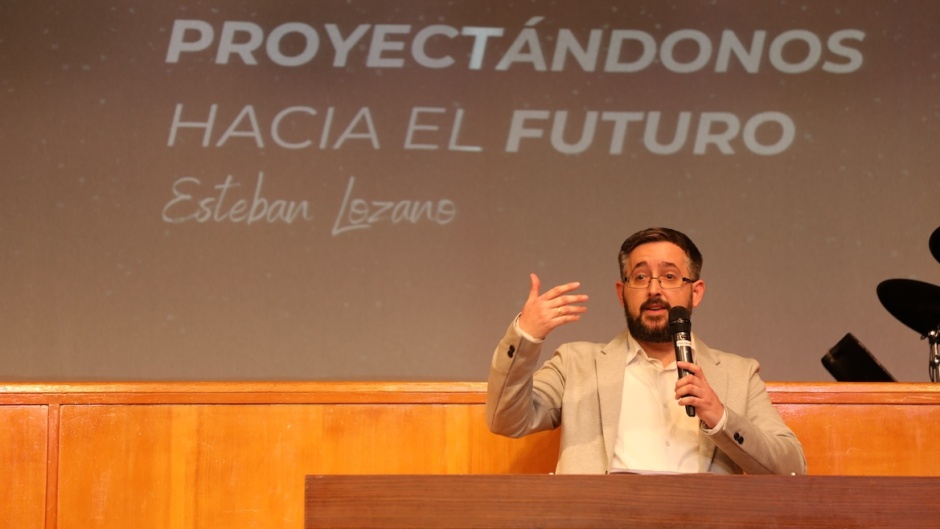
Around 200 people gathered at the premises of the First Baptist Church of Madrid to celebrate the 40th anniversary of Buenas Noticias TV (Good News TV), the evangelical tv programme that began in 1985 as Tiempo de creer (Time to believe) and is currently broadcast on Spanish public television every Sunday morning.
The celebration emphasised the importance of having a stable programme on RTVE, the state television, which was an important step forward for the evangelical presence in Spanish society at the time.
“This programme proclaims life in abundance”
For just over an hour, the Buenas Noticias TV team presented different aspects of the history of the show, looking at the past, the present and the future.
“This programme proclaims life, life in abundance”, said the young presenters Marta López and Pablo Salvador, collaborators of the programme who are in charge of dynamising the project's content on Instagram.

Carolina Bueno, executive secretary of the Federation of Evangelical Religious Entities of Spain (FEREDE), said “it is important to celebrate this programme, which makes the evangelical community visible, to talk about our principles and values, the contributions that we evangelicals make in the social sphere, and above all to talk about Jesus, his life, work, death and resurrection”.
“We must pray that God will protect what has been achieved and open doors and windows to preach the gospel, and that we will continue to do so with excellence”, added Bueno.
Testimonies of changed lives
One of the positive effects of the programme takes place off air, in the relationship with the audience.
At the celebration event, Beni Moreno, presenter of Buenas Noticias TV, interviewed three people: Merce, Carlos and Rafa. They come from different cities in Spain, backgrounds and beliefs, but they have one thing in common: they came to know Jesus after calling the phone number that is repeated on screen every Sunday.
“I was looking for God, but I was not satisfied, until I saw a programme in which they talked about how the Bible was the only authority, that impacted me”, said Merce.
After contacting the programme, she received a New Testament and discipleship through which “I came to know the real Jesus”. Merce says her life now “is secure in Jesus, despite my mistakes and falls”.
Carlos recalled how the loss of his father led him to ask questions about faith and the meaning of life. After watching the tv programme and calling, he was connected to a nearby church, where they helped him to find Jesus.

“I realised that following Christ is difficult, but it is something that commits us. God has changed my life”, he said.
Rafa also shared how, after searching intensely for truth in living the traditional Catholic faith, he found Jesus when “in a time of difficulty and illness, I decided to call the programme and they sent me a Bible”.
“I discovered the importance of not just reading, but asking questions and seeing how the Word of God applies to life”, he added.
A milestone and a challenge
José Pablo Sánchez, who was director of the programme for 27 years, recalled how its launch was a milestone for evangelicals.
“I would like to thank José María Calviño once again for his courageous decision, because as director of Spanish National Television (RTVE) he promoted the presence of non-Catholic religious programmes”.

After so many years working on the programme, Sánchez stressed “the credibility and trust” that the presence of evangelicals on public television conveys. “The question I ask myself here is whether evangelicals today are taking advantage of this potential, or we have put the light in a drawer”.
Looking to the future
Esteban Lozano, the current director of the programme, expressed his excitement about the experience so far and encouraged evangelicals to continue to support the programme in its initiative of renewal and outreach to new audiences.
“We have made every episode for the glory of God and to serve the evangelical people, but we cannot stay in the past. We must continue to carry the message of the gospel, adapting to society, with young people stepping into leadership positions, taking a place and a voice that belongs to them”, he underlined.

According to Lozano, “the future lies in connecting with new generations and being relevant to them”, which does not imply changing the content, but sometimes the means or communication channels.
“Our society faces conflicts, anxiety, loneliness in the midst of great advances, which shows us that the human heart does not change”. That is why “the programme remains a means for the gospel to reach people, and for them to find Jesus”.
Lozano concluded with a final challenge: “We must continue to pray, share the content and support the work we do together. This programme is the programme of all evangelicals”.

Join us to make EF sustainable
Learn all about our #OneMoreYearEF campaign here (English).
Published in: Evangelical Focus - europe - 40 years sharing ‘Good News’ on Spain’s public television