
‘The Protestant’ recounts the story of a woman executed with her husband in the Spanish Civil War
The journalist Paco Niebla tells the life and murder of his grandmother Ángela in the Spanish city of Vigo. “People who lose their memory lose their identity”, he said.
VIGO · 02 SEPTEMBER 2026 · 15:10 CET
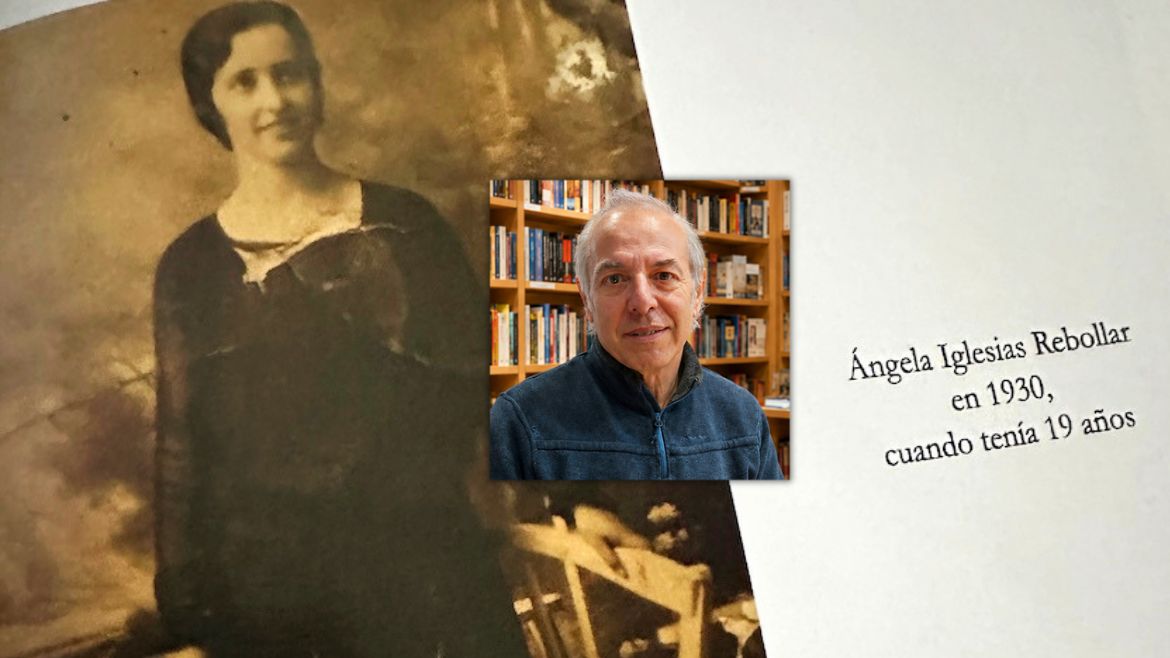
Paco Niebla has wanted to tell his grandmother's story for over twenty years. In May 1937, Ángela Iglesias Rebollar was executed alongside her husband in the city of Vigo in northern Spain, while she was seven months pregnant.
She was a republican, a feminist and a Protestant. In her neighbourhood, she was simply known as 'the Protestant'. Her family never talked about it.
It was a photograph and his father's unexpected tears that prompted his investigation.
All Evangelical Focus news and opinion, on your WhatsApp
Niebla, who lives in Barcelona, spent years travelling to Galicia, examining civil and military archives, and talking to neighbours who still remembered what the family had buried. The result is The Protestant: Blue Eyes, Red Heart, a novel about the life of her grandmother which also delves into the investigation process of the events that occurred almost 90 years ago.
Spanish news website, Protestante Digital spoke to the author about the investigation, the role of the Protestant community in the resistance against the regime of Francisco Franco, and the importance of not losing historical memory.
Question. How does everything start? When did you decide to start investigating the story of your grandparents?
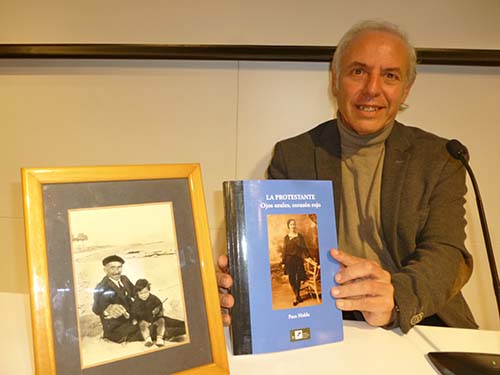
Answer. In 2002, when my father turned 70, we gave him a painting featuring a photo of him in his grandfather's arms. He was so moved that he started crying; we had never seen my father cry before.
We asked him what was wrong, and he replied, "I would like to take flowers to the graves of my parents". It was the first time he had said it out loud. We realised that he had a wound inside that he had never told us about.
At that time, historical memory groups had just started, so we contacted some in Vigo, and the investigation began from there.
Q. Was it difficult to find information?
A. The biggest challenge was doing it from 1,200 kilometres away. I live in Barcelona, so I had to balance a lot of online and telephone work with two or three trips a year to Vigo and Camposancos, where my grandmother was born.
The key thing was talking to people who knew my grandparents. Interestingly, the neighbours remembered everything, while my own family had silenced or pushed the memory to the back of their minds to avoid further suffering.
Q. What was the key moment of the investigation?
A. The historian Joan Carles Abad, from the Institute of Vigo Studies, led me to a file in the military archive in Ferrol. I used my position as a journalist to request access, and it was granted.
One summer, when my father was still alive, I went there with him and we found the statements of the thirteen falangists and two civil guards who participated in the assault on my grandparents house.
They described what happened and said that my grandparents were killed in the mountains because they “attempted to escape”. I then compared this official account with the testimonies of neighbours who had witnessed everything and came to my own conclusions about what really happened.
Q. Your grandmother was part of the Protestant community. How did she become involved with it, and how important was it in her life?
A. My grandmother, Ángela, was born in Camposancos in 1911 into a devout Roman Catholic family, but her father was quite liberal and she learnt to read and write.
As she grew up, she saw that the church hierarchy, especially during the Primo de Rivera dictatorship, supported the regime, the king, and the rich, while doing little for the poor.
There was an important Protestant community in Camposancos, and she had friends at school whose families were part of that community.
Getting to know them, she saw that they were good people who did altruistic work, dedicated themselves to social causes and stood with the workers, helping them during strikes. She gradually became increasingly attracted to Protestantism.
She was not a radical Protestant, in her own words, but she did become a practising Protestant. She married in a Catholic church, probably due to family pressure or because it was the only legal option at the time, but she did not baptise her children according to the Catholic rite. In her neighbourhood, everyone knew her as 'the Protestant'.
During the investigation, I was able to contact three of her childhood friends, with whom she had become Protestant, who were still alive.
I also contacted the evangelical churches in Vigo, but they found no records of her. Nevertheless, the fact that she was remembered in the neighbourhood by that nickname says it all.
Carlos Rovira, an expert on Protestantism who read the book, told me that he loved it, although he lamented the lack of material on her Protestant activism. This is one of the gaps left by repression and family silence: much was lost forever.
Q. What role did that community play in the 1936 coup d'état?
A. They were among those who contributed the most to the civic resistance network formed in Vigo in the early days of the coup to save those who had been targeted, such as mayors, socialists and trade unionists.
The Protestant community helped them greatly. For the Francoists, who took control of the city from day one, my grandmother was a prime candidate for repression due to her left-wing and feminist ideas, and her Protestant faith.
Q. Why did you choose to write it as a novel?
A. I wanted to write it in the easiest way possible to make it accessible to those who don't like reading and appealing to young people.
All I did was write dialogue for the characters and immerse myself in their lives. It was like encountering them again. The most intimate conversations in the book felt as if I had been present. I felt I had known my grandparents even though I never met them in person.
The book is divided into three parts. The first part is the novel; the story of my grandparents, in which I recount things I discovered about my grandmother's childhood that even her family was unaware of.
The second part is the epilogue, in which I explain what happened to all the characters who appear in the book.
The third part is a first-person account of how the research progressed year by year. This is what my journalist friends liked the most.
Q. What did it mean for your family to have their story recognised publicly?
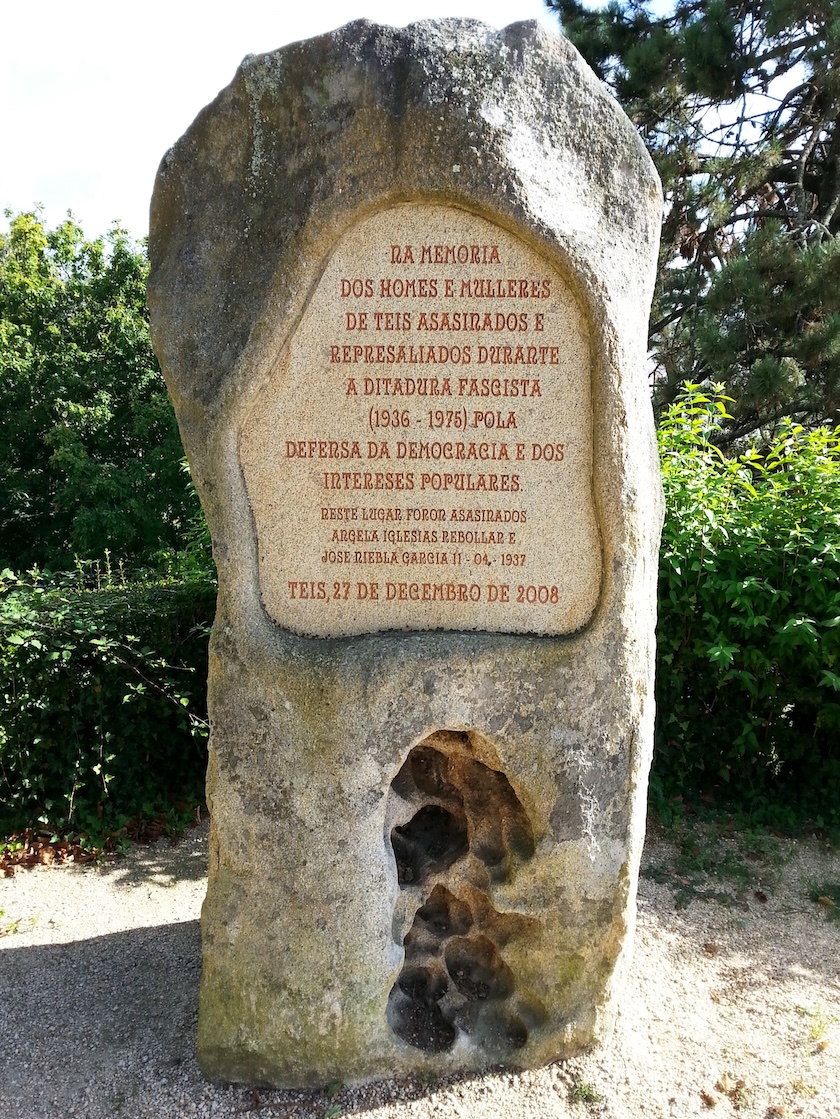
A. It meant a lot. In 2008, the neighbourhood association in my grandparents' neighbourhood put up a monument on the mountain where they were killed. In 2009, Vigo City Council named a street in the neighbourhood after Angela Iglesias Rebollar.
My father was able to attend both events before he died in 2010. After promising him in 2002 that we would find the truth, it was very special to see him there. I think my father left this world happy.
Q. Why is it important not to forget these stories?
A. People who lose their memory lose their identity. Furthermore, in this case, something has not yet been done properly: the war has never really been explained from a woman's perspective.
Women were major victims, yet their names are barely known. We know about generals and politicians, but not about all the women who suffered and played a significant role in the resistance.
I encourage young people to ask their grandparents. When the protagonists die, their memories are buried too. It was only 90 years ago that my grandparents were persecuted. It must not be forgotten.
Do you see a need for this kind of journalism?
Through news, interviews, opinion and analysis, we seek to build bridges between evangelical churches and the societies in which they live.
As a non-profit entity, the big challenge is to be sustainable, month by month. We invite you to make a difference! Join the readers who make Evangelical Focus possible.
Published in: Evangelical Focus - culture - ‘The Protestant’ recounts the story of a woman executed with her husband in the Spanish Civil War