
Evangelicals are now the majority religion in Honduras, Guatemala and El Salvador
The LatinoBarometer shows that, while the number of evangelicals in Latin America rose from 6% in 1995 to 19% today, the proportion of Catholics fell from 80% to 55%.
Evangélico Digital · 13 NOVEMBER 2026 · 13:00 CET
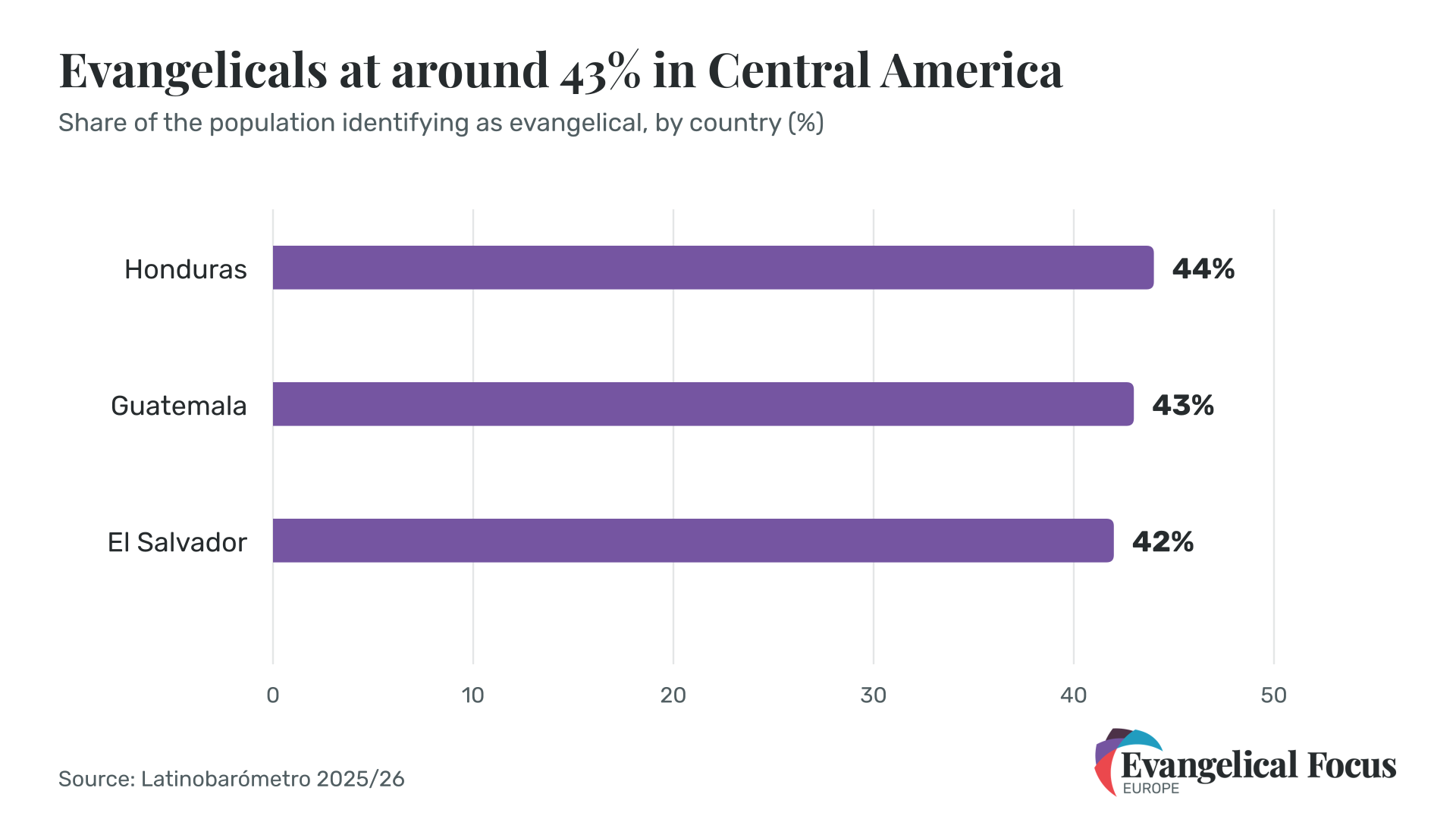
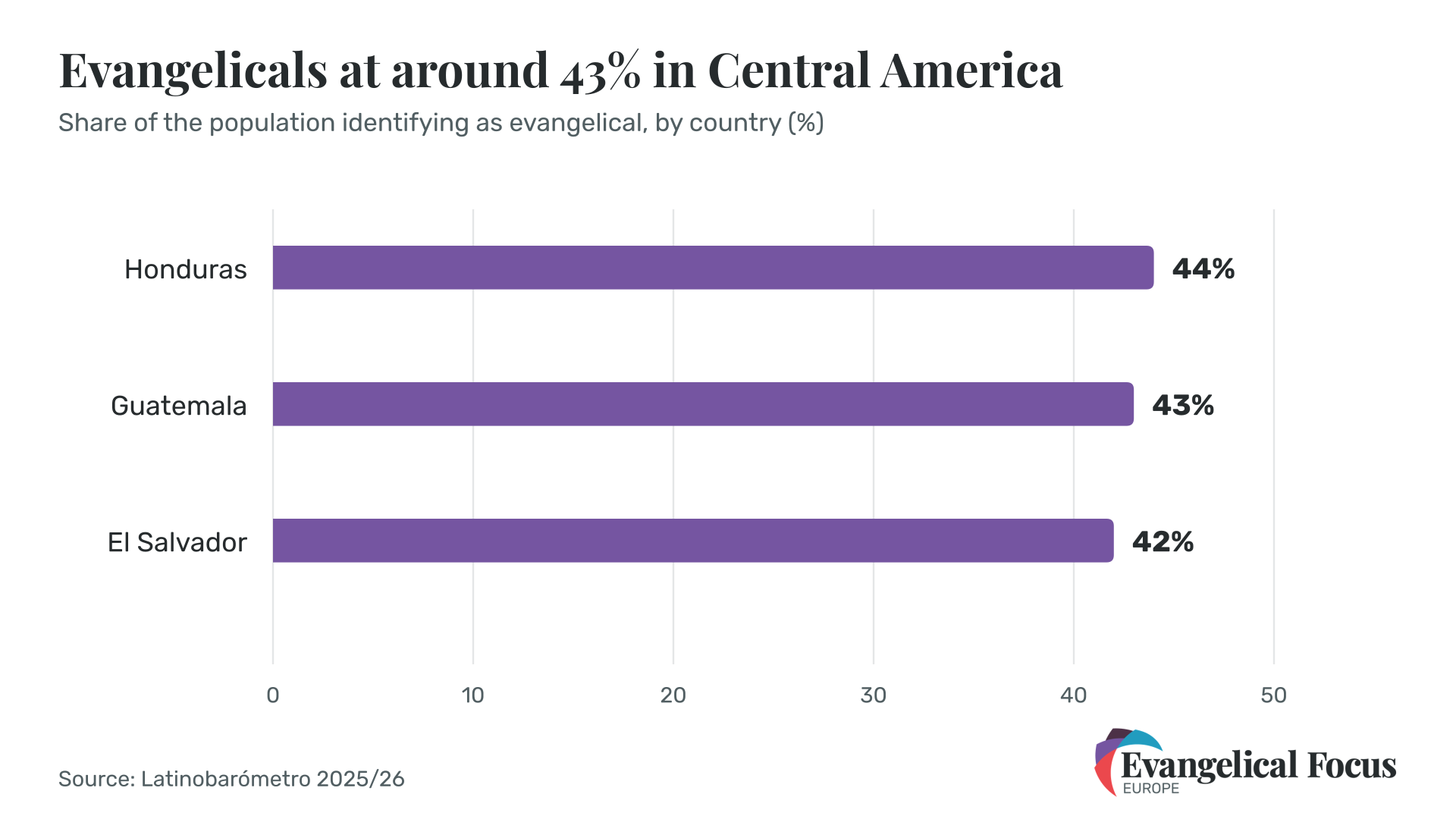
Data from the LatinoBarometer show that 44% of the Honduran population is evangelical, closely followed by Guatemala (43%) and El Salvador (42%).
These three countries have the fastest-growing evangelical populations in Central America, although this growth is not uniform.
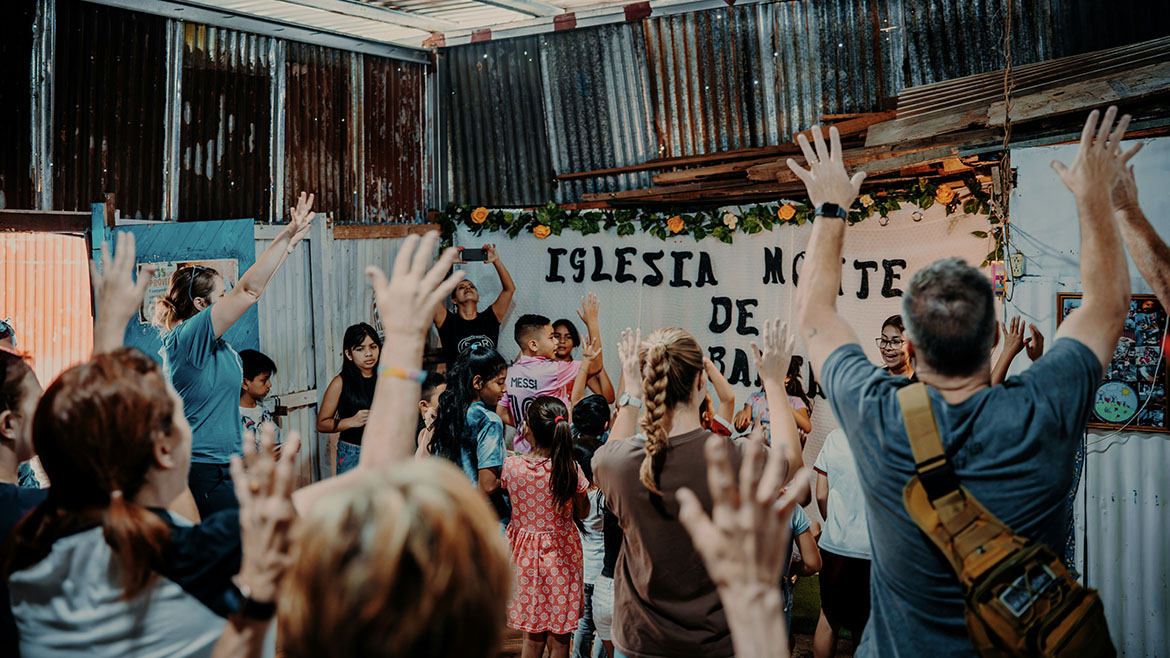
Honduras has therefore become the country with the highest proportion of evangelicals in Latin America, with evangelicalism becoming the country's majority religion once again.
All Evangelical Focus news and opinion, on your WhatsApp
Currently, 44% of the population identifies as evangelical, compared to 38% who identify as Catholic.
That trend is repeated in Guatemala and El Salvador. In both countries, evangelicals have consistently outnumbered Catholics, something that had never happened before.
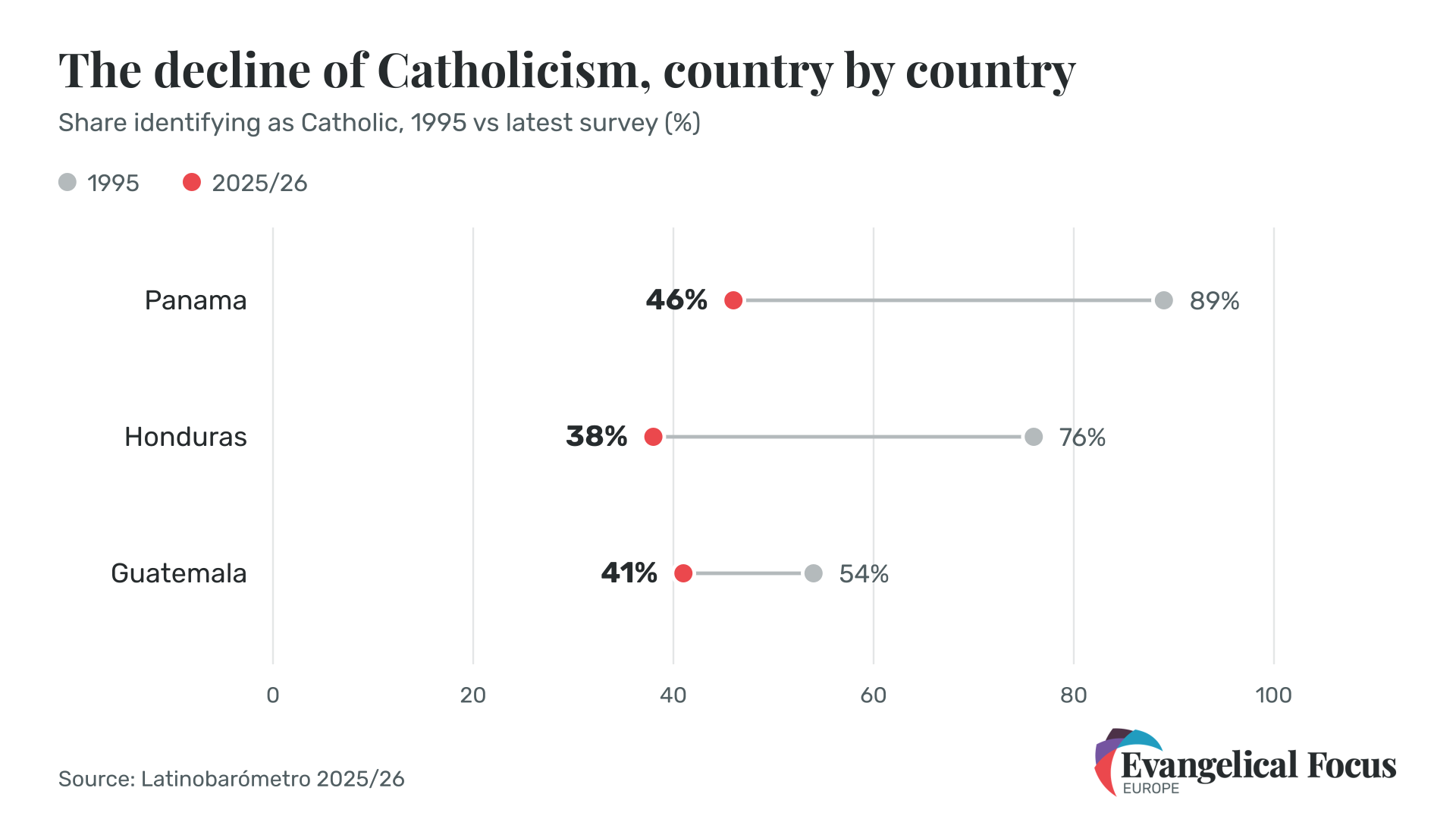
In Guatemala, the decline in Roman Catholicism was 13 percentage points, falling from 54% in 1995 to 41% in the latest survey, according to polls conducted over three decades.
Given these results, evangelical churches have become the largest religious group in Guatemala, accounting for 43% of the population, ahead of the 41% who still identify as Catholic.
According to Infobae, these figures on the decline of Roman Catholicism are not limited to Guatemala. In Panama, for instance, the decline was the greatest in the region, dropping from 89% to 46%, while in Honduras, the number of Catholics fell from 76% to 38%.
By contrast, Mexico has experienced the smallest decline in the number of Catholics on the continent, just eight percentage points, and continues to be one of the countries with the highest proportion of Catholics, alongside Paraguay and Peru.
General data
According to the Latinobarometer, the proportion of Latin Americans who identify as Catholic fell from 80% in 1995 to 55% in 2025/26, a decline of 25 percentage points over three decades.
While Roman Catholicism still accounts for more than 50% of the population in nine of the 17 countries analysed, its dominance has eroded to varying degrees depending on the country.
The organisation has asked the same questions about religious identity to thousands of respondents for 30 years.
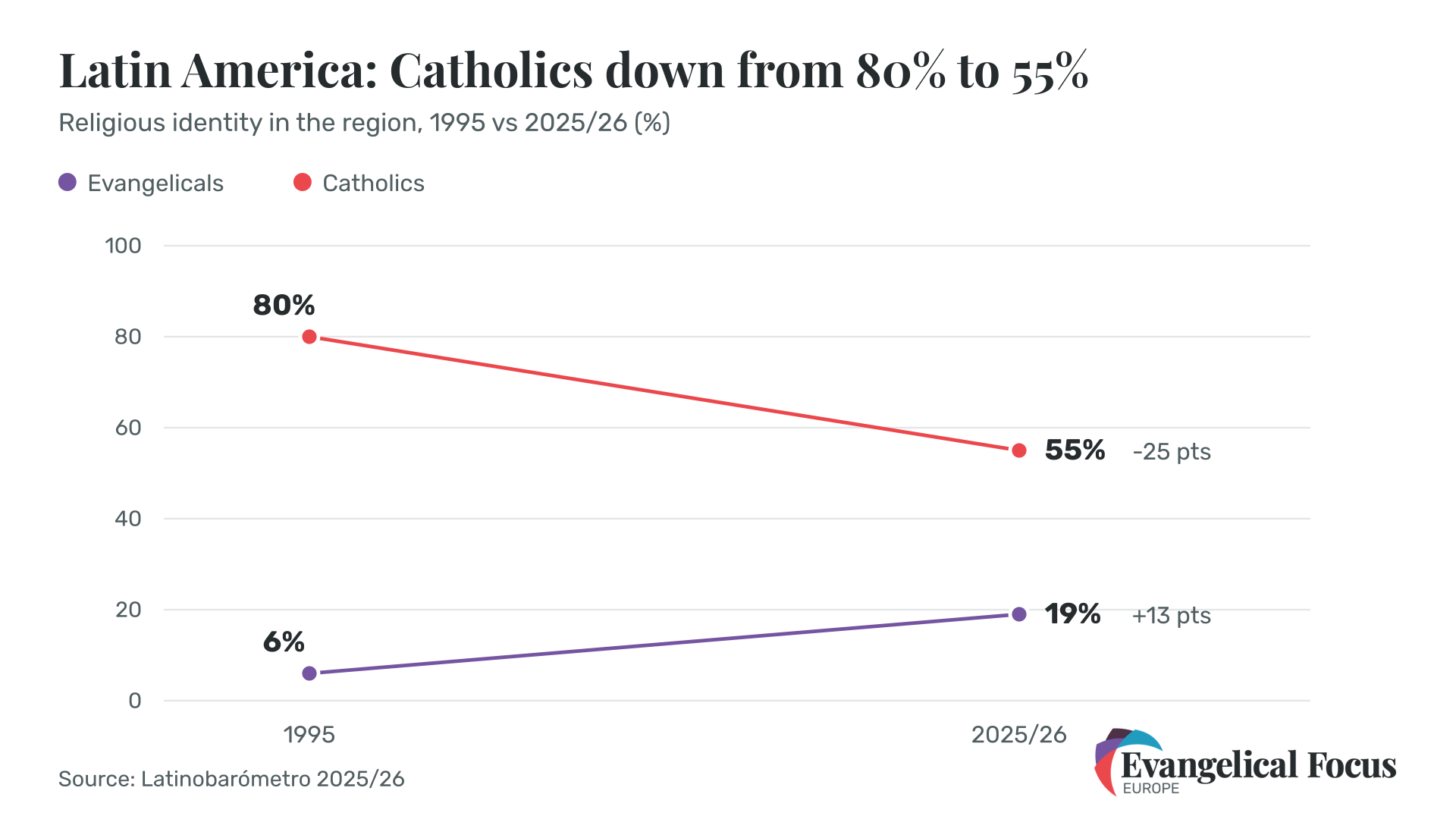
The results show that evangelical churches have significantly expanded their presence, rising from 6% of the Latin American population in 1995 to 19% today.
Religious practice
The report also reveals that 64% of Guatemalan evangelicals consider themselves practising, compared with 56% of Guatemalan Catholics.
This mirrors the regional pattern, with 62% of Latin American evangelicals and 48% of Latin American Catholics describing themselves as practising.
Regarding trust in churches as institutions, trust in the Catholic Church fell from 72% in 1995 to 63% in the current survey, the highest level of trust among all the institutions assessed by the Latinobarometer.
The study was carried out among the population aged 18 and over, with a sample of 1,200 respondents interviewed face-to-face in South America and Mexico, and 1,000 in Central America.
Do you see a need for this kind of journalism?
Through news, interviews, opinion and analysis, we seek to build bridges between evangelical churches and the societies in which they live.
As a non-profit entity, the big challenge is to be sustainable, month by month. We invite you to make a difference! Join the readers who make Evangelical Focus possible.
Published in: Evangelical Focus - world - Evangelicals are now the majority religion in Honduras, Guatemala and El Salvador