
Tatiana Kopaleishvili: “Europe has a lot to navigate, keeping fundamental rights at the forefront is crucial”
The new Brussels representative of the European Evangelical Alliance shares her vision in an interview. “Evangelical Christians are called to balance religious freedom while maintaining authentic expressions of biblical faith”, she says.
03 FEBRUARY 2025 · 13:16 CET
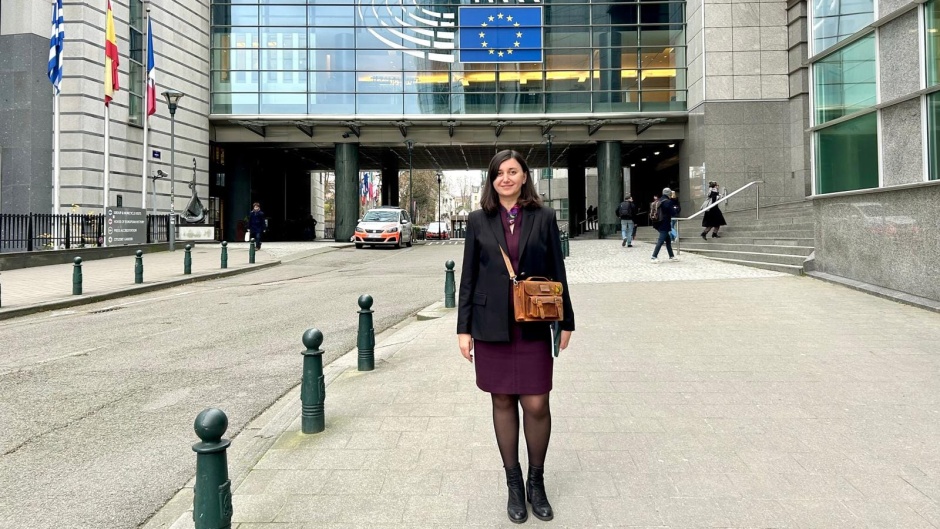
Many evangelical Christians may not be aware that their voice and worldview has a presence in Brussels, as do many other ideological or religious movements that participate in the public debate.
For more than 30 years now, the European Evangelical Alliance (EEA) has sought to present a Christian vision of the current issues of debate, and has done so, as Julia-Doxat Purser, the entity’s socio-political representative, explained, with “behind-the-scenes and face-to-face influence, in personal conversations with the people who are shaping the ideas”.
At the heart of the European Union, Christel Lamère Ngnambi and Arie de Pater have worked with this vocation of being the face of evangelicals in the past two decades. Since 2025, the new Brussels representative of the EEA is a Georgian, Tatiana Kopaleishvili.
Evangelical Focus wanted to know more about her background and her vision as a national of a small Eastern European country.
Answer. I am Georgian and from Georgia, with half of my ethnic heritage being Ukrainian. I was born into a typical Soviet family and joined a Pentecostal church during the first wave of people flooding into churches after the dissolution of the Soviet Union. I served in student ministry (the IFES movement in Georgia) for 14 years, including seven years as the general secretary of the movement.
With a PhD in History, I hold an academic position as a guest assistant professor at the Evangelische Theologische Faculteit (ETF) in Leuven, Belgium. At ETF Leuven, I coordinate the Institute for the Study of Freedom of Religion or Belief (ISFORB).
I see my calling in fostering collaboration between evangelicals, other Christians, and broadly helping them to shine in the public sphere. This is why I actively engage in professional networks and practical ministry, serving with the Georgian Evangelical Alliance and the Council of Religion under the Public Defender's office in Georgia. I work to connect academic and religious spheres through my roles as a board member of Sola Forum in Georgia and the Fellowship of European Evangelical Theologians (FEET).
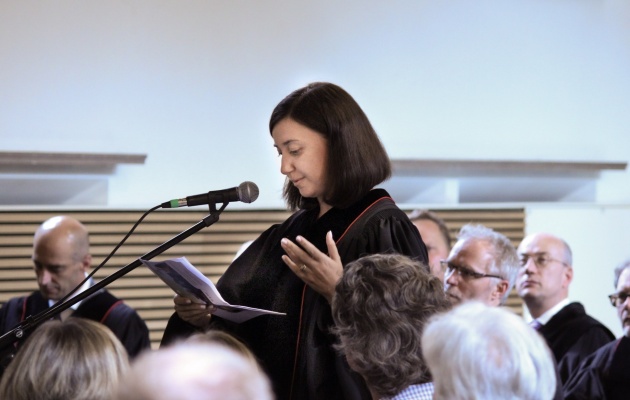
Q. From all this experience in culture and church so far, how would you describe evangelical Christians in Europe?
A. European evangelical Christians today represent a vibrant mosaic of backgrounds, cultures, and expressions of faith, united by their shared commitment to living out biblical truth in their local contexts.
Evangelicals in Europe have to navigate an increasingly secular public sphere: they are challeneged to maintain meaningful Christian witness in pluralistic societies. They are called to balance religious freedom for them and for all while maintaining authentic expressions of biblical faith.
A particularly pressing concern is the intergenerational dynamic, as churches work to engage younger generations who have grown up in a post-Christian context while preserving the depth of Christian tradition.
Despite these challenges, I’ve observed how European evangelicals are developing innovative approaches to maintaining a constructive presence in society, often finding creative ways to build bridges across denominational lines while standing firm in their convictions.
“The remarkable resilience of Eastern European churches under historical persecution offers important insights about maintaining faith under pressure”
A. We are fast to think that it is Eastern European Christians who need to learn from the West, due to the 70 years taking very different trajectory of living in a totalitarian and atheistic space. Now we want to catch up with the benefits of what democracy, human rights and other European achievements brought to the societies in the West.
But there is much to learn from the East due to its past. First, I would mention that the remarkable resilience of Eastern European churches under historical persecution offers important insights about maintaining faith under pressure. Their experience demonstrates how strong communities and clear convictions can sustain Christian witness even in challenging circumstances.
Secondly, their strong sense of Christian identity and commitment to church community and in general – communal life-style in the face of external pressures offers important lessons about maintaining vibrant faith in an increasingly post-Christian context.
Q. Personally, what does it mean for you to work in Brussels, the “political heart of Europe”? Do you feel close to the way things are made there?
A. Working in Brussels is both exciting and a bit nerve-wracking for me. It feels like a big milestone, expecially because it will imply change of the residency for me and my family.
“What gets me most excited about working in the EEA is being a Good News person in this context”
Q. What excites you most about working in the EEA?
A. What gets me most excited about working in the EEA is being a Good News person in this context.
I also see this work as a chance to make a real difference in advancing freedom of religion or belief (FORB) for Christians, especially to alter the negative perceptions on evangelical Christians in Europe. As for a relational person, I like the fact that it is all about connecting with people and seeing the big picture, like putting together a puzzle.
“Challenges around security and unity will shake Europe for a while”
A. The European Union is changing, and politicians know that the problems that are coming - they are not going to be able to solve them. Challenges around security and unity will shake the continent for a while.
They’re trying to keep innovation going while respecting human rights – it’s a tricky balance! Plus, discussions around identity and religion are heating up as well. Dealing with digital transformation and the ethical side of artificial intelligence makes things even more interesting. Moving forward, Europe has a lot to navigate, and keeping fundamental rights at the forefront is crucial.
Q. How is your work supported financially?
A. Our work mainly relies on the generosity of our members and supporters who believe in what we’re doing. We’re always looking for more ways to strengthen our evangelical presence in Brussels, and any support we can get is greatly appreciated.
“Our work mainly relies on the generosity of our members and supporters who believe in what we’re doing”
Q. What is your prayer for Europe?
A. My prayer is for the future of Europe, where through compassion and respect the contrasting parties in the politics or comunities dialogue and this guides us through the challenges we face in our countires and communities.
As an Eastern European, I pray for peace among our nations where peace is achieved not to the detriment of justice.
Join us to make EF sustainable
Learn all about our #OneMoreYearEF campaign here (English).
Published in: Evangelical Focus - europe - Tatiana Kopaleishvili: “Europe has a lot to navigate, keeping fundamental rights at the forefront is crucial”