
“The impact of the end-of-life law on future generations is little understood by the French people”
Evangelicals in France have been reflecting for years on the dignity of people at the end of their lives. Thierry Le Gall, who works with the CNEF in political circles, explains his point of view on the new assisted suicide law that is about to be voted on.
PARIS · 20 MAY 2025 · 10:49 CET
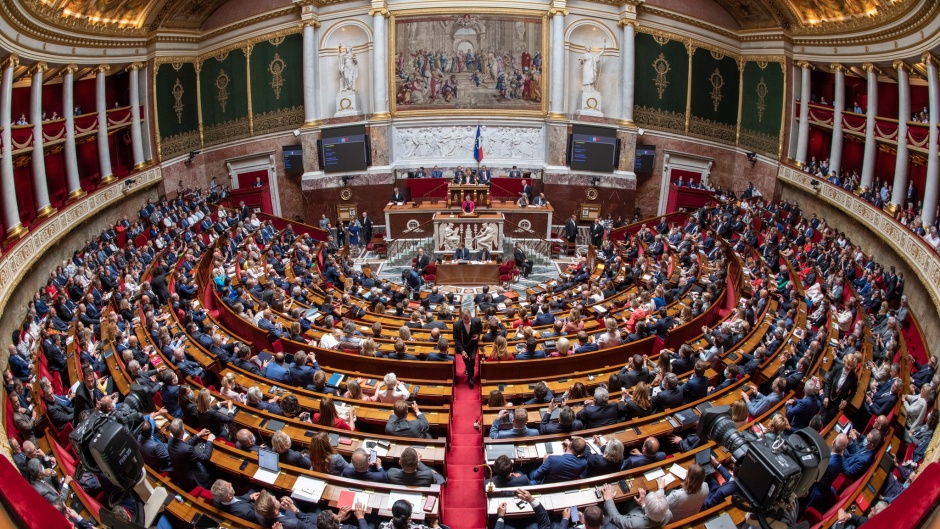
After looking at how to improve palliative care for people suffering incurable diseases, the Parliament of France is now moving on debating a law to make assisted dying and euthanasia more available.
French evangelical Protestants fear a shift towards a ‘utilitarian’ society that would give priority to healthy, productive members of society at the expense of the weakest, the poorest, and those who feel they are becoming a ‘burden’ on their families and society.
A very similar parliamentary debate is also happening right now in the UK. In Scotland, dozens of church leaders wrote to the parliament asking to stop a law they consider very harmful.
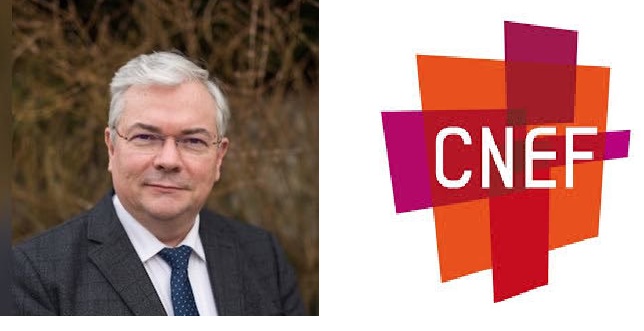
Thirery Le Gall of the National Council of Evangelicals in France (CNEF). Thierry Le Gall, the National Council of Evangelicals in France’s director of the pastoral service to parliamentarians, answered questions of Evangelical Focus.
Question. At which point is the political debate about right now in France, and where do you expect it to go in the next weeks?
Answer. The debate on palliative care, which began on 12 May in the National Assembly, is now over, making way for the chapter on assisted suicide and euthanasia.
The formal vote on the two bills is scheduled for 27 May 2025.
The issues surrounding the end-of-life law currently under discussion are engaging MPs in an ethical, social and spiritual battle, the impact of which on future generations is little understood by the French people.
We as CNEF clearly stated in March 2024 that “affirming the absolute value of every human life, evangelical Protestants denounce any act that causes death, including ‘active assistance in dying’ at the end of life”
In countries where medical assistance in dying has been legalised (Canada, Switzerland, Belgium, the Netherlands, etc.), we see that assisted suicide has become a ‘care option’ for the sick.
Q. President Macron has repeatedly said such a law is needed. But what do you think Parliament will vote?
A. Nothing is certain yet, even though the promoters of assisted suicide and euthanasia have, for the moment, succeeded in passing completely absurd concepts and removing basic protections for human dignity.
For example, it was voted that assisted suicide would be considered a ‘natural death’ (AS 895), and amendment AS 568, which prohibited assisted suicide or euthanasia for people with intellectual disabilities, was rejected.
“For the moment, the debates I have attended in part from the galleries of the National Assembly reveal sometimes radically opposed worldviews”
If the two houses of Parliament fail to reach an agreement at the end of the legislative process, the President of the Republic could call a national referendum.
Q. Evangelicals are in favour of palliative care and against medical assistance in dying. Why?
Last year, as National Council of Evangelicals in France we said this: “In a society where money, profitability and power dominate, but where fraternity is declining, we affirm that humanity lies precisely in refusing to give in to demographic, lobbyist or economic pressures that call for facilitating premature death”.
“The deterioration of health services, particularly emergency medical services, fuels a collective anxiety about the risk of losing dignity and suffering at the end of life”
Various opinion polls show that the majority of French people fear dying in undignified conditions and would therefore be in favour of ‘liberalising the end of life’.
Certain radical humanist movements, Masonic lodges, popular artists and intellectuals have actively campaigned in favour of assisted suicide and euthanasia as an ‘ultimate freedom’ that should be granted to citizens, who should remain in control of their own destiny. To put it bluntly, some of these lobbyists openly admit to fighting to free humans from the control of religion.
The deterioration of health services, particularly emergency medical services, fuels a collective anxiety about the risk of losing dignity and suffering at the end of life.
In reality, the many interviews I have had with healthcare professionals, including doctors, anaesthetists, and heads of palliative care and geriatric departments, confirm that in 98% of cases, the suffering of patients at the end of life is managed and alleviated, regardless of its intensity, if a trained and equipped medical team is present at their side.
“I have witnessed several Christian Member of Parliament showing courage and actively advocating at a high level in defence of life and palliative care”
Many members of French society, Christian or otherwise, are committed to defending life: the medical profession, psychiatrists, the French palliative care society, Christian organisations, the Conference of Religious Leaders in France, etc.
In a context where political groups in Parliament allow their members to vote freely, many Members of Parliament and senators have publicly taken a stand in favour of protecting life, including the Minister of the Interior and Religious Affairs.
However, at the time of writing, no one can predict the final outcome of this law.
Q. What good news do you see in this debate on end-of-life care?
A. Within the palliative care law, ‘spiritual care’ has been consolidated, strengthening the role of hospital chaplaincies and pastoral visits to the sick.
Whatever the outcome of the vote, I have witnessed several Christian Member of Parliament showing courage and actively advocating at a high level in defence of life and palliative care.
It is still possible to pray and write to your MP or senator! The Protestant Committee for Human Dignity is proposing actions in this regard.
Join us to make EF sustainable
Learn all about our #TogetherInThisMission initiative here (English).
Published in: Evangelical Focus - europe - “The impact of the end-of-life law on future generations is little understood by the French people”