
The Vatican says “Mary is not co-redemptrix”: what does it mean?
The exaltation of the Virgin Mary in certain Catholic contexts re-opens the internal debate. Evangelical theologian Leonardo De Chirico in Rome analyses the ‘pendulum’ of the last three centuries and rules out a profound reform of Marianism.
ROME · 06 NOVEMBER 2025 · 13:07 CET
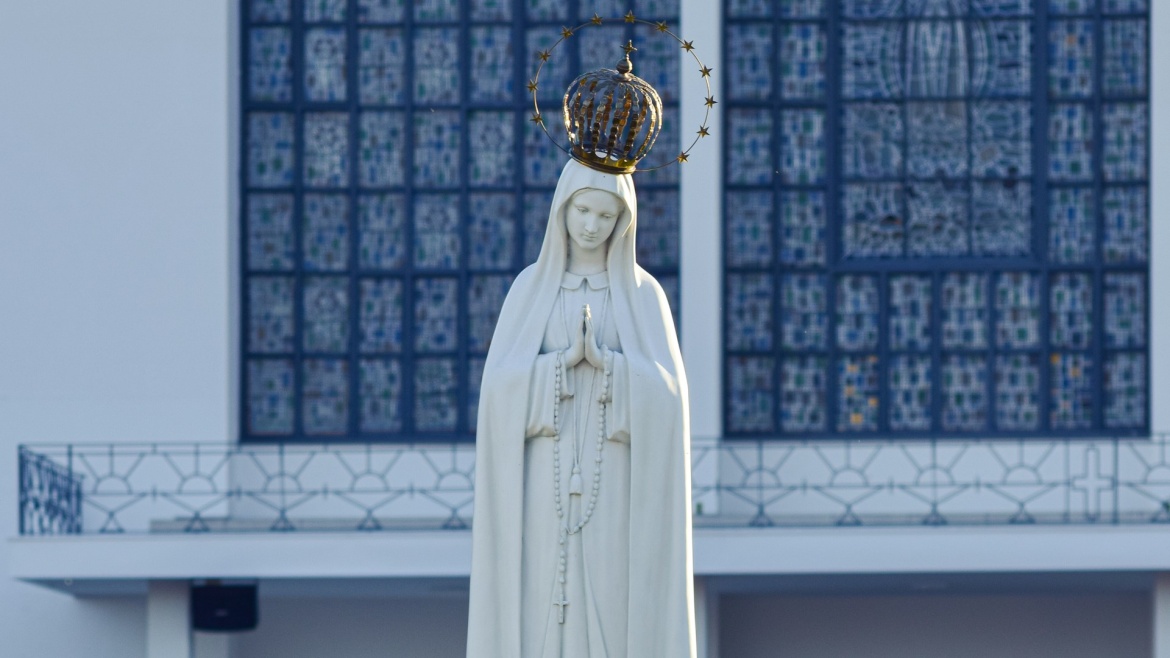
Mary is not ‘co-redemptrix’, and the role of Jesus Christ in salvation must be preserved. This seems to be the message communicated by the Vatican in a “doctrinal note” that aims to clarify the official dogmas of the Roman Catholic Church.
The Dicastery for the Doctrine of the Faith said this clarification was necessary because of “the numerous consultations and proposals that have reached the Holy See in recent decades on questions related to Marian devotion and certain Marian titles”.
The body states now that it is “always inappropriate” to speak of Mary’s co-redemption because salvation is obtained through Jesus Christ. Mary’s cooperation would be, according to the latest Vatican document, "subordinate, dependent and the fruit of grace".
Nowadays, the role of the Virgin Mary is prominent in the liturgical practice of churches in many regions of the world. On social media, the traditionalist and more Marian wings of the Catholic Church have reacted with criticism to the document, which is more than 50 pages long and entitled Mater Populi Fidelis.
Evangelical Focus asked evangelical theologian and pastor in Rome Leonardo De Chirico about this latest internal debate within the Roman Catholic Church.

Theologian and evangelical pastor in Rome, Leonardo De Chirico. Question. How important is the move of the Vatican in scrapping Mary from her role as ‘co-redemptrix’?
Answer. Mariology has always been a work-in-progress for Roman Catholicism. While the past dogmas (e.g. the 1854 Immaculate conception and the 1950 Bodily Assumption) are fixed and established, Mariological spirituality is always on the move. It is almost an open-ended development.
The “co-redemptrix” title has been brewing for some time. Popes like Pius X and XI used it in official documents; entire grassroot movements pushed for its official adoption by the Vatican.
On the other hand, reservations about it were already expressed by Pope Benedict XVI (then Cardinal Ratzinger) and even reinforced by Pope Francis. So, the situation was characterized by different voices trying to bend the direction in one direction or the other. The Note echoes the perplexity of Benedict and Francis, arguing that the meaning of “co-redemptrix” is subject to misunderstanding and there is no stable acceptance in the Roman Church.
For a dogma to be promulgated there needs to be theological definition and clarity. The Note says that the title hasn’t reached these standards yet. But even though it is negative towards the title for the time being, it is technically a step towards further definition. So, ultimately it could be a building block towards a fifth Marian dogma - not in a foreseeable future, but in a distant one.
Q. There has been quite a stir on social media among some priests, theologians or just general followers of a ‘traditionalist’ Catholicism opposing the move and describing it as a “Protestanticization” of the Roman Catholic faith. Did you expect such opposition in the Catholic world?
A. I wouldn’t buy into this narrative of the Roman Catholic being influenced by Protestantism. Was the staunchly Catholic theologian Benedict XIV under Protestant influence? Unlikely.
Western Roman Catholicism is perhaps crossed by a mild form of theological liberalism that may use similar language than mainstream Protestantism, but this trend has little to do with evangelical Protestantism. The reality is that Rome has always had maximalist and minimalist Mariological sensitivities.
The Marian pendulum sometime swings over here, sometime over there. In the 19th century up to the mid-20th century, Mariology significantly expanded its borders. After Vatican II, there has been a retraction of it. It is an inner tension within Roman Catholicism.
The Note is a chapter of this internal debate and gives voice to a moderate Roman Mariology that seems dominant today. Tomorrow, we don’t know. While the Note is cautious about new developments, it unwaveringly reaffirms the traditional Roman Catholic Mariology made of unbiblical dogmas, practices and devotions. This is hardly a sign of a Protestanticization of Rome!
Q. Is this theological move a way of delimiting Mariology and even correcting Pope Francis’ ideas about Mary?
A. The Note wants to distinguish the mediation of Jesus Christ as far as salvation is concerned and the mediation of Mary in all other graces. At the same time, it reiterates the view of Christ’s mediation as being “inclusive” and participatory, thus making room for Mary’s and the saints’ intercession and mediation of graces.
The Gordian knot of the Roman Catholic theology of mediation hasn’t been cut. Although “derived and subordinate” (n. 53), she is considered to be mediatrix and intercessor via her maternal intercession and presence (n. 46).
Rome still believes that “the life of grace includes our relationship with Christ’s Mother, for our union with Christ by grace also entails union with Mary in a relationship of trust, tenderness, and wholehearted affection” (n. 72). There is no “Christ alone” theology in the Note.
Like any other Pope, Pope Francis had his own way of expressing his Mariology. On the one hand, he was extremely devout to Mary in an exaggerated sentimental way; on the other, he had reservations on the use of the title “co-redemptrix”. This attitude seems to be shared by Leo XIV who has approved the Note. Francis’s way, i.e. warm to Marian devotions, lukewarm to new dogmatic pronouncements, seems to be winning the day.
Q. Do you think this clarification of the role of Mary from the Vatican will have a real impact in changing the grassroots mentality of many Roman Catholic churchgoers in cultures like the Mediterranean where she often gets the same attention than Christ himself?
A. Some Roman Catholic traditionalist and Marian circles have already expressed their criticism of the Note. Even the official presentation was disrupted by one or two protesting voices who interrupted the presenters.
I suspect that these maximalist sectors will become vocal over time. As for the mainstream Roman Catholics who participate in Marian rosaries, pilgrimages and initiatives, I don’t think that much will change.
The main reason is that Marian devotions and practices are more impacted by the lex orandi (i.e. liturgy and spirituality) than lex credendi (i.e. doctrine). The Vatican Note underlines a potential problem in the latter but warmly encourages the full expression of the former.
Join us to make EF sustainable
Learn all about our #TogetherInThisMission initiative here (English).
Published in: Evangelical Focus - europe - The Vatican says “Mary is not co-redemptrix”: what does it mean?