
Portuguese media urged not to fall into ‘distortions and hasty conclusions’ regarding evangelical churches
The Portuguese Evangelical Alliance responds to a case of illegal immigration linked to an unregistered church and the alleged connections of conservative political movements with evangelicalism.
LISBON · 26 AUGUST 2026 · 12:54 CET

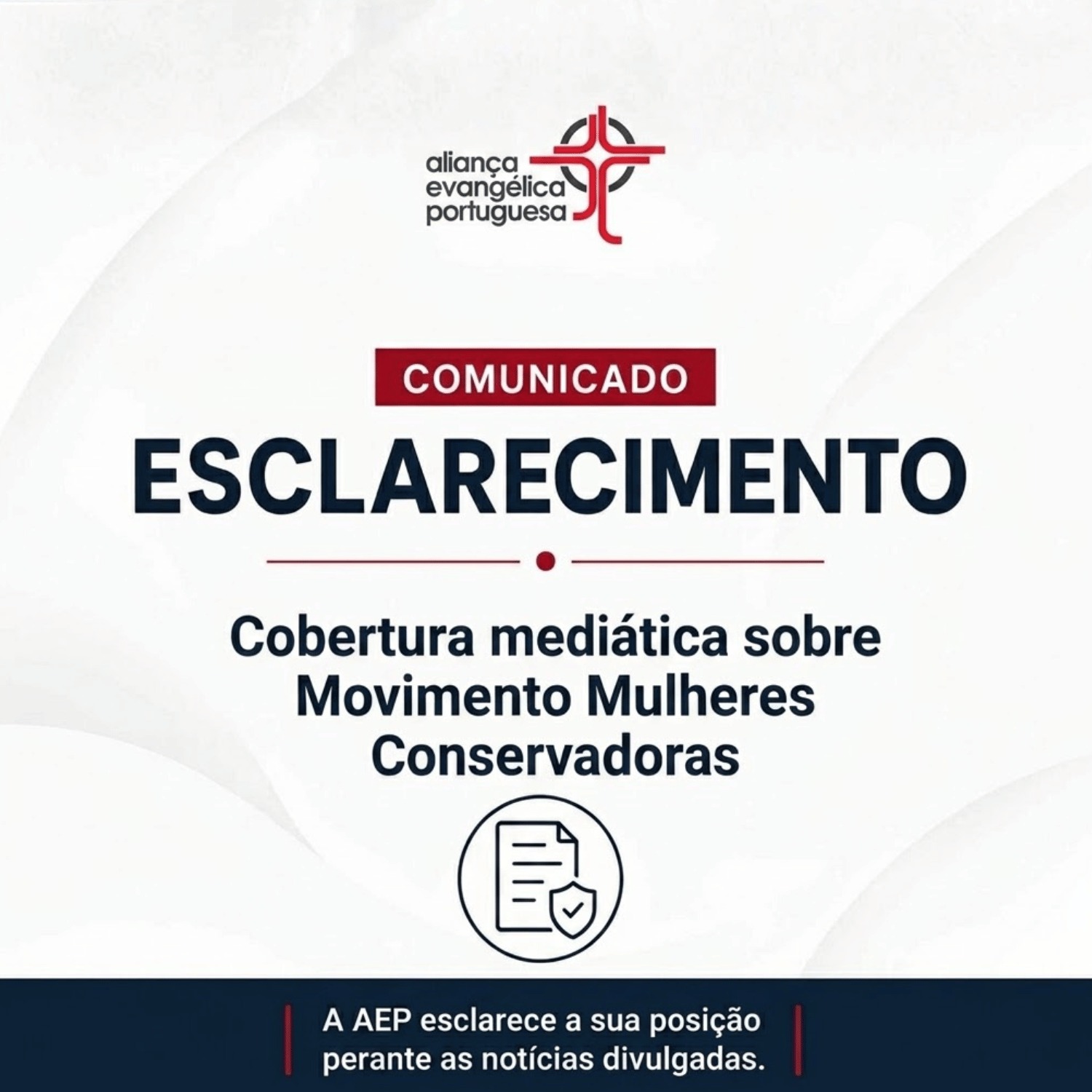
The Portuguese Evangelical Alliance (AEP) has issued two consecutive statements on August 22 to clarify the reality of evangelical churches in the country.
“We cannot stand by in silence while an entire group of peace-loving people is vilified, by association, on the basis of unfounded generalizations about a political phenomenon to which the overwhelming majority of them are entirely unconnected,” says the AEP, by its Portuguese acronym.
All Evangelical Focus news and opinion, on your WhatsApp
One of the documents, more than 1,500 words long, was written after tv broadcasters and national newspapers reported on the alleged influence of the evangelical community in the formation of the new Conservative Women’s Movement, which the media links to Chega, a right-wing populist party founded seven years ago that holds 60 seats in the opposition in the national parliament.
This new movement, whose leadership includes both Catholic and evangelical women, was launched in July and has been discussed in media outlets in Portugal such as SIC, Expresso, Público, and Diário de Notícias.
Media should not mistake evangelicals in Brazil for those in Portugal
According to the board of the Evangelical Alliance of Portugal, the opinions expressed in various media outlets reflect the reality of Brazil—a country that shares a language and a common history with Portugal—more than that of Portugal itself.
Analyzing the links between right-wing politicians and highly influential neo-Pentecostal evangelical leaders risks “confusing analysis with analogy”. Unlike the significant Brazilian evangelical population, in Portugal, the official 2021 census reported that only 2.13% of the population was evangelical, the Evangelical Alliance notes.
“The Portuguese (and European) evangelical landscape is internally far more diverse than the term ‘evangelical influence’ suggests. There are socially conservative evangelical women, to be sure; but there are also progressive evangelical women, non-partisan women, women’s rights activists, trade unionists, or those who are simply indifferent to politics. The reverse is equally true: not all conservative women in Portugal are evangelical; in fact, the majority are not”, says the AEP.
They add: “Treating ‘Evangelical’ and ‘conservative’ as synonyms, or as overlapping categories, is a simplification that neither the sociology of religion nor direct observation of our communities can support”.
Some media outlets had suggested that the greater presence of evangelicals in certain areas of Portugal equated to a higher vote for the populist right. The AEP says that if one looks at the data in detail, the conclusion is not clear-cut.
“We do not recommend any particular vote”
On previous occasions, the Alliance—which brings together groups of churches and registered Evangelical organizations in Portugal—has explained that it will never take a stance as an entity in favor of one political option or another, because the reality among believers is diverse.
“We do not associate ourselves with political movements; we neither support nor condemn them as an organization; and we do not recommend any particular vote or party affiliation to evangelical believers”.
Constitution guarantees public participation by Christians
The AEP points out that the Portuguese Constitution guarantees the “right to freely form associations”, and that this, logically, does not exclude citizens who profess a specific faith.
Moreover, Christians cannot be required to renounce their right to participate in public life, seeking the good of the country based on their biblical values and convictions.
For this reason, they demand “rigor from those who write about us, and prudence from those who, based on individual cases, draw generalizations about the whole”.
Case of illegal immigration
On the same day, Portugal’s Protestant entity also issued a statement emphasising its condemnation of the actions of an alleged evangelical pastor in Seixal, who was sentenced by the courts to a five-year suspended prison term for facilitating the illegal entry of immigrants and renting them substandard housing.
The AEP had already expressed its disapproval of these actions in March 2025, clarifying that neither the pastor nor the church were members of the Evangelical Alliance of Portugal. In this case as well, the representative evangelical organization “regrets the generalization that the media has repeatedly made regarding the term ‘Evangelical’, often out of context”.
The Portuguese Evangelical Alliance seeks to represent before the state and society some 1,500 places of worship, 12 theological schools, and more than 60 social action organizations in the country.
The AEP is a member of the European Evangelical Alliance and the World Evangelical Alliance.
Do you see a need for this kind of journalism?
Through news, interviews, opinion and analysis, we seek to build bridges between evangelical churches and the societies in which they live.
As a non-profit entity, the big challenge is to be sustainable, month by month. We invite you to make a difference! Join the readers who make Evangelical Focus possible.
Published in: Evangelical Focus - europe - Portuguese media urged not to fall into ‘distortions and hasty conclusions’ regarding evangelical churches