“The Bible is in good health in Spain”
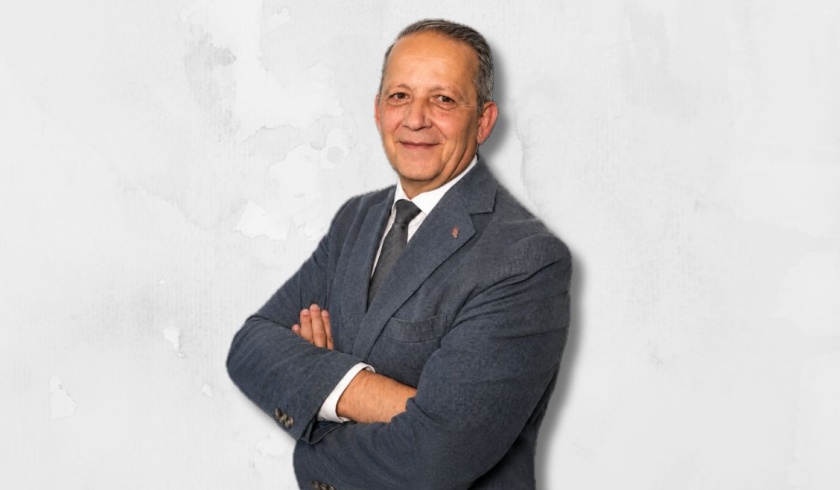
We talk to Luis Fajardo, director of the Spanish Bible Society, which is celebrating its 190th anniversary with the Month of the Bible events.
Protestante Digital · MADRID · 04 SEPTEMBER 2026 · 17:50 CET
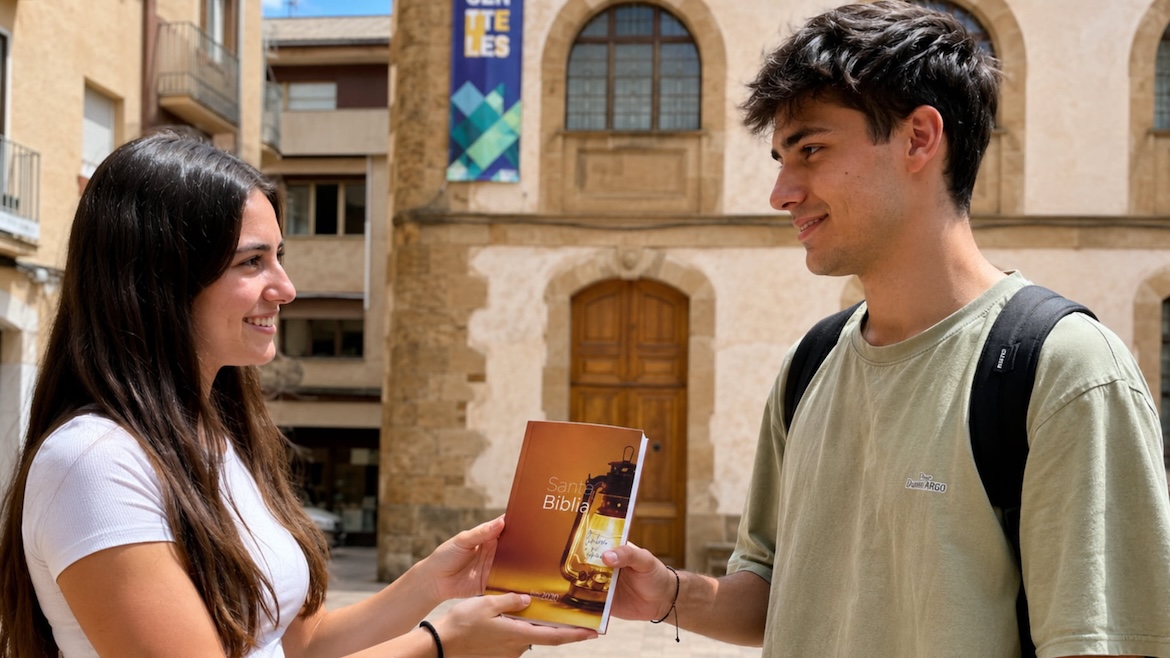
For over 40 years, September has been the Month of the Bible in much of the Spanish-speaking world.
The date, chosen because the first Spanish translation of the Bible was published in this month in the 16th century, is a reminder of the ongoing importance and impact of this book on millions of people.
The best-known and most widely translated book in history has also suffered censorship and persecution over the years, even in Spain.
All Evangelical Focus news and opinion, on your WhatsApp
Spanish new website, Protestante Digital spoke to Luis Fajardo, director of the Spanish Bible Society, one of the country's longest-established evangelical organisations which will celebrate its 190th anniversary in 2026.
The Bible, accessible to all
Fajardo explains that the work of the Spanish Bible Society focuses on “translating, producing and distributing the Bible” in a way that is accessible both in terms of cost and the comprehensibility of the text.
“The translation process varies greatly depending on who the readers are,” he says. This work is not limited to Spain; the Bible Society reaches “every Spanish-speaking region”.
September: Month of the Bible
The origins of the 'Month of the Bible' are linked to two significant dates. On 26 September, the complete Bible was printed in Spanish for the first time as the 'Bear Bible', the work of Casiodoro de Reina.
This date is close to the Feast of St Jerome on 30 September, the “translator of the Vulgate”. Although this text is somewhat removed from the original languages, it is of great historical value.
That is why, he explains, during this month, “in many parts of the Spanish-speaking world, we encourage people to read the Bible”, taking it to public squares to show that “the Bible is part of our culture, our legislation and our customs and language”.
A beloved, revered and persecuted book
The history of the Bible in Spain shows us how society treated this text in different eras, and the impact of technological advances on its distribution.
In Spain, the Bible in vernacular languages – that is, in common spoken languages such as Castilian – was banned for centuries.
“The printing and reading of the Bible in vernacular languages was banned by the Inquisition”, a ban that remained in place until almost the 20th century.
The aim was to prevent “ordinary people from understanding the underlying message of the Scriptures”, a message that “challenges us” and continues to “put us between a rock and a hard place regarding our behaviour”.
This persecution of the Bible had the opposite effect to that intended, since “it sped up the translation process, because there is nothing better than banning something to make people want to do it”.
Fajardo recalls that translators such as Casiodoro de Reina and, later, Cipriano de Valera worked in exile, convinced that reading the Bible transforms people and changes societies.
The authors of the Bear Bible and Pitcher Bible translations hoped this text would reach Spain “because they believed in its power to transform people and society”.
However, the free circulation of the Bible would not be achieved until almost the 20th century. Earlier, in the 19th century, the figure of the colporteur emerged. This profession led people such as George Borrow to travel throughout Spain.
As part of the 190th anniversary celebrations, the Bible Society researched its own archives, finding a report from 1840 which states that 14,000 copies of Bibles and New Testaments had been distributed in Spain, a figure which had risen to 74,000 by 1900.
Fajardo identifies 1836 as the turning point, with the arrival of Borrow as an agent of the British and Foreign Bible Society, which, in his words, marked “a first revolution”.
Interestingly, the first Bibles published in Spanish for Spain, in 1837, were based on a Catholic translation of the Vulgate, from which the notes were removed to leave “only the biblical text”.
Regarding the role of the organisation in those years, Fajardo recalls that the Bible Society was “the missionary organisation that helped the the small Evangelical Church in our country by distributing the Scriptures”.
The Bible in Spain today
When asked about the current situation, Fajardo used a medical metaphor: “If we were doctors, we would say it is in good health; it could even be excellent in a sense”.
He acknowledges that distribution “is not that widespread”, because the number of evangelical believers in the country is not yet as significant as in other Latin American countries.
On a positive note, he highlights the large number of Bible translations and revisions produced over the last 40 years. “No one has a monopoly on Bible translation, and that has been very good and is very enriching”, points out Fajardo.
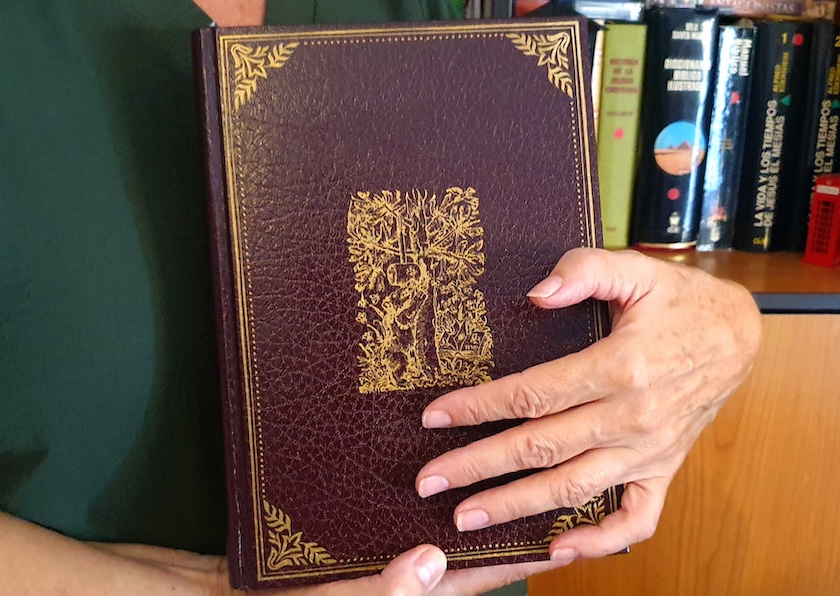
In recent years, the Bible Society has published in Spanish the ‘La Palabra’ translations and a revised edition of the classic Reina-Valera (2020).
The important thing, explains Fajardo, is that the Bible remains accessible, including through various languages.
“It gives me goosebumps when I hear some people talk about ‘holy languages’. That doesn’t exist: the Word became flesh, became man, and we must strive to bring that message to everyone”.
“The Bible must be at the centre”
Regarding the role of Scripture within evangelical congregations, Fajardo believes that there has always been a risk of losing sight of the centrality of the Gospel.
That is why he considers the centrality of the Bible in the church to be fundamental, because “what we know of God, we know through the Bible”, and he views initiatives seeking to restore the importance of the biblical text in preaching as positive.
Artificial intelligence: opportunities and risks for translation
Technological advances and the emergence of artificial intelligence are also impacting the world of Bible translation.
Fajardo explains that the Bible Society is “working on a code of ethics for the use of artificial intelligence”, aware that it offers real opportunities, such as “speeding up the translation process into very minority languages so that the biblical text reaches people sooner”, but also risks, since “translation is not a mechanical process” and “contextualisation must be given great importance”.
Fajardo also discussed the important role of social media in spreading the Bible today
“I like to compare social media to the printing press in the 16th century. If the printing press had not existed in the 16th century, biblical texts and other kinds of writings would never have reached anywhere”.
Ongoing projects
Fajardo also outlines several projects currently in development.
The most eagerly awaited is the Reina Valera 2020 Study Bible, which is due to be published next year, featuring “linguistic, documentary, geographical and historical” notes, but “never doctrinal notes”.
They are also working on a new study edition of the La Palabra Bible, “in a slightly larger format to make it easier to read”, and are continuing to develop the Bible in Basic Language, designed for children aged eight and over and for people who are not fluent in the language, with evangelistic goals in mind: “I am discovering incredible things with this text, for people who have never read the Bible before”.
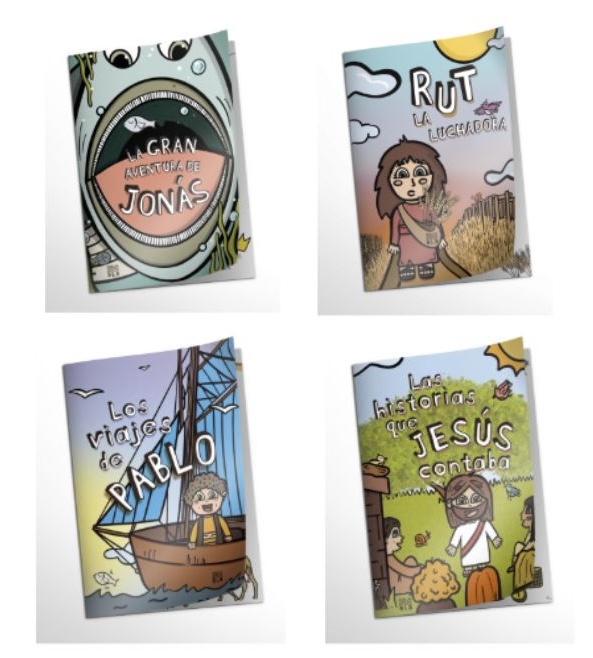
Another project that Fajardo describes as “our flagship project of the last two years” is the Easy-to-Read Bible Stories, which is a pioneering format at a European level.
It is aimed at people with neurodiversity (such as autism, ADHD, dyslexia and Down's syndrome) as well as older people with cognitive difficulties.
Having published several parables and the Lord’s Prayer, the organisation has now released the complete Gospel of Luke, is finalising the Book of Acts and has begun work on the story of Joseph.
Fajardo underlines that “in Spain there are only between 60 and 90 publications in easy-to-read format”, which makes this project “a pioneering initiative”.
The entity is also preparing a new format of travelling exhibitions, “more interactive and much more adapted to the current times” which they hope to be ready by the end of October or in November.
“There is a great team behind the Bible Society, made up of people who work hard every day to do their jobs to with excellence”, concludes Fajardo.
Do you see a need for this kind of journalism?
Through news, interviews, opinion and analysis, we seek to build bridges between evangelical churches and the societies in which they live.
As a non-profit entity, the big challenge is to be sustainable, month by month. We invite you to make a difference! Join the readers who make Evangelical Focus possible.
Published in: Evangelical Focus - europe - “The Bible is in good health in Spain”