European Disability Network calls for a Church where people with disabilities take on leadership roles
The EDN took part in ‘Hope for Europe 2026’, a gathering of the European Evangelical Alliance in Albania. Inclusion means giving church members with a disability a voice, participation, and responsibilities, they said.
GOLEM (ALBANIA) · 26 OCTOBER 2026 · 12:00 CET
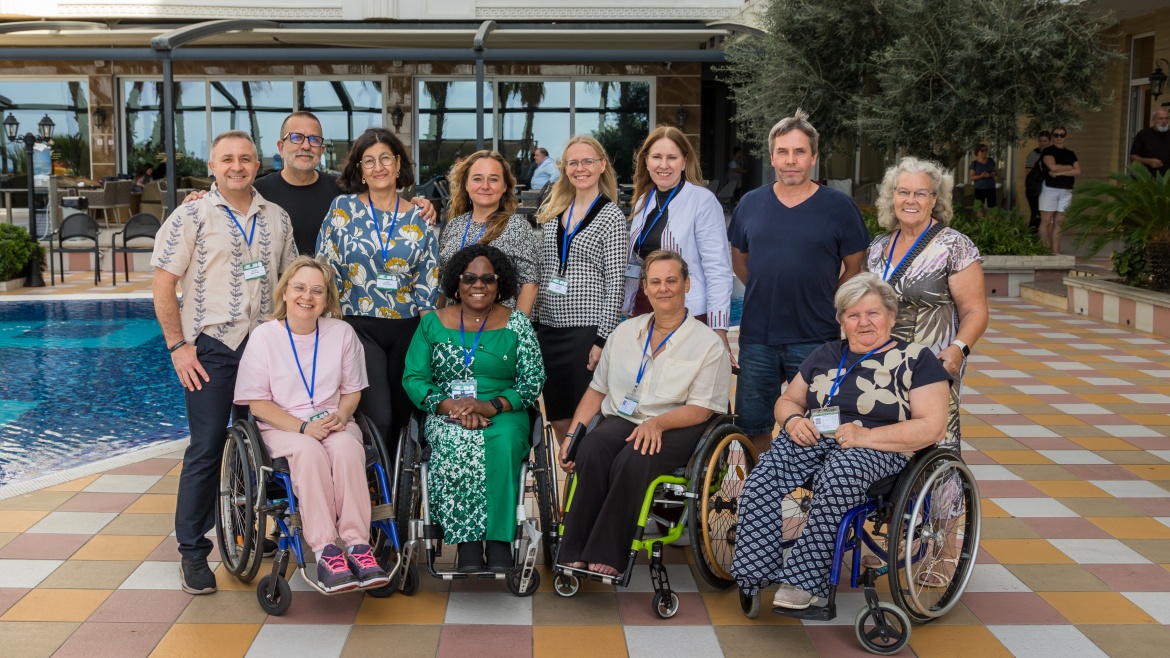
What role do people with disabilities play in churches? Are they merely recipients of care and support, or can they participate in decision-making, develop their gifts and take on responsibilities? These questions shaped the European Disability Network’s (EDN) participation in Hope for Europe 2026, the European Evangelical Alliance’s gathering held from 5 to 9 October in Golem, Albania.
Under the theme Hope in Times of Uncertainty, some 250 evangelical representatives from 35 European countries shared experiences and proposals to strengthen the mission of the churches. Among them, the EDN – a European network of evangelical ministries working in Europe with people with disabilities – highlighted one of the major challenges facing Christian communities: moving from good intentions to effective inclusion.
All Evangelical Focus news and opinion, on your WhatsApp
“Helping is not enough”
The EDN delegation comprised Martina Köninger (Germany), Taza Mzyece, also known as Beulah (Zambia, living in Germany), Lydia González and Jordi Torrents (Spain), Therese Swinters (Belgium), Evelyn Apinis (Estonia), Galyna Tsymbal, Natalia Bolchuk and Sergei Bolchuk (Ukraine).
They joined workshops and discussions on disability, politics, communication, the arts, public spaces and the reality of the Roma people, amongst other topics. These sessions addressed issues such as prejudice, dignity, empathy and social justice from the perspective of people with physical, intellectual or sensory disabilities.
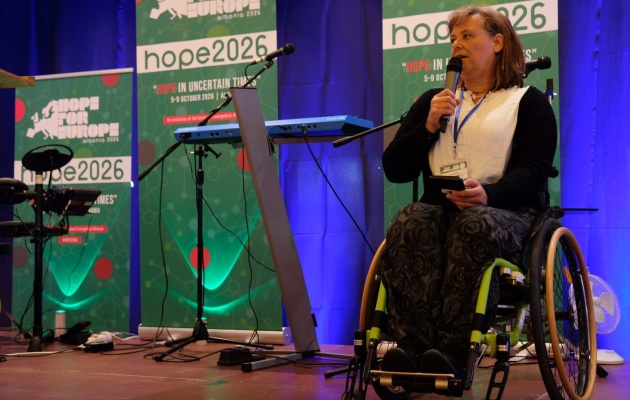
One of the highlights of the meeting was Martina Köninger’s address to all those present. Her message challenged the lack of people with disabilities in leadership roles, including within churches. “Care and support are necessary, but they are not enough; people with disabilities must be able to participate in decision-making and actively contribute to the life of their communities,” stated Köninger.
The EDN’s proposal is clear and is based on the principle that it is not merely a matter of facilitating access to churches, but of ensuring that people can be part of them on an equal footing.
One in six people
The EDN also coordinated one of the gathering’s workshops, during which it was noted that approximately one in six people worldwide lives with a disability, according to data from the World Health Organisation.
This figure prompts a review of everyday aspects of church life, from the accessibility of buildings to communication, community activities and the training of leaders. One of the conclusions was that an accessible environment does not merely benefit people with disabilities, but facilitates the participation of the whole community.
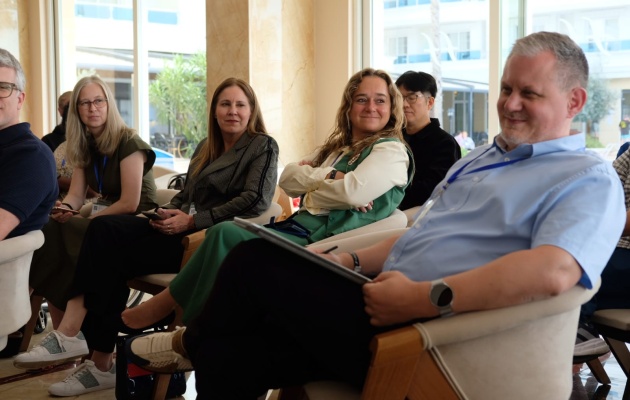
The workshop also addressed the difficulties faced by some families in contexts where disability is still associated with shame or stigma. Participants emphasised the importance of supporting these families, promoting acceptance and creating opportunities for each person to develop their abilities.
From a Christian perspective, dignity does not depend on autonomy, productivity or the ability to communicate. The question is how to translate this conviction into the day-to-day practice of churches.
Precious Treasures: inclusion in Albania
The EDN workshop also provided an opportunity to learn about the Precious Treasures (VT Albania) project, led by Luis and Laura Artoni, an Argentine couple linked to the missionary organisation World Gospel Mission.
The initiative supports young people and adults with physical and intellectual disabilities through a day centre and activities that promote independence and social participation. Laura works in the day care programme, whilst Luis promotes inclusive sports initiatives, including football for people with amputations.
Their experience demonstrated how inclusion is put into practice on a day-to-day basis through spaces for socialising, personal relationships, learning and opportunities to participate in the community. This work also involves families and seeks to ensure that each person is recognised for their abilities and not defined solely by their disability.
Stuttering, a less visible disability
Another voice that enriched the meeting was that of Cinthia Hieber, founder of the Paraguayan Stammering Association and a member of the Evangelical Alliance of Paraguay.
Hieber shared her personal experience with the EDN team, describing how her stammer had improved from affecting 90 per cent of her speech to just 20 per cent. Hieber had even wondered why God had not allowed her to recover completely, but over time she came to see this experience as an opportunity to bear witness and support others, particularly through support groups.
A tragic event marked the beginning of her commitment: learning of the case of a twelve-year-old boy who took his own life after being bullied because of his stammer. That news spurred her to create spaces for support and awareness-raising.
Her testimony highlighted a dimension of disability that often goes unnoticed: the social barriers, ridicule and prejudice that can have profound consequences on people’s lives.
From words to action
In conclusion, the EDN’s participation in Hope for Europe 2026 raised a question that challenges European evangelical churches: is it enough simply to welcome people with disabilities, or must we also ensure their participation and leadership?
The network argues that inclusion should not be limited to a specialised ministry, but must be integrated into the life of the entire Christian community. This involves reviewing spaces and activities, listening to people with disabilities themselves, and recognising their abilities, their experiences and their contribution to the mission.
At a gathering dedicated to hope in times of uncertainty, the message was an invitation to turn convictions into concrete actions. Because an inclusive Church is not just one that opens its doors, but one in which everyone can find their place and participate fully.
Do you see a need for this kind of journalism?
Through news, interviews, opinion and analysis, we seek to build bridges between evangelical churches and the societies in which they live.
As a non-profit entity, the big challenge is to be sustainable, month by month. We invite you to make a difference! Join the readers who make Evangelical Focus possible.
Published in: Evangelical Focus - europe - European Disability Network calls for a Church where people with disabilities take on leadership roles