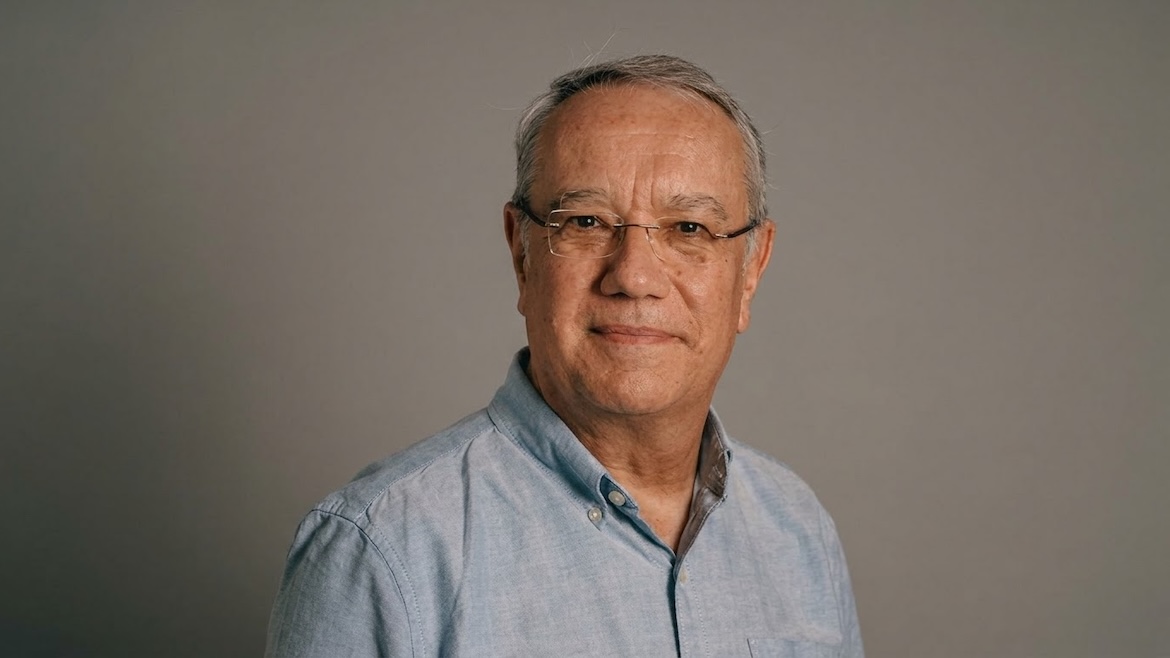
Jaume Llenas: “There is no such thing as an ‘evangelical vote’”
In recent years in Europe, the 'evangelical vote' has emerged on the horizon as an attractive prospect for politicians. Jaume Llenas urges Christians to engage with the world of politics without fear, but to go beyond simply casting a vote.
Protestante Digital · BARCELONA · 10 NOVEMBER 2026 · 10:03 CET
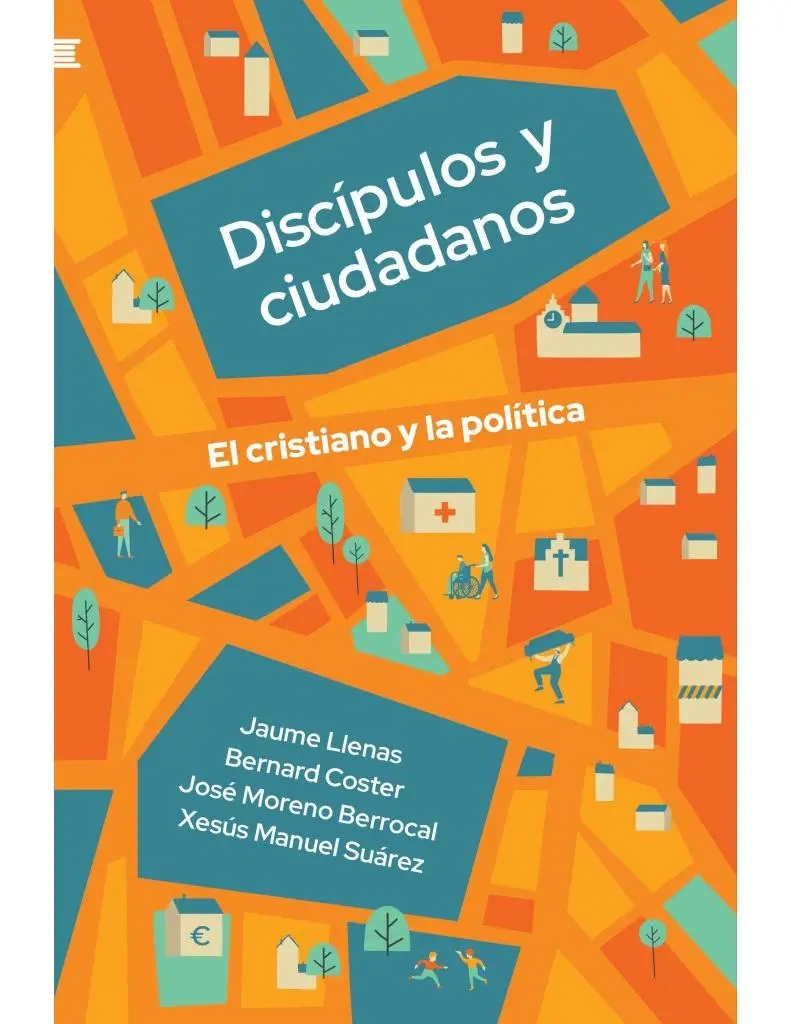
“Christians and politics are two words that sound wrong together”. This is how the foreword to Disciples and Citizens: The Christian and Politics (Andamio) begins.
The book, written by Jaume Llenas, Bernard Coster, José Moreno Berrocal and Xesús Manuel Suárez, emerges from the ongoing conversations between the authors and many university students who have taken part in a school of political education run in Spain by the University Bible Groups (GBU) over the last decade.
We spoke to Llenas to reflect on the Bible and politics from a non-partisan perspective, and to help us with the decisions we must make as voters and as citizens.
All Evangelical Focus news and opinion, on your WhatsApp
A toxic relationship with power
Question. The book begins by stating that ‘Christians’ and ‘politics’ sound like a bad combination. Why is that?
Answer. Because our political tradition in Spain has not been based on biblical Christianity, but on a religion. It has been, in my opinion, a toxic relationship between a specific religion and political power – one of the last manifestations of Constantinianism, that was National Catholicism. I’m not saying it was all negative, but it was not good for either the Church or society.
It is not that there should be no relationship between religion and politics. Those of us with spiritual convictions are just as much a part of this society as anyone else, and we have a voice. What is wrong is to monopolise the political arena, to take away others’ place at the table. But it would also be wrong if we were unable to participate. The table belongs to everyone: to 49 million Spaniards, to those born here and those born abroad, to young and old, to believers and non-believers. Wanting to exclude someone simply because they are not one of ‘us’ is what is dangerous. A parliament is a forum for the discussion of ideas, and that bad habit of imposing and excluding is what has left us without a Christian worldview of politics.
“Politics can be misused, but it has a very positive side”
A. Yes. We’ve said that politics is dirty, ugly and corrupt. There are corrupt politicians, but that is not the fault of politics but of human beings. We are mired in it, and we taint everything we touch: business, sport, politics. The problem lies in the heart, not in the sphere itself. It’s like social media: it isn’t bad in itself; it’s neutral. Politics can be misused, but it has a very positive side. That is why I believe it is a mistake that so many Christians – Evangelicals and also many Catholics – have said, ‘No to politics; don’t even mention it to me’.
What the Bible says (and what it doesn’t)
Q. The Bible does not tell us which politician is doing well or badly, but it does provide principles. Which ones?
A. What we do in the book is merely an introduction, because the Bible is a profoundly political book and could fill entire encyclopaedias. We divide the biblical narrative into the four classic theological stages: creation, the Fall, redemption and new creation, and we see what light each one sheds.
- Creation. Human beings are relational, because they are made in the image of a relational God, who lives in the Trinity. When faced with any political programme or law, one of the first questions is whether that decision builds relationships or destroys them. This applies, for example, to housing policy.
- The Fall. If you believe that human beings are essentially good, you do not establish systems of control. Democracy requires checks and balances, a balance of powers and oversight of those in office. This is a very Protestant idea. Without taking sin into account, corruption grows without limit.
- Redemption. We are part of a kingdom that is not of this world but which exists in the ‘already and not yet’, and which must be manifested in support for specific policies. We must go beyond the so-called ‘evangelical agenda’ (abortion, gender ideology, euthanasia). These matters are important, but the Lord also claims to be the protector of the orphan, the widow and the stranger. Economic policies also have an impact on the expansion of the kingdom.
- New creation. This gives us a vision of hope. We should not become cynical, waiting for everything to be destroyed. The biblical perspective is broader, and this is also the source of our care for creation – a call to which we have sometimes failed to respond.
“Democracy requires a balance of powers – a very Protestant idea”
R. We have proposals that address all concerns, because everything human is of concern to God. Abraham Kuyper, who went on to become Prime Minister of the Netherlands, said that there is not a single square centimetre of the universe over which God does not say, ‘This is mine.’ God cares about schools and hospitals, and that is why, when the Reformation takes effect, it addresses education and healthcare, not just worship. As Christians, we are human beings first and foremost: the first Great Commission is found in Genesis 1:26–28, and it is for all human beings, not just for believers. A Christian can be prime minister, but so can an atheist, and they can be a good prime minister.
In a fallen world, nothing will be perfect. Jesus explains this when asked about divorce: God’s ideal is different, but because of the hardness of people’s hearts, the law already takes the fall into account. And we cannot claim to govern theocratically, as Israel did. That was not God’s will for the nations, but for a people with a specific missionary role. The Old Testament law is not the law for nations today, although it contains sound principles for society, such as concern for the ox that threshes, which is relevant to today’s economy.
History: when the Bible is rediscovered
Q. What examples can we find of politics being practised on the basis of Gospel values?
A. Every time we rediscover the Bible, we rediscover our role in society. This happened with the Reformation. José Moreno Berrocal explains in the book how the welfare state emerged at that time, when people began to be regarded not merely as religious beings.
Even in the New Testament, we see how the new faith clashed with the powers of Rome. Christianity did not seek to overthrow governments, but rather to bring about a deeper revolution. With master and slave sitting side by side in the same church as brothers, slavery became impossible. That principle was applied once more in the 18th century through William Wilberforce. There were Christians who challenged the prison system, such as Elizabeth Fry, or the child labour of chimney sweeps, or who transformed nursing, such as Florence Nightingale. At GBU we run a programme, the Agora Experience, which takes around twenty people to London every year to see how Christianity transformed a society.
My prime example is Roger Williams, the religious father of the secular state. Until then, the principle of cuius regio, eius religio had prevailed: the king’s religion is the people’s religion. A hundred years before the French Revolution, he ensured that people of different religions had the same legal rights in what is now Rhode Island. He opposed taking land away from the indigenous peoples and opposed slavery. Today we must defend a secular state, not a secularist one: a state that is neither confessional nor favours any particular religion.
Evangelicals in Spain: a growing minority
Q. We evangelicals are a growing minority, and the political parties are beginning to take notice of us. What should be avoided?
A. The reality is that there is no such thing as an ‘Evangelical vote’. We see this in Brazil: in the second round, the states with a stronger Catholic presence voted more for Bolsonaro, whilst those with a stronger Evangelical presence voted more for Lula. The Evangelical vote is not monolithic, and no party should assume it has our support. We are very diverse, and that spiritual diversity is also reflected in the political sphere. We are a difficult group to retain. Evangelicals are not all going to vote for the same party; the vote will be very divided.
Being a Christian does not make you right-wing or left-wing. It makes you interpret current affairs from a clear worldview, and from there you might believe that the private sector has the best solutions or that state intervention corrects market inequalities. There can be a good Christian on the right, in the centre or on the left. The Bible never tells you who you have to vote for.
Q. How, then, should Christians approach voting?
A. By realising that you’ll never be completely satisfied. We cannot buy the whole package from anyone. If you’re on the left, be critical of the left, and if you’re on the right, be critical of the right. We must vote with a clear and calm mind, and accept that we will always be voting for something that is not entirely in line with Scripture, because this is not a theocratic state, nor will it be. Even with an evangelical prime minister, we would have to vote for or against ‘with a pinch of salt’: politics is the art of the real, and reality is confusing. Not even the Church is fully in accordance with God’s will.
Nor should we disparage one another for voting differently. Some issues will be more important to some people and others to others. As the Evangelical Alliance says: ‘In essentials, unity; in non-essentials, liberty; and in all things, charity.’ There is no such thing as an ‘evangelical’ candidate, and the mid-term elections in the United States have shown this once again.
“If the evangelical agenda is broad, you are not anyone’s captive client”
A. If our agenda is reduced to abortion, feminism, gender ideology o euthanasia, we become captive clients. A party that has no intention of doing anything about these issues makes you promises and captures you, because your agenda is very narrow. If the evangelical agenda is broad, you’re not anyone’s captive voter. All parties delivered on some of their promises and failed to deliver on others. We mustn’t judge them on just three or four issues, because then our vote is worth very little. We’re a small part of the population, but we have to be a valuable vote: they have to promise us very specific things. And, as they’ll try to pigeonhole us from the outside, let’s not be the ones perpetuating that labeling.
The book and the politics and faith summer school
Q. Where did Disciples and Citizens come from?
A. It’s the content of what we taught at the political training school during the GBU Summer Camp for about ten years.
What the book lacks is the direct interaction between trainers and students, with those rich debates in which someone would defend a position and then have it challenged. The students have contributed greatly to our political thinking.
We trainers were also enriched by these experiences; we would eat together and discuss things. We do not all think alike; what unites us is a biblical worldview of politics and culture. Bernard Coster, José Moreno Berrocal and Xesús Manuel Suárez would challenge me: ‘Where does this opinion come from? Is it really a biblical worldview?’ Politics is a very visceral field, and bringing it into the realm of reason, testing it against Scripture—which is timeless and was not written for today’s debates—was a very enriching experience.
Q. How was the training structured?
A. On three levels. The first was the biblical foundation, which I covered. The second was how the Church has engaged with politics over time, covered first by Bernard Coster and then by José Moreno Berrocal, who rounded off the picture. The third was the practical aspect, led by Xesús Manuel Suárez: how to analyse a particular moment, a law, an event or a political programme. That part took up half the time, because we didn’t want to leave it at mere intuitions; rather, we wanted the students to be able to apply the principles to their own analysis.
Voting is the last thing
Q. To conclude, any final thoughts?
A. The last thing you have to do is vote. By that I mean that we must not limit ourselves to going to the polls every three or four years and keeping quiet the rest of the time. A Christian’s rightful place is not just the church, but society: work, culture, science. We follow a Jesus who died outside the gates of Jerusalem, to show that the impact of the cross was not limited to the holy city. Our mission lies outside the church, which is the place where we are trained and equipped.
“We must not limit ourselves to going to the polls every four years and keeping quiet the rest of the time”
The book Disciples and Citizens: The Christian and Politics, by Jaume Llenas, Bernard Coster, José Moreno Berrocal and Xesús Manuel Suárez, is published in Spanish by publishing house Andamio (Barcelona).
Do you see a need for this kind of journalism?
Through news, interviews, opinion and analysis, we seek to build bridges between evangelical churches and the societies in which they live.
As a non-profit entity, the big challenge is to be sustainable, month by month. We invite you to make a difference! Join the readers who make Evangelical Focus possible.
Published in: Evangelical Focus - europe - Jaume Llenas: “There is no such thing as an ‘evangelical vote’”