
Character, integrity, transitions: “Two in three leaders do not end well”
Accountability, mutual confession, mental health and generational renewal were addressed by 90 leaders at the 2026 Lausanne Movement Spain gathering in Guadarrama.
Protestante Digital · 23 NOVEMBER 2026 · 15:50 CET
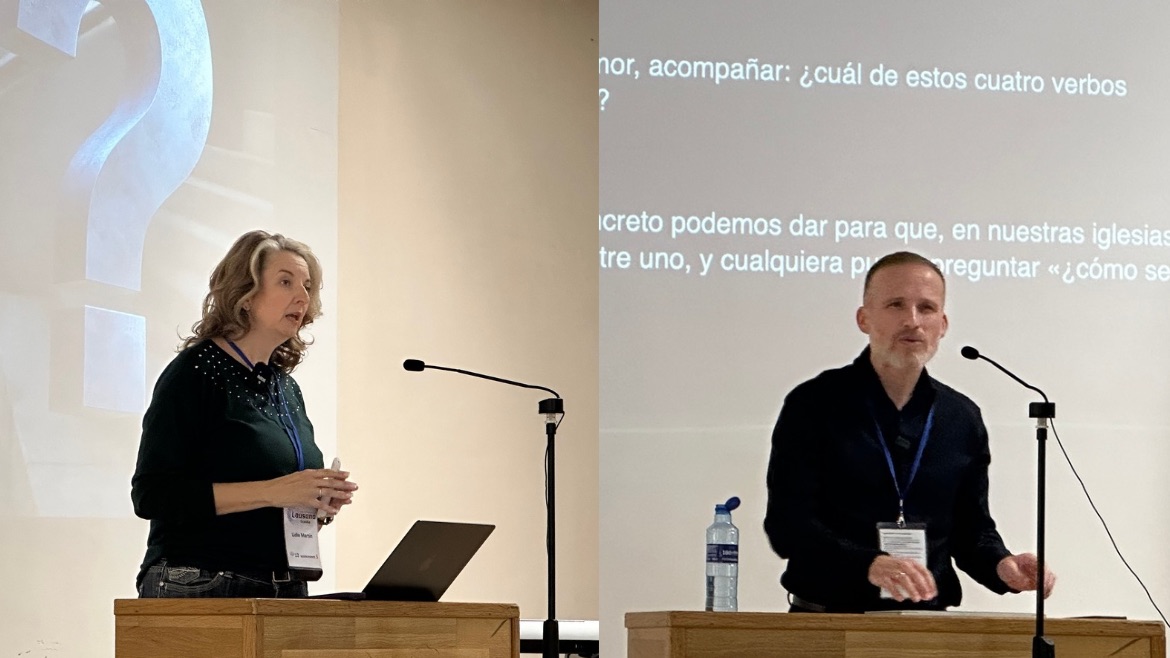
Around 90 evangelical leaders gathered this weekend in Guadarrama (near Madrid) to reflect on integrity in the Christian life and the “passing on the baton” in ministry.
Men and women of different ages, from across the country and representing various denominations and ministries, took part in another edition of Spain’s national Lausanne Movement annual gathering, which is approaching two decades of networking in alignment with the priorities of the Movement founded in 1974 as a global evangelical network to advance evangelism and mission.
All Evangelical Focus news and opinion, on your WhatsApp
Following the usual format of these gatherings—short in duration (less than 24 hours) yet packed with content and opportunities for joint reflection—the event centred on one of the ‘gaps’, that is, one of the areas requiring special attention for the advancement of mission.
The chosen theme was integrity, addressed in four presentations in which evangelical pastor Francisco Mira, evangelist Andy Wickham, psychologist Lidia Martín and Evangelical Alliance general secretary Juan Carlos Parra, explored specific and practical aspects for the leadership of churches and ministries in Spain.
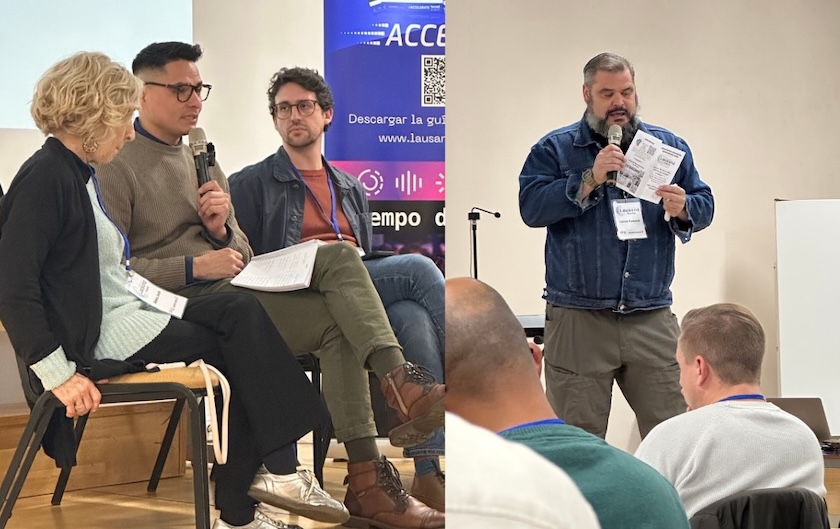
There was also a panel discussion on generational succession in leadership, featuring pastors Jonathan Rodríguez, Chisco Ramírez and Rebecca Jacob, as well as brief times of worship and devotional prayer led by singer Débora Romo.
After each presentation, participants split into groups of eight to continue the discussion and mutually enrich the weekend’s work. The conclusions from these groups are subsequently published openly on the Lausanne Movement in Spain’s website. Also noteworthy was the presence of many new, younger faces taking part in the Lausanne annual gathering for the first time.
The plenary sessions are now available on their YouTube channel.
“We cannot give what we are not”
The first session, led by Francisco Mira, focused on the “meek and humble” leader. When considering Christian leadership, he argued, the question should not be what a person knows, what skills they possess or what results they achieve, but what sort of person they are. “We cannot give what we are not,” he stated. “Being comes before doing. Only a transformed character sustains a faithful ministry.”
Mira cited Moses as an example, in whom God worked on his character for decades, and recalled a phrase by José de Segovia: “We are worse than we think”. Character formation, he noted, is “a lifelong endeavour”, and the fruit of the Spirit is at its heart.
Meekness, he explained, “is not weakness, timidity or indolence, nor a lack of firmness in the face of evil”, but rather confidence in God, the ability to listen, “inner strength that brings peace” and authority without the need to promote one’s ego.
Humility, for its part, is “living from what we have received”. Drawing on Philippians 2, he described it not as an emotion but as a discipline: “It is not a matter of considering ourselves humble, but of asking ourselves how far we are prepared to descend”, following the example of Christ’s descent.
From this, according to Mira, emerges a form of leadership that is not “technical or business-oriented”, but which springs from the Word and from God’s call; it encourages teamwork, values setting an example and is mindful of its own weakness. He also warned that “placing leadership in the hands of a single person makes us vulnerable”. “In Christ there are no gaps. What he says, he lives out”.
In the discussion groups, several participants pointed out that the initiative to humble oneself lies with each individual, “but it is God who exalts”, and that leaders often do the opposite. Mention was also made of the attraction to the leadership models of the Old Testament kings as opposed to the example of the servant, the need for people who “bring us back down to earth when things are going well”, and the importance of times of rest.
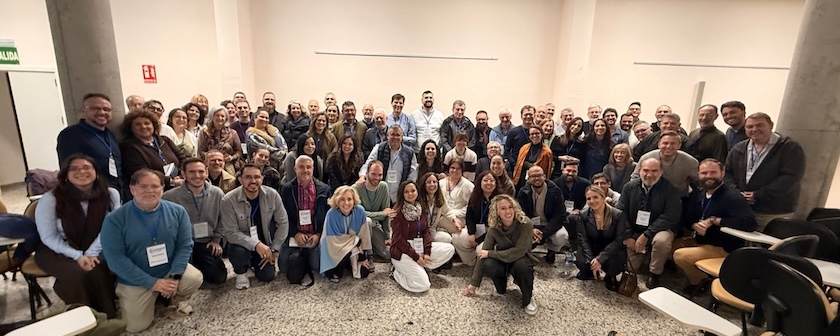
Group photo of those attending the gathering. Photo: Lausanne Spain “I never…”: a dangerous phrase
Andy Wickham addressed accountability and the challenge of “finishing the race well”. As he explained, fewer than a third of the major leaders featured in the Bible finish well, and current figures are similar. “Every leader who fell said: ‘That will never happen to me’,” he warned.
Faced with frequent news of leaders’ downfalls, Wickham suggested reframing the question. Rather than seeking explanations in childhood, narcissism or hypocrisy, “we need to remember that we all are made of the same clay”. The relevant question, he said, is: “Will this happen to me too? How am I going to prevent it from happening?”
In the speaker’s view, “the greatest threat is not external opposition, but the internal erosion of character”. He added that while “character is what God knows about us, reputation is what others know.”
Wickham stated that a third of those who leave the church do so because of scandals or moral and ethical failings on the part of the leadership and explained that a downfall does not usually result from major decisions, but from “small slippery slopes”.
He cited Solomon as an example, who “started well, putting God first”, but gradually added “reasoned and reasonable” decisions—another palace, another wife, another army, another alliance—until he reached the point described in 1 Kings 11:4. “He wrote the definitive manual for a life of integrity and, knowing so much, did not live by it. Character is not built through knowledge, but by being moulded by the Word”.
Among the factors leading to downfall, Wickham listed a lack of authenticity, pride and the abuse of power, burnout (“beware of saviour syndrome”), moral compromises and isolation. To counter these, he proposed commitments to financial integrity, moral purity, transparency and collaboration with the local church.
However, he insisted, “structures are not enough when we do not allow anyone to enter our lives and examine our hearts”. Wickham advocated mutual confession based on James 5:16: “The Reformation rejected sacramental confession, but not fraternal confession. We have put nothing in place of the confessional”.
An individualised faith, he argued, has led to “a solitary relationship with God”, and confessing to another believer “helps to break down any hint of hypocrisy” and to live in community, “which means letting someone into your kitchen”. He concluded with a challenge: “Start this week with an uncomfortable conversation. Ask for help”.
During the discussion, one participant shared that he had suffered from depression whilst in ministry and that it was the congregation, upon seeing his vulnerability, who helped him recover and later asked him to lead the congregation again. Others pointed out that in churches “there are protocols for money, but far fewer for understanding the spiritual lives of leaders”, and proposed creating a network of trust: elders, friends, mentors and one’s own spouse, each within their own sphere.
Mental health and the “wonder pastor syndrome”
Lidia Martín devoted her presentation to mental health in leadership. She described the leader under pressure, suffering from overload, poor management and a lack of boundaries – a situation that undermines unity and the mission. “There should be no topic we do not discuss in our congregations, yet mental health has been sidelined”, she stated.
Drawing on Philippians 4, she presented the cycle of “concern, activity and rest”, and pointed out that many pastors think they are doing something wrong because they cannot find peace or joy. Leadership, she acknowledged, carries a burden that cannot be removed, but one must be wary of imposed burdens. Shee recalled Nehemiah, and underlined that “it is up to the leader to know how to set boundaries”.
Martín identified three common mistakes: the “wonder pastor syndrome”, where someone believes they can do everything, something that “is neither sustainable, nor wise, nor educational”; neglecting difficult issues (“that sort of thing doesn’t happen amongst us”), when the Bible does indeed speak of anxiety and sorrow; and “do-goodism”, which confuses kindness with a false sense of goodness and fails to call sin by its name.
In response, she proposed a leadership style based on wisdom—which makes ministry sustainable—and on vulnerability. The therapist defined an abusive leader as someone who “thinks they are God, believes they are above the law and acts like a spoilt child”, and concluded: “When the leader sets a good example, the community follows suit. Wisdom, sustainability, vulnerability: this is mental health”.
During the discussion, participants acknowledged that when faced with depression or an anxiety crisis, “the first thing we say is ‘pray more’” and highlighted the need to listen and to admit that professional help is necessary, recognising that pastors and psychologists “are not enemies, but collaborators”. There was also discussion of incorporating biblical counselling into discipleship as a preventative tool.
Running a few metres side by side
The panel on intergenerational collaboration brought together testimonies of leadership transition. Rebecca Jacob, who served as pastor of the Amistad Cristiana church before handing over to Chisco Ramírez and Jaz Jacob, explained how they had managed this transition.
Jaz Jacob acknowledged that doubts often arise when passing on the baton, and emphasised the importance of listening to the church so that it is not an autonomous decision, but one supported by the whole congregation. Her experience, she said, has been one of having to let go, but also of realising that stepping down from leadership does not mean disconnecting from the new leaders, but rather a change of role which, if done well, helps the church take the next step with confidence and assurance.
Chisco Ramírez explained how the church has developed leaders through a discipleship programme, in a transition that honours the work done and continues to give a voice and a place to the previous generation. “A leader needs mentors and peers”, he stated.
Jonathan Rodríguez argued that encouraged the congregation to “include Timothy in their pastoral team”. The panellists compared the handover to a relay race: “You run a few metres alongside the other person”.
They all agreed that both parties must play their part, that each church has its own identity which the handover must respect, and that the calling remains fundamental. They also lamented that “there are no courses on pastoral transition” and that there is a lack of materials and resources in Spanish subject on this important issue.
“We reproduce what we are”
The final session, led by Juan Carlos Parra, focused on leadership development based on 2 Timothy 2:1–3. “In the fruit lies the seed that we are going to reproduce. We reproduce what we are”, he stated.
Parra highlighted three elements of the text: “My son”, which speaks of a relationship and of “healthy fatherhood”; “entrust”, which points to transmission; and “with me”, which describes “a shared path of suffering”. “We need fatherhood, not paternalism”, he noted – a fatherhood that teaches, models, corrects and accompanies.
He explained that many leadership conflicts arise from a failure to understand the different circles seen in Paul’s writings—leaders, collaborators, and children and successors—and from haste, a desire for control, or a fear of letting go. His lesson was that “nothing should depend on a single man”, and “we should not clone people”.
Recalling Sarvia’s sons in the story of David, he warned that “there is a difference between raising capable men and raising men of character” and summarised the challenge as moving “from imparting information to imparting life”.
Para agregar información en el pie de una photo se podrá realizar con el siguiente seudo código de ejemplo:
“We bear fruit in other people”
Carlos Fumero, a member of the organising team and facilitator of the gathering, also presented the vision of the Lausanne Movement, which, through various working groups, is producing open-access materials in areas such as care for creation, missions, church planting, discipleship and evangelism amongst indigenous peoples.
Jaume Llenas, national coordinator of the Lausanne Movement in Spain, brought the gathering to a close by encouraging participants to put the training they had received into practice in their work and Christian ministry contexts.
The Lausanne Spain gathering brings together “influencers”—that is, people who, through their work, can amplify the impact of the work being done in a condensed form. “Remember that we bear fruit in the life of other people”, Llenas said as he brought the intense meeting to a close.
Do you see a need for this kind of journalism?
Through news, interviews, opinion and analysis, we seek to build bridges between evangelical churches and the societies in which they live.
As a non-profit entity, the big challenge is to be sustainable, month by month. We invite you to make a difference! Join the readers who make Evangelical Focus possible.
Published in: Evangelical Focus - europe - Character, integrity, transitions: “Two in three leaders do not end well”