
An evangelical soldier in Ukraine: “Even in this dark war, I try to leave good memories and examples”
Mykhailo Husiev, former Ukrainian Christian student worker, is a regular soldier who works keeping records of all drone streams.
17 DECEMBER 2025 · 13:14 CET
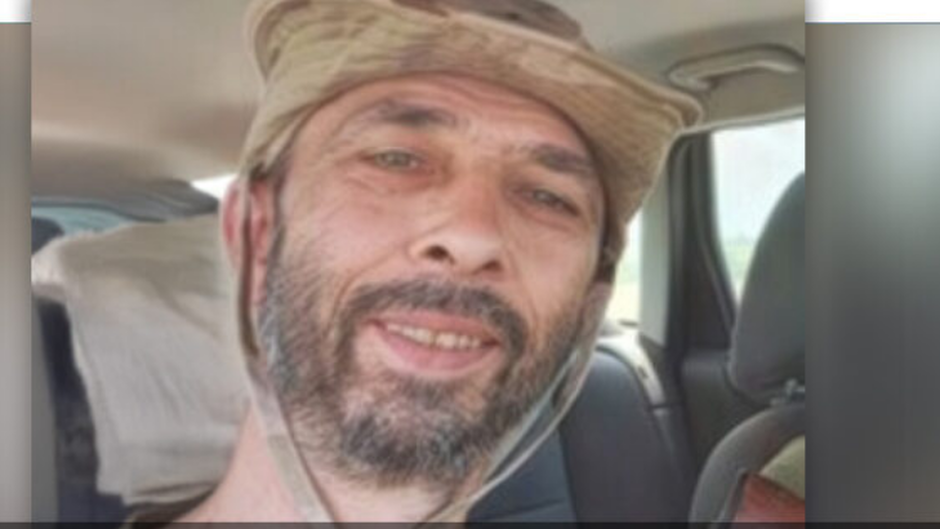
I was recently in Lviv, Ukraine, and had an opportunity to talk with a brother in Christ who was conscripted and now serves as a soldier in the Ukrainian army.
Knowing him as a civilian and missionary in the past, and seeing him now in military uniform, moved me deeply. This led us to a more open conversation, presented here in the form of an interview.
Mikhailo spent almost 20 years with the International Fellowship of Evangelical Students (IFES) community across Ukraine, Georgia, and Austria, also working in customer support for various companies.
All Evangelical Focus news and opinion, on your WhatsApp.
He, his wife Irena, and their two sons are members of Holy Trinity Church, a Reformed community in the city of Lviv. Now he is a regular soldier who works at the headquarters of his battalion, keeping records of all drone flights, surveillance drones, heavy bombers, and FPV drones.
Question. Can you remember the moment you received your conscription notice? What went through your mind and heart?
Answer. I was willing to serve from the beginning but couldn’t volunteer, there were no spots available. Then two men handed me the conscription letter on the street. I decided it was God’s will. I was expecting it, yet afraid, I was 51 and not a military man.
A. Even before the war, I knew the difference between killing to take what your neighbor has versus defending your family and land when an enemy attacks.
This difference is not properly explained in our churches. In the Old Testament, we see that defending against the enemy is not a sin.
Q. What has been the hardest part, not just physically, but spiritually and emotionally, about this transition from civilian life to military service?
A. When I was monitoring drone streams, it was hard knowing we were killing people. Although it was hard, I later found myself full of joy after successful attacks. I struggled with whether this was normal. But this is war.
Another struggle was being alone as a believer. All the officers I’ve met are far from spiritual. I met a few Protestant soldiers during training, but we were separated, one was even killed.
It’s also hard to accept that I may die any moment. Shaheeds (Iranian-made attack drones) are constantly buzzing overhead. My pastor supports me through messages, and I’m encouraged knowing the church and my family are praying.
“I met a few Protestant soldiers during training, but we were separated, one was even killed”
A. It changed, it became deeper. I look at the stars and remember the wise men who followed them. I know God is not far away but right here with me.
The fact that I keep good relations with officers and soldiers tells me it’s God, not me. I see God using me and speaking through me. This is a miracle, even as I realize my life could stop at any moment.
Q. What Scripture passages or prayers have become lifelines for you? Are there any that have taken on a completely new meaning?
A. I keep in mind and heart the most necessary knowledge about God. During difficult times, I remember what God says.
One of the most encouraging passages is Isaiah 41:8-11, which reminds me not to fear because God is with me, strengthening and upholding me. And Philippians 4:6-7, which I learned in my student years, not to be anxious but to present everything to God in prayer, and His peace will guard my heart and mind.
Q. How does your church community support you?
A. They support me with prayers and practical help, they sent two minivans of goods. My wife keeps them informed. Our church has 100 members, and five of us are serving in the army.
“Philippians 4:6-7, which I learned in my student years, not to be anxious but to present everything to God in prayer”
I never hide what I believe. My commander knows I’m an evangelical. People know my principles and admire my family and church support.
They know I won’t do certain things, like lie about statistics. They see I’m a believer and an intelligent person who can contribute experience to the military world.
The Commander often asks my opinion, even though I’m not an officer, which is very encouraging.
Q. When you think about the future, for yourself, for Ukraine, for the church, where do you find hope?
A. I remember Francis of Assisi scattering flower seeds wherever he traveled. This reminds me to leave good footprints wherever I am. Even in this dark war, I try to leave good memories and examples.
Hope is not in the hands of the EU or USA, but in God’s hands. We need more evangelical chaplains who are faithful to God, not sent for salary, but to turn hearts to God. Many soldiers are in deep despair.
“Hope is not in the hands of the EU or USA, but in God’s hands. We need more evangelical chaplains who are faithful to God”
A. Jesus lived among His followers, He was right there with them, sleeping, talking, and eating. That’s how He made a difference.
Chaplains need to live the life of soldiers to be efficient. If they live far away and just drop by occasionally, it will only arouse anger.
I also wish for evangelicals in top positions in the EU and USA to find ways to reach our top officers, we cannot reach them. But these people can talk to them directly through prayer breakfasts or official meetings. High officials should also hear the Good News.
Tatiana Kopaleishvili, Brussels Representative for the European Evangelical Alliance. This article was first published by the EEA and re-published with permission.
Join us to make EF sustainable
Learn all about our #TogetherInThisMission initiative here (English).
Published in: Evangelical Focus - European Evangelical Alliance - An evangelical soldier in Ukraine: “Even in this dark war, I try to leave good memories and examples”