
Are we all monarchists at heart?
Reflections on the human desire for a single ruler in light of Psalm 72.
27 JULY 2026 · 12:55 CET
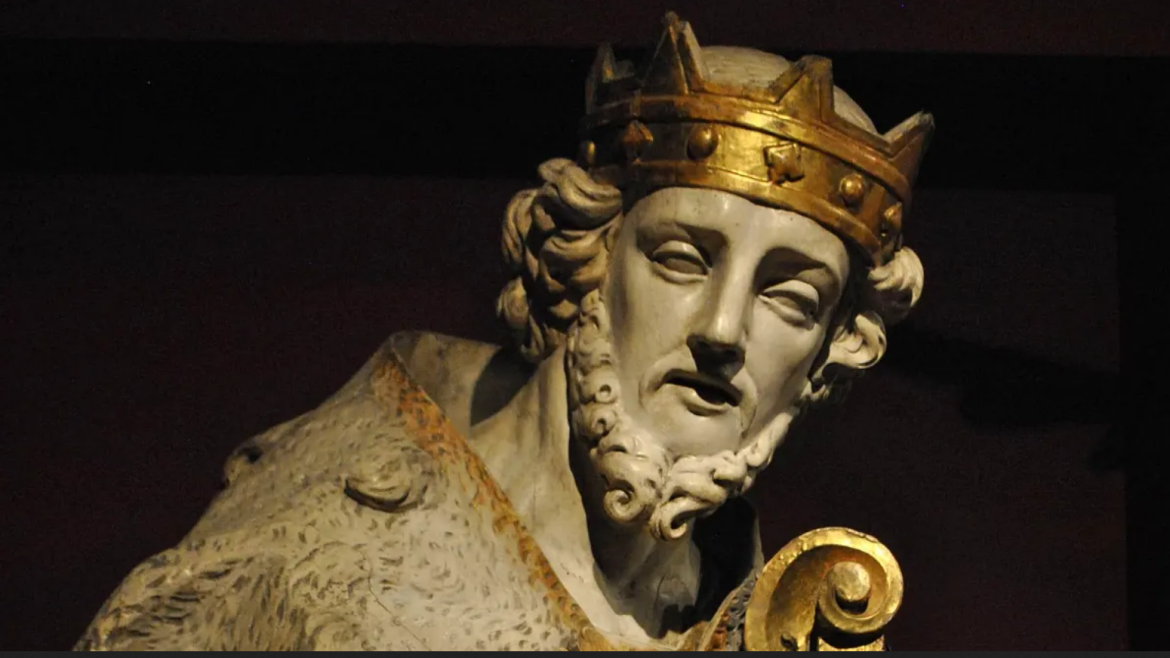
I was struck one day this week as I reviewed the news headlines on a popular news website how most of the top stories began with the name of an individual.
As usual, Donald Trump featured strongly, but so did the new Prime Minister of the UK, Andy Burnham. I cannot remember if there was a story that day about the Russia-Ukraine war, but I would not be surprised if the names Putin and Zelenski featured.
Similarly, stories from Asia often lead with President Xi of China or Prime Minister Modi of India.
All Evangelical Focus news and opinion, on your WhatsApp.
Modern news media seems structurally addicted to personalisation, reducing complex political, social, and geopolitical realities to a drama of individual actors.
We do the same with sports. Teams in the recent World Cup were described as “Messi’s Argentina” or “Haaland’s Norway”.
The tendency to reduce news stories to powerful individuals is troubling. It seems we like to find villains and heroes. We know that nothing of great and lasting significance in this world is done singlehandedly by one person.
We know that leaders often fail spectacularly and never endure forever. We know that even the most autocratic leader cannot rule without the support of at least a considerable proportion of the population and without others to enact their decisions.
We know that outcomes are shaped by cultural, economic and geo-political factors at least as much as by a leader’s policies.
And I suspect that most, if not all, readers of this post would agree that multi-party democracy is their preferred system of government, with power held by people appointed by popular vote and held accountable to law and an electorate who have genuine alternatives to choose between.
Why, then, do we seem to long for strong people – most often men – to lead us? Why do we set leaders on pedestals? Why do we blame the most senior leader when things go wrong and praise him when they go well?
Modern media seems structurally addicted to personalisation, reducing complex political, social, and geopolitical realities to a drama of individual actors
Please do not stop reading if that idea offends you.
My American readers may well protest that they had to fight hard for freedom from monarchy achieved 250 years ago and they do not regret it. Their constitution seeks to ensure that excessive power cannot be concentrated in the hands of one individual.
My Irish nationalist friends will rightly recognise the harms the British monarchy presided over on this island and wonder why anyone would want a strong monarchy.
Ulster unionists and many in Britain may warm to the idea, pledging their loyalty to the British crown, but they must also acknowledge that ‘monarchy’ in the UK no longer entrusts supreme power to one person.
In this ‘constitutional monarchy’, the monarch has no real political power and is largely a figurehead, fulfilling ceremonial functions and serving as a potentially unifying non-political head of state.
My suggestion that we are instinctive monarchists is not a claim that we should all support the idea of monarchy in the world as we find it. And certainly not the kind of absolute monarchy that was once the predominant form of government in most parts of the world.
There are good reasons to hold individual rulers to account and ensure checks and balances on power.
My argument is that we are longing for a true and good king who would not need such restraints. Others have noticed the same instinct. The human heart often longs for:
-
a single figure to embody our collective identity;
-
a hero to admire;
-
a father‑figure to protect;
-
a symbolic centre to stabilise our world.
Democracy may be our preferred system, but our instincts often still search for a single figure to embody hope. This is why headlines begin with names. This is why political drama centres on individuals.
This is why leaders are pedestalised and demonised. This is why even republics behave like monarchies in practice. Kings have been dethroned or stripped of unaccountable power, but the idea of the single, powerful leader is alive and well in the world.
We gravitate towards monarchy – literally, a single head – one person we can trust and follow
The Bible has much to say to our monarchical tendencies. Not merely because nations in the time and place of its writing were mostly monarchies, but because it sets standards for kings and gives meaning to our longing for a good king.Several of the biblical psalms are known as royal psalms because they praise the king. One of them is Psalm 72. It paints a picture of an ideal king. Under his reign people flourish, living in peace and prosperity.
He accomplishes this by defending his people, which involves destroying the nations that threaten them. His priority is those who are needy because they are poor – lacking what they need to flourish – and weak – unable to change their circumstances or protect themselves.
To accomplish this, he needs to be a righteous man – whose values align with what is right – with integrity so that his personal righteousness flows into justice.
From the psalmist’s perspective, this king can only have these qualities if he receives them from God, so the psalm opens with a prayer that God would give the king His righteousness and justice.
I suspect many of us would love to live under a king like that and we would not mind if he accumulated power. If we thought there could really be a person good enough, wise enough and powerful enough to create a perfect society, we might begin to wonder whether constitutional safeguards and balances on individual power were still necessary.
We might willingly entrust such a ruler with extraordinary authority. We may willingly lay aside our political theories and constitutional settlements that developed to prevent totalitarian dictatorships.
The qualities of the ideal king in Psalm 72 are timeless principles for good leadership. They describe the kind of people we should seek to elect to political office, and they can guide our prayers for those in positions of power:
-
Who they are. They are people of good character, committed to righteousness, and with integrity in all aspects of life.
-
What they aim for. Their policies prioritise the needy – seeking to protect the weak and help the poor.
-
How they do it. They work for justice, seeking to ensure just punishment for wrongdoers and fair provision for all.
When leaders in society or church reflect these three qualities - when they are people of integrity who prioritise the needy and enact justice - we can be thankful.
We must pray for our leaders to aspire to and come closer to the ideal.
Psalm 72 paints a picture of an ideal king. Under his reign people flourish, living in peace and prosperity
But there is a problem. No human king is that good. Power tends to corrupt. And even if a king is good, he will face external and internal problems that will thwart his attempts to bring complete peace. And he will die someday.Compared with human experience, the psalm sounds like a fairy-tale. Especially when it envisages this king’s reign extending across the whole earth and over all nations.
And it speaks of his reign lasting through all generations and as long as the moon and sun continue – basically forever. This is definitely not a historic king. It may be a standard for kings to aspire to, but it is an ideal no man can match.
Psalm 72 has a heading connecting it with Solomon, which could mean it was written by him, about him, or for him (perhaps by his father David). Whichever we think it is, the heading prompts us to compare the psalm with the realities of Solomon’s reign.
Solomon was the greatest king of Israel in terms of the extent, power and wealth of his kingdom.
He did reign from the River (Euphrates) to the Sea (Mediterranean) and kings (and a Queen from Sheba – named in the psalm) did bring him gifts and tribute. But Solomon did not reign over the whole earth. He did not reign forever.
And he did not prioritise the poor. In fact, he became oppressive – instituting a system of enforced labour – and accumulated vast wealth for himself in direct disobedience to God’s expectations for kings according to Deuteronomy 17:14-20.
This psalm is longing for a greater king than Solomon. A king who will not merely improve the lives of people but remove forever everything that prevents human flourishing.
The enemies of a righteous human king will “lick the dust” (verse 9) and he will “crush” them (verse 4). These words echo Genesis 3:14-15, where God tells Satan – in the form of a serpent – that he will crawl in the dust and that a coming descendant of Eve will crush his head. Kings like
Solomon can defeat human enemies, but for human flourishing to happen we need a king who can defeat Satan, sin and death itself.
And the psalm hints at something else about that king. It closes with these words (verses 17-19):
May his name endure for ever,
his fame continue as long as the sun!
May people be blessed in him,
all nations call him blessed!Blessed be the Lord, the God of Israel,
who alone does wondrous things.
Blessed be his glorious name for ever;
may the whole earth be filled with his glory!
These verses speak first of the king in two couplets starting with “May”. This language echoes God’s promise to Abraham in Genesis 12:1-3 – that he will be blessed and all nations will be blessed in him.
The ideal king of Psalm 72 fulfils God’s promised purpose. But the following verses use strikingly similar language about none other than God:
-
May [the king’s] name endure for ever … Blessed be [God’s] glorious name for ever
-
[the king’s] fame continue as long as the sun … the whole earth filled with [God’s] glory
-
all nations call [the king] blessed … Blessed be the Lord, the God of Israel
-
people be blessed in [the king] … [God] alone does wondrous things
It seems the king receives the fame, praise and glory due only to God and endures as long as only God can. Psalm 72 is a prayer for the king, yet the closing doxology blurs the line between the king and God.
The Lord Jesus Christ is the king we are longing for. He is the true and only satisfactory object of our monarchist longings
This same pattern of a divine-human king is seen in Psalm 2, Isaiah 9 and Daniel 7. The Old Testament is longing for a king who is human – descended from David and Solomon – but also divine. A king who defeats Satan, sin, and death.Only one person in history could credibly be said to fulfil that pattern. The apostle Paul identifies him for us in Romans 1:3-4:
descended from David according to the flesh and … declared to be the Son of God in power according to the Spirit of holiness by his resurrection from the dead, Jesus Christ our Lord
.
He reigns now at His Father’s side above every power and authority (Ephesians 1:20-22), and the Bible says the day will come when He returns and all the kingdoms of this world will become His kingdom (Revelation 11:15).
The blessings of Jesus are for all peoples. But not all will be included in them. For Jesus to save His people, he must judge their enemies.
The blessing promised to Abraham only comes to those who bless him – those who curse him will be cursed.
And this psalm follows the same pattern. To have the blessings of eternal fullness of life that Jesus gives, we must do what Psalm 72 calls the kings of the nations to do: bow down before him, render him tribute, bring gifts, fall down before him, serve him (verses 9-11).
There is a righteous king. His name is Jesus. He is the king your heart is already reaching for — the one who embodies righteousness, protects the weak, defeats evil, and brings blessing to all nations.
The blessings of His reign are offered to all, but they are received only by those who bow before Him in trust and allegiance.
So, will you acknowledge and receive Him as your king?
Paul Coulter, author, executive director of the Centre for Christianity in Society in Northern Ireland. This article was first published on the author's blog, Connected Christianity. If you would like to be informed when the Christian Leadership Integrity Commitments are released, please subscribe to this blog.
Do you see a need for this kind of journalism?
Through news, interviews, opinion and analysis, we seek to build bridges between evangelical churches and the societies in which they live.
As a non-profit entity, the big challenge is to be sustainable, month by month. We invite you to make a difference! Join the readers who make Evangelical Focus possible.
Published in: Evangelical Focus - European perspectives - Are we all monarchists at heart?