
Let’s talk about Artificial Intelligence (1)
After quite a few conversations on the subject, my impression is that within the evangelical world, Artificial Intelligence is being used far more widely than is openly acknowledged, and that almost no one explains how they do it.
18 AUGUST 2026 · 08:30 CET
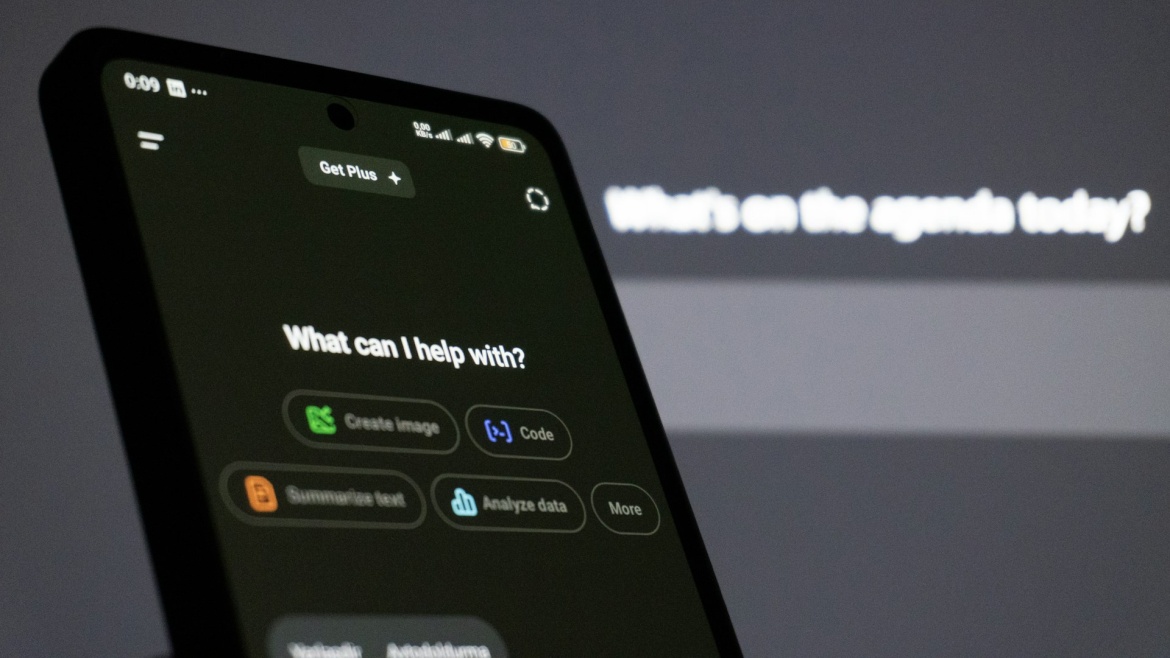
A large part of my working day is now spent in conversation with a machine.
I’ve been working like this for several years now, using the major conversational AI assistants – Gemini, ChatGPT and Claude – which have gradually become part of almost everything I do, from writing to audio transcription, translation, image generation, video editing, or that much less glamorous but equally necessary task of opening an Excel spreadsheet crammed with nested formulas, cross-references and columns that nobody can remember who created or for what purpose, and managing to extract something from it that a human being can understand. At this stage, practically my entire workflow runs through a system built on a combination of AIs.
All Evangelical Focus news and opinion, on your WhatsApp
Over this time, I’ve seen them change from one quarter to the next, both in terms of what they can do and the way in which one ends up working with them.
There are pastors who use AI to organise the outline of a sermon, to expand on an idea that fell short on Thursday evening, or to put together the Sunday service
There are pastors who use artificial intelligence to prepare the PowerPoint presentations that are then shown on Sundays; there are those who use it to organise the outline of a sermon, to find an illustration that’s missing, to expand on an idea that fell short on Thursday evening, or to put together the Sunday service, and I won’t even get into the posters for campaigns, concerts and days of prayer – an area where quite a few pastors have finally found an outlet for all the visual creativity they’ve been harbouring, with results that graphic designers across half the world are still gazing at, having not quite recovered from the shock.
In the academic world, where this ceased to be a novelty quite some time ago, the phenomenon has reached proportions that it would be absurd to deny. According to Eurostat data for 2025, 59 per cent of young Spaniards use generative artificial intelligence for educational purposes, compared with a European average of 39 per cent, which places us at the forefront of Europe by a fairly wide margin; and the CYD Foundation’s report Use and Perception of AI in the University Environment, published in July 2026 based on a sample of 800 students, raises the figure to 90 per cent among university students, with the added detail that one in four admits to attending fewer classes as a result.
When a tool appears that promises the same result with half the effort, we don’t usually need much persuading
What isn’t being said
What strikes me most about all this is not the use of AI itself—which I see as inevitable and, to a large extent, desirable—but the silence surrounding it.
After quite a few conversations on the subject, my impression is that within the Spanish evangelical world, artificial intelligence is being used far more widely than is openly acknowledged, and that almost no one explains how they do it, so that we have neither a manual, nor a shared set of guidelines, nor hardly any accounts from anyone willing to say quite naturally, ‘I prepared this in this way, using this tool, giving it these instructions, and then I checked it in this other way’. We have dealt with this new development in a way that is very much our own: by incorporating it thoroughly without discussing it with anyone.
This silence has two sides, and both concern me, albeit for different reasons.
Rather than protecting us from anything, the lack of honest debate prevents us from moving forward, because one cannot improve what cannot be named
The second aspect is far less innocent, because there are those who have discovered that with these tools they can achieve formulations, conclusions and levels of refinement that were previously beyond their reach, and rather than sharing this discovery with others, they prefer to keep it to themselves, discreetly enjoying a new ability that others do not possess – which is no longer a matter of fear but of competitive advantage, something that is far less amusing amongst colleagues.
The result, in either case, is the same, namely that the Church is indeed using artificial intelligence whilst carefully refraining from discussing it, maintaining an outdated discourse on a new practice and claiming we do things one way when we are actually doing them another. This, rather than protecting us from anything, prevents us from moving forward, because one cannot improve what cannot be named, nor warn of a danger one is unwilling to face head-on.
This is not the first time this has happened to us
To break this silence, it helps to remember that the Church has been through similar debates before – not to settle this one with an argument based on historical authority, which would be somewhat disingenuous, but because that history teaches us something about how we usually resolve such issues.
There was a time when the first annotated Bibles and biblical commentaries aroused suspicion, because it seemed that the believer was no longer engaging with the text alone but through the voice of another; and those who raised this concern were not speaking nonsense, as it did indeed change something in the way we approach Scripture; then came concordances and biblical dictionaries, followed by digital libraries such as Logos, which make available in two clicks what once required an entire bookshelf and a long afternoon’s work, and finally internet search engines, which put the whole world at our fingertips.
We continue to demand—and quite rightly so—that whoever preaches understands what they are saying, makes it their own, and is accountable for it before God
And we must acknowledge that those who warned of the danger back then were partly right, because anyone who has heard a sermon cobbled together in twenty minutes using the very first result a search engine returned knows that that fear was not unfounded and that something was lost along the way, even if it wasn’t quite as much as was feared.
What was not lost—and this is what gives me hope—was the measuring stick: nobody today considers a pastor to be any less faithful for consulting a commentary, nor that a sermon is any less his own because it began with a search; but we continue to demand—and quite rightly so—that whoever preaches understands what they are saying, makes it their own, and is accountable for it before God and before their congregation. That requirement remains as valid as ever, and the only thing that has changed—though it has changed enormously—is the power of the tools at our disposal.
Those who do not wish to, and those of us who cannot sit still
That standard does not oblige anyone to adopt these tools. I want to make one thing clear, because I believe it is only fair and because I genuinely feel this way: anyone who decides not to use these tools has more than enough reasons for doing so, and I find their stance entirely consistent.
Two attitudes coexist: that of the person who steps back out of conviction, and that of the person who dives into everything by nature. Neither is sufficient on its own
Having said that, and since we’re being honest, I admit that for those of my generation, such prudence is quite a struggle.
We millennials are incapable of letting a new development pass us by without getting involved: we’ve had no problem embracing liturgical renewal and the introduction of technology into churches; we’ve adopted new tools even when it wasn’t at all clear what use they would be to us, and we’ve switched jobs, formats and hobbies with a zest that our elders have at times found reckless – and probably with good reason, because along the way we’ve taken a few knocks that we could easily have avoided if we’d listened a bit more.
Although it must also be said that everything has its limits, and that the worship songs generated entirely by a machine—which are already doing the rounds and some of which sound frankly quite good—still send a shiver down my spine; a feeling I’d find rather difficult to defend in a theological debate, yet one I simply cannot shake off.
All in all, that same curiosity, which sometimes gets us into trouble, has a flip side that I find valuable: it has kept us holding on to the hope that God is still doing new things, and to the suspicion—perhaps somewhat naïve—that in every new tool that appears there may be an opportunity for His work that it would be a shame to let slip by.
So here, the two attitudes coexist: that of the person who steps back out of conviction, and that of the person who dives into everything by nature; and I suspect that neither is sufficient on its own, but rather that we need one another, because the prudent one prevents the curious one from crashing, and the curious one prevents the prudent one from getting stuck at a station where the train no longer stops.
Read Part 2 of this article here.
Daniel Gómez, Communications Coordinator for the Federation of Assemblies of God of Spain. This article was originally published in 'Fiel' magazine and has been translated with permission.
Do you see a need for this kind of journalism?
Through news, interviews, opinion and analysis, we seek to build bridges between evangelical churches and the societies in which they live.
As a non-profit entity, the big challenge is to be sustainable, month by month. We invite you to make a difference! Join the readers who make Evangelical Focus possible.
Published in: Evangelical Focus - European perspectives - Let’s talk about Artificial Intelligence (1)