
The Christianisation of ‘The Odyssey’: Here’s what Christopher Nolan’s new film is about
In Nolan’s version of 2026, the war hero Odysseus is a broken man. Inside the Trojan Horse, he brings sin and destruction into the world.
Pro Medien Magazin · 12 AUGUST 2026 · 10:38 CET
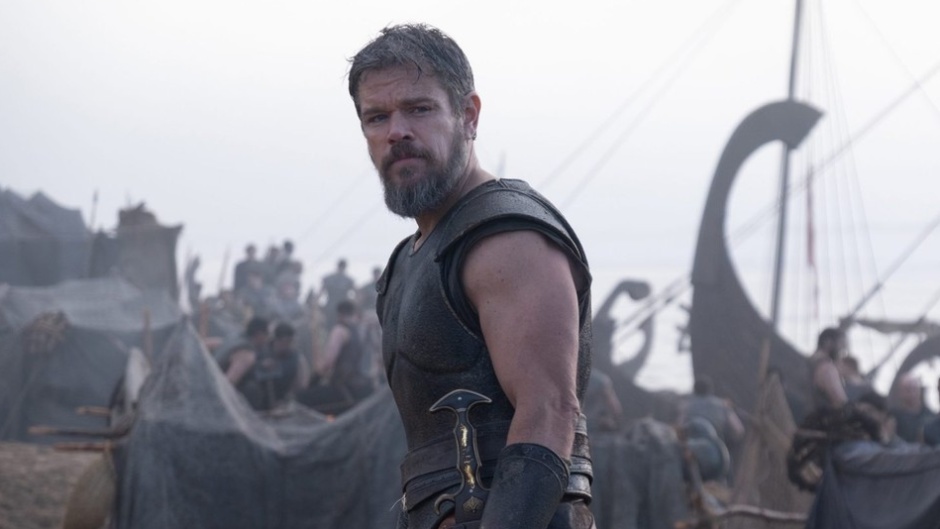
Odysseus conquers Troy with an army and the help of a wooden horse he built himself. After a ten-year siege, he finally wants to go home. But he finds himself seemingly hopelessly lost at sea.
Together with his comrades, he battles not only storms and whirlpools along the way, but also a Cyclops, a witch, giants and singing sirens – those magical creatures who drive men mad with their voices.
All Evangelical Focus news and opinion, on your WhatsApp
Yes, he even descends into the underworld. And all this only to return to his beloved wife, Penelope.
A story not only destined to be retold over the centuries and constantly adapted for books, but definitely one for the big screen as well. None other than star director Christopher Nolan (‘Inception’, ‘Interstellar’, ‘Oppenheimer’) has now taken on Homer’s pre-Christian work and put his very own stamp on it.
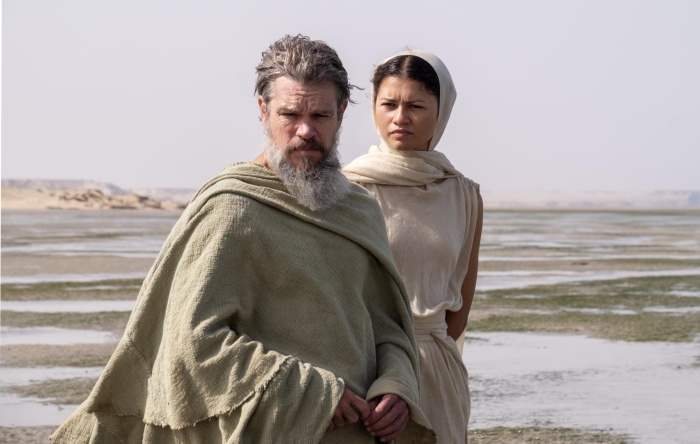
For in Nolan’s version, the war hero Odysseus becomes a broken man; the one cursed by the gods becomes someone who cannot live with his own guilt; and the hero inside the Trojan Horse becomes one who, like Adam, brings sin into the world.
Spoiler alert! To explain how Nolan was able to reinterpret the “Odyssey” in such a Christian light, a few spoilers are necessary. So anyone who still wants to enjoy the film to the full – and this is highly recommended for both cinema and mythology fans – should stop reading here and only continue after watching the film.
Guilt and atonement
“God helps those who help themselves,” says Odysseus. The soldiers have just blinded a Cyclops on a deserted island; the sea is churning. The men speculate that the monster must have been a son of Poseidon, and that the sea god is now furious. Odysseus brushes this aside with some wise words. This isn’t about gods. It’s about what people do – which is presumably what the director wants to say as well.
Together with his comrades, Odysseus battles storms and whirlpools, Cyclops, a witch, giants, singing sirens. He even descends into the underworld
The story is also well known: for ten years, Odysseus and his men lay siege to the city of Troy, but its walls prove impregnable. Then, however, the warriors come up with a new plan. They build a huge, hollow horse, hide inside it and wait. Before long, the enemy, driven by curiosity, fall for the ruse and drag the horse into the city. During the night, the warriors led by Odysseus climb out and conquer Troy from within.
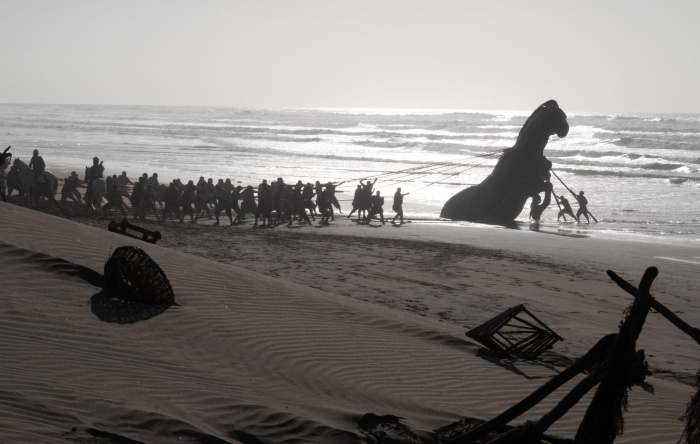
The Trojan Horse
A story that, until now, has primarily focused on the cunning of those who built the horse. Nolan, however, sees it differently. In his version, Odysseus realises in the course of his journey that he has in fact brought not wisdom to the world, but death and destruction. To misuse a gift, he says at last, as a weapon – as a gateway to death, to war crimes and the murder of the Trojans – is inhuman.
But now this Pandora’s box has been opened, and others will make use of precisely the same means: discord instead of hospitality, greed instead of charity, bloodlust instead of compassion, a curse instead of a blessing.
So, in the end, it is not the gods who cause Odysseus to wander aimlessly.
Now Pandora’s box has been opened: discord instead of hospitality, greed instead of charity
Later, beguiled by the solitary nymph Calypso, who first rescues him and then robs him of his memory for seven years, it becomes clear: she could never have erased his memory had he wished to remember. But the burden of guilt weighs too heavily. Odysseus must acknowledge it, atone for it, and then finally submit himself to the gods and to fate in the harsh winds of the sea in order to return home. Letting go of himself and his ego.
What a story – a twist Homer could hardly have envisaged. Nolan, however, transforms the ‘Odyssey’ into a tale of guilt and atonement. He imbues Greek mythology with a Christian spirit.
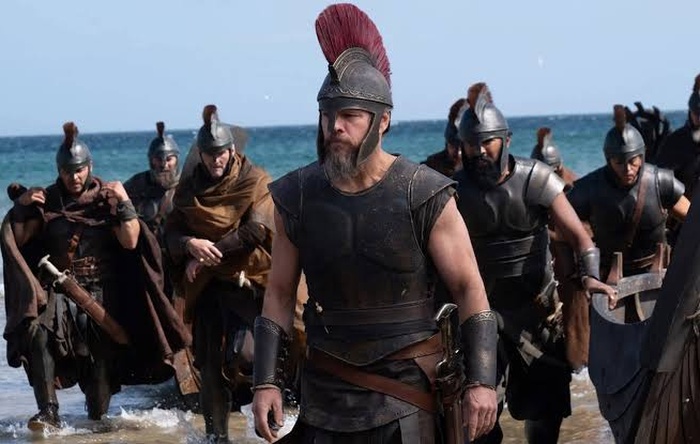
Christopher Nolan: A storyteller of our time
This demonstrates once again that Nolan is perhaps one of the finest storytellers of our time. He ventures into science fiction, mythology and thrillers. The fact that his productions are usually expensive and realised with the help of numerous special effects obscures the true strength of his films: it’s actually less about spectacular or terrifying monsters, mind-blowing spaceships and time-travel sequences. Nolan moves us through his characters.
Christians: here a true Greek classic is telling an audience of millions a completely fresh story of forgiveness and repentance
Some may still remember *Memento* and its protagonist Leonard Shelby (Guy Pearce), the police officer who lost his short-term memory and who resonated so deeply with the audience precisely because Nolan told his story in reverse order to demonstrate Shelby’s limited perception. To this day, incidentally, it remains a film that is second to none.
It is these stories and fates that keep his audience awake long after the cinema experience is over. Odysseus, Cooper, Cobb and all the others remain unforgettable, lodged in the mind and the heart. And that is what defines great literature, great theatre and, indeed, great cinema.
Incidentally, even before the film’s release, there was a debate amongst Christians regarding the film’s casting. Firstly, because the beautiful Helen is played by the Black Oscar-winning actress Lupita Nyong’o, who does not necessarily look typically Greek. And secondly, because one of the warriors in Odysseus’s army is played by Elliot Page, who publicly declared in 2020 that he was transgender and changed his first name.
One might well ask whether the controversy over the casting distracts from what is actually important for Christians: namely, that here a true Greek classic is telling an audience of millions a completely fresh story of forgiveness and repentance.
This article was first published in German by Pro Medien Magazin, and translated into English with permission.
Do you see a need for this kind of journalism?
Through news, interviews, opinion and analysis, we seek to build bridges between evangelical churches and the societies in which they live.
As a non-profit entity, the big challenge is to be sustainable, month by month. We invite you to make a difference! Join the readers who make Evangelical Focus possible.
Published in: Evangelical Focus - European perspectives - The Christianisation of ‘The Odyssey’: Here’s what Christopher Nolan’s new film is about