
The eclipse clockmaker
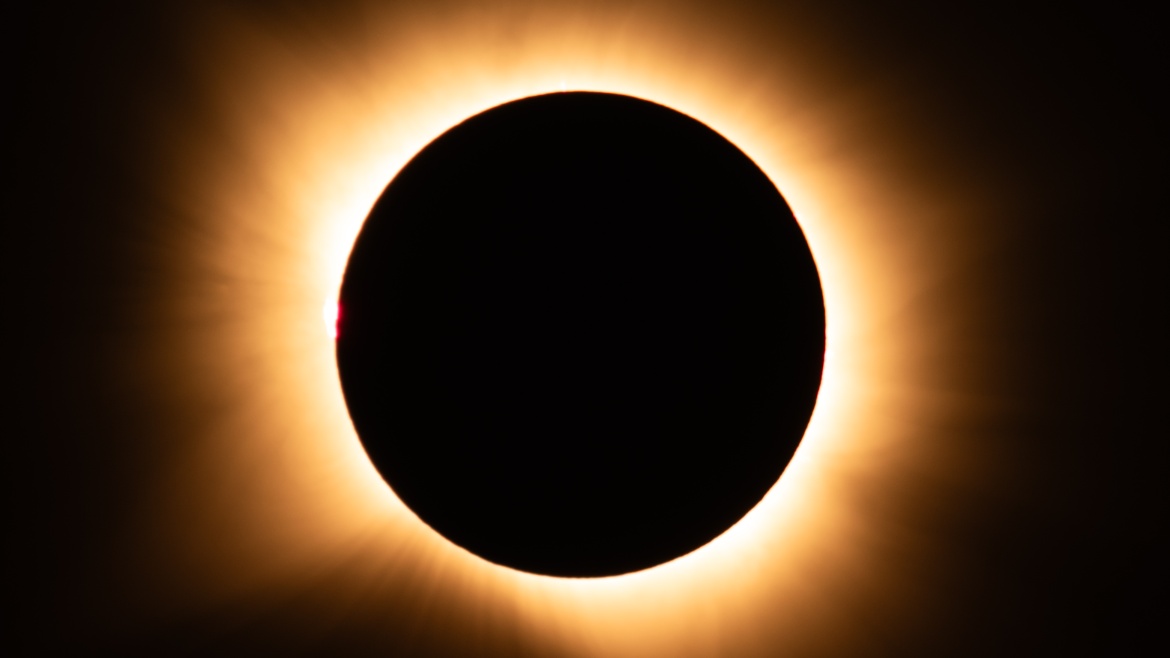
On 12 August, it was thrilling to see how, after the darkness of the eclipse, the moon continued its orbit and a sliver of sunlight appeared at the edge. Then, the sun shone again, radiating its full power to generate light and life.
13 AUGUST 2026 · 12:09 CET
The Sun rotates upon its axis and orbits around the centre of the Milky Way. Around it, the Earth traces an ellipse each year, giving rise to the seasons, whilst also rotating on its own axis, generating day and night.
And around the Earth, the Moon orbits whilst rotating on its own axis, producing, for example, the tides. All these rotations, so precisely synchronised with one another, allow this blue planet, in a corner of the universe, to sustain life with its circadian rhythms.
All Evangelical Focus news and opinion, on your WhatsApp
On 12 August, all these immense rotations lined up to amaze us with a solar eclipse, an alignment that follows well-defined and verifiable patterns
I have great admiration for my agnostic friends. The world, as they see it, came into being through impersonal chance, like a billiard ball striking others and setting them rolling, scattering them at random. In this astonishing coincidence, one must believe that every so often these balls—which set off rolling as they pleased—align with mathematical precision and fall back into line after a defined period with a worrying degree of regularity. Undoubtedly, my agnostic friends show remarkable faith to be satisfied with this explanation.
Today I thought of the Huguenots, French Protestants subjected to genocide and expelled from their homeland to places such as Geneva; there they established the Swiss watchmaking industry. As Max Weber explains, they rejected luxury and so renounced jewellery, channelling their professional excellence into crafting the most precise timepieces. As the famous Swiss watchmaker Vacheron Constantin said, ‘Do it better if possible, and it is always possible’, literally following the instructions in Colossians 3:23: ‘Whatever you do, work at it with all your heart, as working for the Lord’.
Rather than billiard balls scattered at random, it seems more plausible to me to understand the workings of the world as those of an immense Swiss watch in which every cog, every balance spring, every balance wheel, every star, every planet, every satellite, every orbit, was beautifully and precisely designed by a meticulous watchmaker who one day set the pendulum in motion with a single purpose: to create the right conditions to allow life on Earth. When we gaze upon an eclipse, we realise the immense, precise and intelligent perfection of that clock, designed and set in motion by someone marvellous.
The darkness of Jesus’ death was not able to remain. It fled, and the light of life returned to remain amongst us forever
Yesterday it was thrilling to see how, after the darkness of the eclipse, the moon continued its orbit and a sliver of sun appeared at the edge, then a quarter, and then the moon scurried away until the sun shone forth in all its glory, with its full power to generate light and life. Nor was the darkness of Jesus’ death able to remain; it fled, and the light of life returned to remain amongst us forever.
X. Manuel Suárez, medical doctor, member of the Spanish Evangelical Alliance board.
Do you see a need for this kind of journalism?
Through news, interviews, opinion and analysis, we seek to build bridges between evangelical churches and the societies in which they live.
As a non-profit entity, the big challenge is to be sustainable, month by month. We invite you to make a difference! Join the readers who make Evangelical Focus possible.
Published in: Evangelical Focus - European perspectives - The eclipse clockmaker