
Drumcree: How should Christians respond?
Two Christian duties are in tension here. On one hand, the New Testament tells us to submit to the authorities and honour the law. On the other, we are called to live at peace with others.
15 OCTOBER 2026 · 15:29 CET
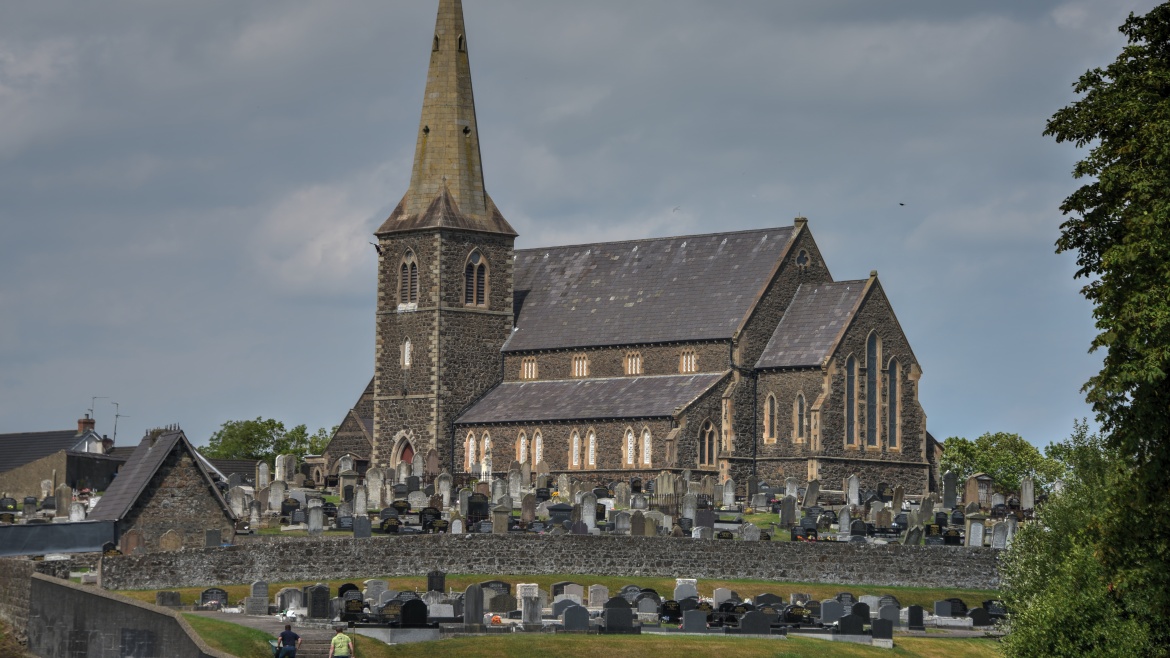
Drumcree is a rural townland in County Armagh. It should be a peaceful place – a quiet backwater, unknown to most people who do not live in the area. But many people know the name ‘Drumcree’ as a byword for tension – even conflict – between two historic communities.
What is happening in Drumcree?
The history of the Drumcree situation is long and complicated. Like many people of my generation, I remember the lengthy stand-off and violent clashes of the late 1990s, although the situation has been conflicted since the 1870s.
All Evangelical Focus news and opinion, on your WhatsApp
It concerns the route by which members of the Orange Order walk home from a church service in Drumcree Parish Church.
The Order is a Protestant fraternal organisation dedicated to preserving and promoting the Protestant faith and retaining Northern Ireland’s place within the United Kingdom.
When its members first walked to and from the church building in Drumcree in 1807, the routes they used were country roads with few residents. In the 1960s and 1970s, new housing estates were built along one of these roads – the Garvaghy Road.
Initially intended to have mixed Protestant and Catholic populations, during the Troubles (the inter-community conflict that ran from 1969 to 1998), like many areas of Northern Ireland they became overwhelmingly Catholic and nationalist.
Part of the peace process in Northern Ireland and a direct result of the Drumcree situation was the setting up of a Parades Commission. It is intended to be independent of government and impartial.
Any parade must be notified to the Commission and approved by it, while any protest against a parade must also be notified to be legally authorised.
Since 1998, the Parades Commission has refused repeated applications by the Orange Order to walk to Portadown along the Garvaghy Road after its service in Drumcree Parish. That is until a judicial review ruled that there had been flaws in the Commission’s decision-making process.
Since 1998, the Parades Commission refused repeated applications by the Orange Order to walk to Portadown along the Garvaghy Road after its service in Drumcree Parish. That is until a judicial review ruled that there had been flaws in the Commission’s decision-making process
A fresh application by Portadown District Orange Lodge on 3 September 2026 was approved by the Parades Commission on 25 September 2026, subject to conditions: a maximum of 35 participants; an early time on Sunday 27 September from 8am to 9.30am; no accompanying bands, supporters, flags or banners.The Garvaghy Road Residents’ Coalition immediately launched a legal challenge to this decision. A temporary injunction on the parade was issued by the courts and High Court judges sat through the night to reach a ruling in the early hours of the planned date for the parade.
The ruling dismissed the residents’ application for a judicial review and upheld the Parades Commission’s decision to allow the parade. Protestors then blocked the Garvaghy Road and, fearing the potential for violent clashes, the police prevented the Orangemen from passing along the route.
At the time of writing, the Orangemen continue to wait at Drumcree Parish Church, insisting they have the legal right to walk the route, while the Residents’ Coalition continues to insist that the march cannot proceed.
Politicians have sided with both parties in the dispute – Unionists supporting the Orange Order’s claim to a legal right to walk and Nationalists supporting the residents’ claim to a legal right to live peacefully in their own homes.
First Minister Michelle O’Neill of Sinn Féin stood with protestors blocking the road on Sunday 27 September and has repeatedly said that right is on their side.
Unionists have called her actions law breaking and a breach of her pledge of office and the police have begun investigations into alleged illegality.
The Secretary of State for Northern Ireland (a minister in the UK government) called representatives of both sides to talks to seek a mediated resolution, but agreement could not be reached.
On 5 October, the Court of Appeal in Belfast heard arguments about whether the Parades Commission approval of the march was lawful, specifically whether it gave enough weight to police data about potential violence. At the time of writing (October, 7), the judges have reserved their judgement.
What do both sides think?
What are Christians to think about this situation? As a Christian living in Northern Ireland and committed to this context, I find myself torn and confused, but above all saddened.
Rather than tell readers what they should think, I want to outline my understanding of the perspective of both sides in the dispute.
I am not quoting any real person, but what I say in what follows reflects what I have heard people say in media reports and in personal conversations.
- The right-hand side is from the perspective of the Orange Order and Unionists. The left-hand side is from the perspective of the residents and Nationalists.
- We have walked this route since 1807.
- We live on this road.
- We simply want to walk home peacefully from a church service.
- There are other routes you can use.
- We are a small number of men, many of us old.
- You represent a history of oppression of our people.
- We pose no threat and will not harm anyone.
- Your presence retraumatises us because of past events.
- The past needs to be the past. there’s trauma on both sides.
- But our trauma on this street is because of your actions.
- The law is on our side, we have a legal right to walk.
- The law can be wrong. this is a matter of right and wrong.
We may use the same words: peaceful and fair, but may have different ideas about what is fair and different terms for peace. The division runs deep. It is not easy currently to see a way forward that can satisfy both sides
- Without the rule of law there can be no peaceful society.- Civil disobedience is legitimate where there is injustice.
- The whole point of the Parades Commission was to be independent.
- But the courts might decide its ruling was unlawful.
- But as things stand your protest is definitely unlawful.
- We just want to live in our homes without intimidation.
- We just want to walk the King’s Highway, anyone should be free to do so peacefully.
- We’re not going back to the past of forcing parades on unwilling communities.
- We see no future together if we can’t express our culture.
- We see no future together if you try to impose your politics.
- We are law-abiding citizens, unlike the First Minister who is supposed to lead for all.
- This is our home and the First Minister is protecting our rights.
- In the end of the day, it’s about a peaceful and fair future for all.
- In the end of the day, it’s about a peaceful and fair future for all.
I hope this gives some sense of the complexity of the situation. Notice I have ended with the same words on the lips of both sides. I do so in hope that this may give some hope for a way forward, but not naively.
We may use the same words – peaceful and fair – but may have different ideas about what is fair and different terms for peace. The division runs deep. It is not easy currently to see a way forward that can satisfy both sides.
Two Christian principles in tension
When it comes to finding a genuinely Christian perspective, where are we to go?
Before commenting on that, I want to make it clear that I am not and never have been a member of the Orange Order or of any political party.
I am not concerned in this post with the big political question of the future of Northern Ireland. within the UK or as part of a united Ireland. My concern is to help towards a Christian response.
Two Christian duties are in tension in this situation. On one hand, the New Testament tells us to submit to the authorities and honour the law (Romans 13; 1 Peter 2).
On the other, we are called to live at peace with others (Romans 12:18) and commanded to love our neighbours as ourselves, and love entails laying down our own rights for the sake of others as the Lord Jesus did (Philippians 2:3-4).
If we prioritise the first of these principles, we may say that the Parades Commission’s determination should stand. The residents should turn a blind eye for a short time while the Orangemen walk past.
If, however, we follow the second principle, we may argue that the Orangemen, who claim to be Christians, should lay down their legal right in the interests of their neighbours.
I can see the case for both positions. I understand why I have heard both of the following comments from reasonable and godly Christian people:
-
Why can’t the residents just let the parade happen and stay at home or protest quietly without blocking the road so we can all live together in peace?
-
Why can’t the Orangemen take the moral high ground and say they’ll go home a different way so we can all live together in peace?
The big question is how we can envisage a shared future in this part of the world. If we cannot agree on the rule of law and follow rulings of the institutions set up to help communities live together, I wonder, how can we have a shared future?
As things stand, neither of these appears to be an option. So what should Christians do? Christians are called to be peacemakers (Matthew 5:9).In the short term that might seem to mean that Christian men – which the Orangemen claim to be – should leave peacefully without asserting their rights. But, they may well reply, what about the long-term?
And presumably some on the other side also profess to be Christians (although I have not heard any of them saying so publicly or standing in prayer as the Orangemen have), so can it not be equally argued that they need not lay down their rights?
The big question for me is how we can envisage a shared future in this part of the world. If we cannot agree on the rule of law and follow rulings of the institutions set up to help communities live together, I wonder, how can we have a shared future?
I hear the questions of Protestant people: does Orange and Protestant culture have a place in the future united Ireland that Nationalists aspire to?
I suppose someone might ask: ‘Does it matter if it does not?’ And I can imagine the rebuttal too: are Orangemen and unionists simply unwilling to lay aside the sense of privilege they enjoyed for so long in Northern Ireland?
Whichever side one takes, I think we all need to ask: is short-term peace in tension with long-term harmony? Does a shared future mean laying aside everything about our history?
If not, then what can we lay aside and what must we tolerate for the sake of co-existence? There is a great emotional weight on both sides associated with Drumcree. We need healing for wounds and that will require patience and kindness. Ultimately, it needs the work of God.
How are Christians to respond?
I have deliberately not brought this discussion to a conclusion. I leave it to the reader to settle his or her own mind. But I do want to suggest three practical things Christians can do as they watch on.
This is not a cop out, but I do think our words and actions will matter more in this moment than our private thoughts. Whatever conclusion we reach about what should happen at Drumcree, these are three things I suggest we can do.
Firstly, we can pray
We must pray for people on both sides to seek moderation in their speech and actions and to work towards a resolution. We should pray that those who might threaten or commit violence would not follow through.
We can pray that political leaders will help to dampen down the situation and reach out in search of reconciliation. Christians have a duty to pray for those in leadership in society, whether we agree with their perspective or not (1 Timothy 2:1-2).
Our desire should be freedom to live in accordance with God’s word, loving our neighbours of all backgrounds and sharing the gospel of Jesus Christ with all.
There is also space in our prayers for the kind of lament modelled in the Psalms. Lament for past trauma and present hard-heartedness. And that must also cause us to examine our own hearts. Are we sectarian in our sentiments? Are we prejudiced in our prayers? Are we tribal in our thoughts?
May the Lord soften my heart to love as He does and to hunger and thirst for His righteousness to be known by all (Matthew 5:6) and for His sacrificial love for all to be known to them (John 3:16).
Secondly, we can speak wisely
Christians also have a duty to honour those who hold positions of power (1 Peter 2:17). This means we must not write people off just because we disagree with their stance.
I have found myself tempted towards a simplistic conclusion that the rule of law is what is most foundational, but then I am reminded that where there is genuine injustice civil disobedience may be necessary and right.
I can envisage situations – not currently in Northern Ireland but hypothetically – in which I could not obey the law – if it required me not to preach the gospel or the Scriptures (like the apostles in Acts 4).
But then a person in office in a post-conflict context like this must surely accept the legal framework that is in place to keep us peaceful. Or must they?
Whatever I think about this, I want to fairly understand those who reach a conclusion other than my own, I want to speak kindly about them, and I want to thank God for them.
Thirdly, we can seek to be peacemakers
We are not simply content to find a way to co-exist; we should long for a future in which people of all backgrounds can seek a shared vision of what is good. This relates to the first two points.
It starts with prayerful humility. It continues with wise speech. But it also needs to flow into acts of sacrificial love. I am not yet sure what that means in the specific situation in Drumcree.
I offer a few preliminary thoughts:
-
If we have connections across the divide, we can let them know we are praying for them.
-
We must avoid making or sharing inflammatory posts or unverified claims online.
-
We may be involved in local reconciliation work and cross-community activities.
-
We must evangelise across the divide, knowing that eternal peace is only found in Christ.
This is not about giving up our preferences for either a continued United Kingdom or for a united Ireland. It is legitimate for Christians to hold either position. But whichever future we prefer, we must attend to healing for the lives of people in our current situation.
That certainly includes emotional healing from past trauma, but it ultimately means the life-giving power of God who alone can forgive sins and give eternal life.
What we truly need is the shalom (peace) of God and only God can bring that, though we can be instruments in His hands.
A closing call to ‘cross the road’
I continue to pray that I and my fellow Christians of all political shades in the six counties that some call ‘Northern Ireland’ and others call ‘the North’ may have the courage to be like the archetypical neighbour lover in one of Jesus’ parables – the Good Samaritan (Luke 10).
I am not seeking to walk down a road or to stop others doing the same, but I pray that I might cross the road to bless the wounded person if that is what love requires, even at cost to myself and when I see myself as the outsider.
Paul Coulter, author, executive director of the Centre for Christianity in Society in Northern Ireland. This article was first published on the author's blog, Connected Christianity. If you would like to be informed when the Christian Leadership Integrity Commitments are released, please subscribe to this blog.
Do you see a need for this kind of journalism?
Through news, interviews, opinion and analysis, we seek to build bridges between evangelical churches and the societies in which they live.
As a non-profit entity, the big challenge is to be sustainable, month by month. We invite you to make a difference! Join the readers who make Evangelical Focus possible.
Published in: Evangelical Focus - European perspectives - Drumcree: How should Christians respond?