
‘Scars in the name of faith’, a journey of pain and healing
An interview with Lina Montoya, a psychologist specialising in psycho-spiritual support for survivors of abuse of power in church contexts.
03 NOVEMBER 2026 · 10:30 CET
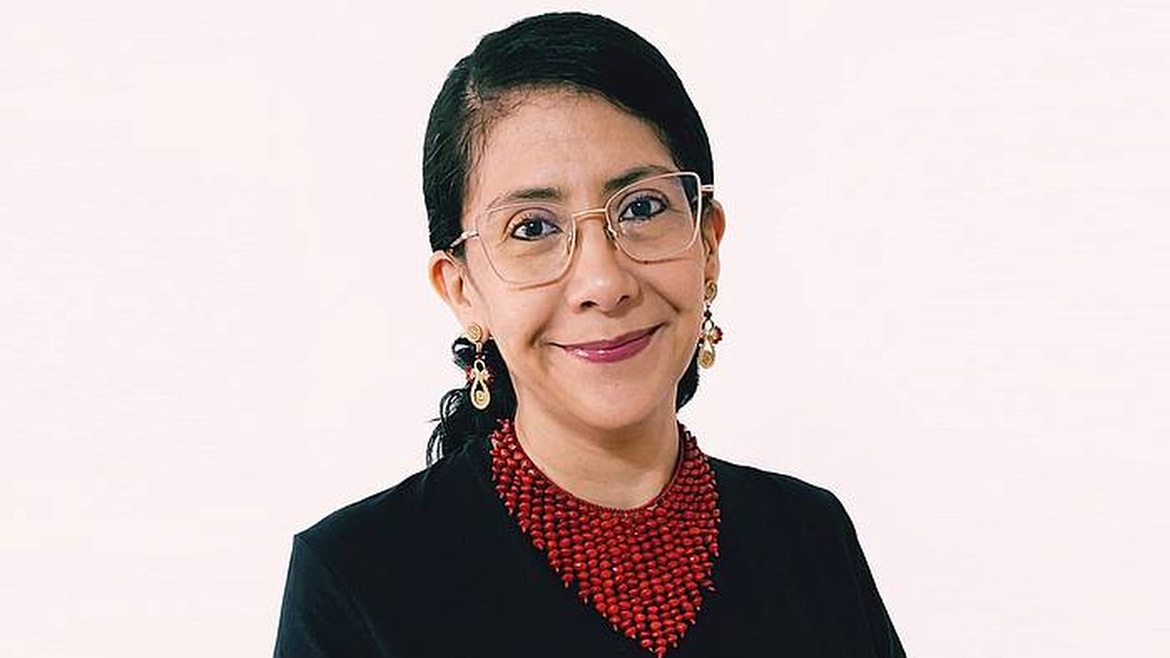
Lina Fernanda Montoya is from Colombia, the land of coffee, cumbia, sanjuanero and chontaduro.
When she was about five years old, she saw her great-uncle reading the Bible. He told her that it was a very important book about God, but that you had to know how to read it, otherwise you could go crazy. That did not scare her, it made Lina curious.
All Evangelical Focus news and opinion, on your WhatsApp
She has lived in Cali, known as 'the branch of heaven', since she was eight. She moved there when the bosses of her mother, who was a domestic worker, offered her a job and took her and her mother in. That is uncommon in Colombia, where many domestic workers have to leave their children in the care of others or even alone. Lina grew up under the love and care of her mother.
Lina's Christian life has been very organic, partly because she has been part of three different congregations, where she has asked questions, expressed her disagreements, and learned
She spoke to God from a young age and knew that He was present in her life. When she was 14, a friend from the neighbourhood invited her to a youth group at a Christian church. There, the leader began to help her frow in the Christian life.
Lina's Christian life has been very organic, partly because she has been part of three different congregations, where she has been able to ask questions, express her disagreements, and learn much in Bible studies, discipleship programmes, retreats, and camps.
She attended a Wesleyan church and a Baptist church. They now attend a Reformed Baptist church. In almost 28 years of following Jesus, she has witnessed visible miracles and, above all, the work of God in her heart and mind.
Rather than crises of faith, Lina explains she has experienced doctrinal crises and has learned to walk with faith in Jesus Christ amidst uncertainty.
She met her husband, Darío Oliveros, a musician and university lecturer, at the Baptist church and has experienced unconditional love with him. They have been together for 15 years and have an 11-year-old daughter and a seven-year-old son.
As a psychologist, she specialised in community development and psychospiritual care
Montoya has also received additional training in logotherapy and peacebuilding. She is a lecturer in the Faculty of Humanities and Social Sciences at both the Pontificia Universidad Javeriana Cali and the Fundación Universitaria Bautista.
The trauma experts co-founded the Colombian Network Against Abuse in Spaces of Faith (RedCAFE). Since 2019, she has focused on providing psychospiritual support to survivors of religious abuse of power.
I spoke to her ahead of the publication of her debut novel, Cicatrices en nombre de la fe (Scars in the name of faith), with a foreword by Almendra Fantilli and myself. It is available on Amazon platforms from 3 November.
Question. Lina, when did you first feel the need to write Scars in the name of faith, and why?
Answer. Between 2022 and 2023, several of my clients receiving counselling for spiritual abuse told me that I "should write a book about this reality".
They said the book should denounce the problem and educate people to prevent such abuse within Christian congregations.
Furthermore, one of them said that a book like this would help psychologists to understand how to treat these cases because, before meeting me, she had been to several psychotherapists who did not understand her experiences and avoided addressing the psycho-religious trauma.
Those arguments reminded me that, in order to support victims of armed conflict and those demobilised from illegal armed groups, psychologists had to learn about the history, dynamics, and psychosocial trauma of the conflict to be able to provide timely and relevant care.
Q. What are you trying to communicate with the title of your book?
A. Every scar, whether on the body or the soul, tells a story of injury, illness or some other kind of impact or hurt.
A scar is a sign of the healing of that story. In this case, it is the healing of a wound caused by religious power — that power which uses narratives of faith to manipulate consciences, bodies, emotions, and behaviours.
"In spiritual abuse, the wounds are not caused by loyalty to Christ, but by loyalty to the desires of religious institutions"
However, in spiritual abuse, the wounds are not caused by loyalty to Christ and his gospel, but by loyalty to the desires of religious authorities and institutions. That's why the title reads In the name of faith.
Q. What do you expect will happen when people read this book?
A. I hope that people being harmed in churches will understand what they are experiencing and make informed decisions that protect and dignify them.
For survivors of religious abuse of power, I hope the book will guide them on their continued healing journey, helping them to forgive and, especially, resignify their experience of faith in Christ.
I hope that leaders and believers who are called to prevent spiritual abuse and care for its victims will find the conceptual and practical foundations they need to mitigate the risks and become the sensible and compassionate companions that those who have experienced psychoreligious trauma require.

Q. I think the testimony section is very special. The way you give them flower names shows your love and sensitivity towards the subject. How did you come up with this idea?
A. I knew that I didn't want to present the testimonies as impersonal or distant data. I wanted to breathe life into the stories of such intimate events that were generously shared with me during consultations.
One day, while observing the lilies that my daughter — who also has a flower name — was caring for, I had the idea of asking those who had shared their stories to select the name of a flower that represented their experience. The exercise turned out to be quite therapeutic.
Each participant did their own research and then shared the description of the flower they had chosen.
This process honoured the brave voices, gave them a starring role in the book, and encouraged readers to approach the testimonies with the same care with which they would observe or touch a flower.
"I knew that I didn't want to present the testimonies as impersonal or distant data. I wanted to breathe life into the stories of such intimate events that were generously shared"
A. There are several definitions of spiritual or religious abuse that helped me understand this issue, which you will find in the first chapter of the book.
However, after comparing literary analyses with cases I have dealt with at a psycho-spiritual level, I have defined it as a type of abuse of power and trust that occurs in interactions mediated by religious or spiritual beliefs and practices.
It differs from other abuses in that it involves the systematic and inappropriate use of symbols, narratives about God, and biblical texts to control thoughts, emotions, and actions in order to obtain certain benefits.
This type of abuse undermines dignity and autonomy, altering interpersonal relationships due to the resulting distrust which transforms perception and the ways in which people connect with others.
Q. In the book, you distinguish between concepts such as abuse of power, spiritual abuse, abuse of conscience, and spiritual violence. Why do you think these distinctions are important, and what does the concept of 'abuse of conscience' bring to the discussion?
A. These concepts overlap, but each one reveals a specific aspect of abusive practices within churches. These definitions are necessary to distinguish between the types of violence that occur both in asymmetrical relationships and amongst peers within the religious experience.
"The mistake is to rush to solve other people’s problems without helping them to depend on God more, without analysing their situation, without fostering their autonomy"
Q. You also talk about 'ecclesial iatrogenesis', which refers to practices that may be carried out with good intentions but end up causing harm. Where would be the line between legitimate pastoral guidance and abusive practices?
A. There are leaders who, with the very best of intentions, often give inappropriate advice disconnected from the Gospel trying to defend what they have defined as 'sound doctrine', usually based on their own experience.
The mistake here is to rush to solve other people’s problems without helping them to depend on God more, without thoroughly analysing their situation and without fostering their autonomy and dignity.
In such cases, abusive behaviour is generally not recognised, and there is an urgent need for training to prevent further harm.
These people probably have a distorted view of the Gospel and believe that Jesus needs defending, but our Lord does not need to be defended. He needs to be proclaimed and manifested through acts of love, service, and justice.
In cases of iatrogenic behaviour, there may be emotional manipulation, but those involved probably never commit deliberate acts such as sexual abuse or financial fraud.
Legitimate pastoral care is rooted in giving glory to God and loving one's neighbour. The latter means that pastoral care should focus on nurturing the individual and helping them to grow in their faith in Christ without compromising their dignity, freedom, and autonomy, just as Jesus did.
The boundary starts in the heart by thinking about why I do what I do, and examining whether my leadership is like that of Jesus.
Q. Another innovative aspect of the book is your concept of 'psycho-religious trauma'. What do you mean by this concept?
A. This refers to the fact that the harm experienced within a church context is rooted in the unhealthy logic of religious structures rather than any emotional or psychological fragility on the part of the individual.
Unlike other forms of trauma, its causes are intrinsically linked to specific religious beliefs, practices, symbols, and systems.
Naming the wounds caused by religious institutions in this way helps to identify the harm and provide the necessary treatment, as dealing with these issues must be the responsibility of faith communities.
If the effects are merely categorised as post-traumatic stress disorder, it might seem that no one is to blame for the harm, and therefore only the victims are responsible for healing those wounds.
Q. Can spiritual abuse exist without the community being aware that it is part of an abusive dynamic?
A. I believe that, even if they do not label it as such, the community does feel that something is not right.
"We are creatures of habit and can become used to mistreatment in church, especially when it is justified in the name of faith"
Sometimes 'learned helplessness' sets in: after seeing others leave due to mistreatment or being intimidated for disagreeing, many assume that nothing will change and carry on as if nothing had happened.
That is what happened at Solid Rock with Pastor J. P. Miller: some left when they became aware of his manipulation and abuse, while others stayed despite knowing about it. In other cases, such as with the church’s board of elders or the Southern Baptist Convention, church pride and the desire to maintain a prosperous image led to overlooking the unacceptable.
However, complete ignorance is rare; it usually occurs among irregular churchgoers or when the abuser hides behind a very effective façade. We are creatures of habit and can become used to mistreatment in church, especially when it is justified in the name of faith.
Q. You suggest that a church wanting to prevent abuse needs care and restoration protocols. What is required for a protocol to be an effective protection tool?
A. Firstly, a biblical reflection on abuse and a clear description of the problem. This cannot be done merely to look good, but must be the result of profound reflection on spiritual abuse and the risks within the congregation itself.
Based on that, it must set out its biblical foundations and include preventative measures; channels for receiving, investigating and addressing complaints; a clear process with designated responsible parties at each stage (ideally a standing ethics committee including an external, exemplary and wise believer); reporting to the authorities in cases of offences against children; guidance for adult victims on how to report the abuse; and support for both the person making the allegation and the person against whom it is made.
Finally, the protocol must be communicated throughout the congregation, not only by making the document available, but also by educating members on why it was created and its significance from a Christian perspective.
Q. What would you say to someone who has been hurt in a church and feels they must renounce their faith?
A. Firstly, I would tell them that I am sorry for what they went through. It should never have happened and God is outraged by such acts. They are right to reject the faith carelessly taught to them; a faith that is mere smoke, tainted by human vanity.
"I encourage victims to rebuild their lives through a contemplative and everyday experience, recognising God's presence at every step"
I encourage them to rebuild their lives through a contemplative and everyday experience, recognising His presence at every step.
Q. How has writing the book and hearing so many stories changed you?
A. Writing this book was like a continuous devotional, praying for those who suffered where they should have found care and for their abusers, that they might recognise their actions and seek to make amends for the harm caused.
I realised that the authority God grants is to love and serve; His Kingdom is an upside-down Kingdom.
I know that I am part of the body of Christ, beyond any particular congregation or denomination. My identity is in being His daughter and seeking first His Kingdom and His righteousness.
It was an experience that connected my profession and my faith. I experience the generosity of those courageous voices as a miracle.
I have seen dry bones filled with the breath of God, and although scars remain, my sisters and brothers walk in the hope that only He provides.
Asun Quintana, evangelical pastor in Madrid and president of the Christian advocacy group Seneca Falls, in Spain.
Do you see a need for this kind of journalism?
Through news, interviews, opinion and analysis, we seek to build bridges between evangelical churches and the societies in which they live.
As a non-profit entity, the big challenge is to be sustainable, month by month. We invite you to make a difference! Join the readers who make Evangelical Focus possible.
Published in: Evangelical Focus - European perspectives - ‘Scars in the name of faith’, a journey of pain and healing