
A voice of faith at COP30: Lessons learned from Belém
I participated in the major global summit on climate change held in Belém do Pará, Brazil, accompanying young leaders to experience COP from a Christian and missionary perspective.
Protestante Digital · Belém do Pará · 19 DECEMBER 2025 · 10:26 CET
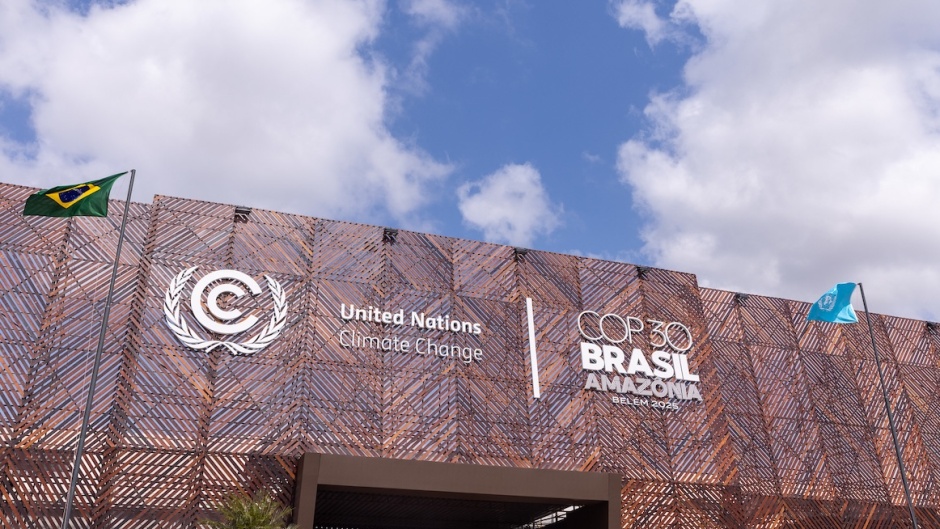
Thousands of people from around the world—government leaders, scientists, young people, indigenous peoples and faith communities—gather in the heart of the Amazon to discuss the future of the planet. That is what I experienced at COP30, the major global summit on climate change held in Belém do Pará, Brazil, in November.
It was a privilege to be there: an opportunity to contribute from a position of faith, to accompany young leaders and to gain a deeper understanding of how multilateral processes such as these affect the wider world.
What happens at a COP is complex.
All Evangelical Focus news and opinion, on your WhatsApp.
On the one hand, there are the official negotiations, where countries seek agreements to tackle climate change and reduce the negative impact on vulnerable populations. At the same time, there are many pavilions, talks and exhibitions where governments, organisations and observer delegates share experiences and also influence the negotiation process.
But around all this, there are multiple parallel activities – marches, forums, citizen meetings – that remind us that the climate crisis affects real people, not statistics.
55,000 guests near the jungle
This COP30 had special significance because it was held in the Amazon. Belém do Pará, a port city at the entrance to the jungle, welcomed more than 55,000 participants, even though its infrastructure was not prepared for so many visitors.
Many had to stay in houses or even on boats. In my case, we were welcomed by the Bible Societies of Brazil on their ‘Bible Boat’ and then by a Baptist church. The warmth and hospitality we received was a beautiful reminder of how faith is also expressed in how we welcome our neighbours.
I participated as part of the Christian Climate Observer Programme (CCOP), which trains and accompanies young leaders to experience the COP from a Christian and missionary perspective. This was my third COP, after Lima (2014) and Madrid (2019).
Progress and challenges of COP30
Ten years after the Paris Agreement—which committed countries to limiting global warming to 1.5–2°C—the world has managed to partially slow the pace of global warming, although we are still far from where we need to be. That is why there were high expectations for this COP in the Amazon region.
Among the advances achieved, the following stand out:
- More funding to help vulnerable communities adapt.
- Recognition that the transition to clean energy must be fair and equitable, especially for the most vulnerable.
- More countries expanded their emissions reduction commitments.
- The indigenous voice at the COP was amplified more than ever before (+3000 indigenous people), highlighting their role in protecting forests and territory.
However, there were also significant obstacles. No agreement was reached on a roadmap to eliminate fossil fuels or halt deforestation. Even the term ‘fossil fuels’ was vetoed in the final document. This shows how difficult it is to reach consensus when such strong economic interests are at stake.
Paradoxically, some of the most encouraging advances occurred outside the official UN space. Colombia and the Netherlands, backed by 80 countries, announced that they will work together to create a Roadmap for the Elimination of Fossil Fuels, convening an International Conference on Just Transition in Colombia in 2026. These initiatives show that, although global consensus is difficult, there are countries willing to move faster.
Parallel spaces: civil society in motion
While official negotiations progressed slowly, parallel spaces became places where civil society – including faith communities – strongly expressed their voice and commitment to creation.
There were symbolic mobilisations such as the Barqueata dos Povos, where hundreds of boats sailed together in defence of the Amazon, and the Climate March, which brought together thousands of people calling for real solutions.
The People’s Summit, held at the Federal University of Pará, brought together a wide diversity of voices – some 70,000 people, including scientists, academics, farmers, fishermen, young people, women, indigenous peoples and climate justice movements. There, testimonies were shared, pains and hopes were heard, and a joint statement was drafted to present to COP30, calling for climate justice, debt swaps for climate action, protection of territories, and defence of those who risk their lives caring for the land.
Faith communities also played a special role, organising ecumenical meetings, dialogues and a prayer vigil. These spaces served as a reminder that caring for creation is also a spiritual calling, and that the church can provide a prophetic and compassionate voice amid technical negotiations and political tensions.
During COP, a fire in the convention centre forced the evacuation of the negotiation area. For many, that moment felt like a metaphor for a planet on fire, crying out for help.
At the same time, the lush vegetation, heavy rains, persistent humidity and scorching sun reminded us at every turn that we were at the gateway to the Amazon, with its immense natural wealth and vulnerabilities.
Reflections from the perspective of faith
Participating in the COP is a way of responding to the Christian call to care for creation and our neighbours. From the perspective of faith, we can:
- accompany advocacy processes,
- raise a prophetic voice for those who are not heard,
- pray for negotiators and leaders,
- inspire local actions that reflect justice, compassion and hope.
COP30 leaves a bittersweet taste: important progress, but insufficient for the urgency of the moment. But it also leaves signs of hope: countries willing to move beyond the lowest common denominator, a vibrant and creative civil society, and faith communities committed to caring for creation.
Participating in these spaces reminds us that caring for creation is not just a technical or political issue, but a deeply spiritual and relational one. May God continue to guide us to be instruments of peace, justice and restoration in his world.
Juliana Morillo, Colombian, chemist, specialist in the environment and in disaster prevention and response. She has worked with the government, NGOs and UN projects on the environment in Colombia, and for years has been a missionary focused on the issue of caring for creation with the organisation, serving with Latin Link in several Latin American countries and in various networks and church spaces. She currently lives in Bogotá with her husband Ian and their two children.
Join us to make EF sustainable
Learn all about our #TogetherInThisMission initiative here (English).
Published in: Evangelical Focus - Features - A voice of faith at COP30: Lessons learned from Belém