
“Caution that tolerates abuse is a betrayal of the gospel”
The third Interdenominational Forum in Spain addressed violence against women and children and the creation of safe churches. 15 speakers addressed the situation from many angles.
MADRID · 24 NOVEMBER 2025 · 14:03 CET
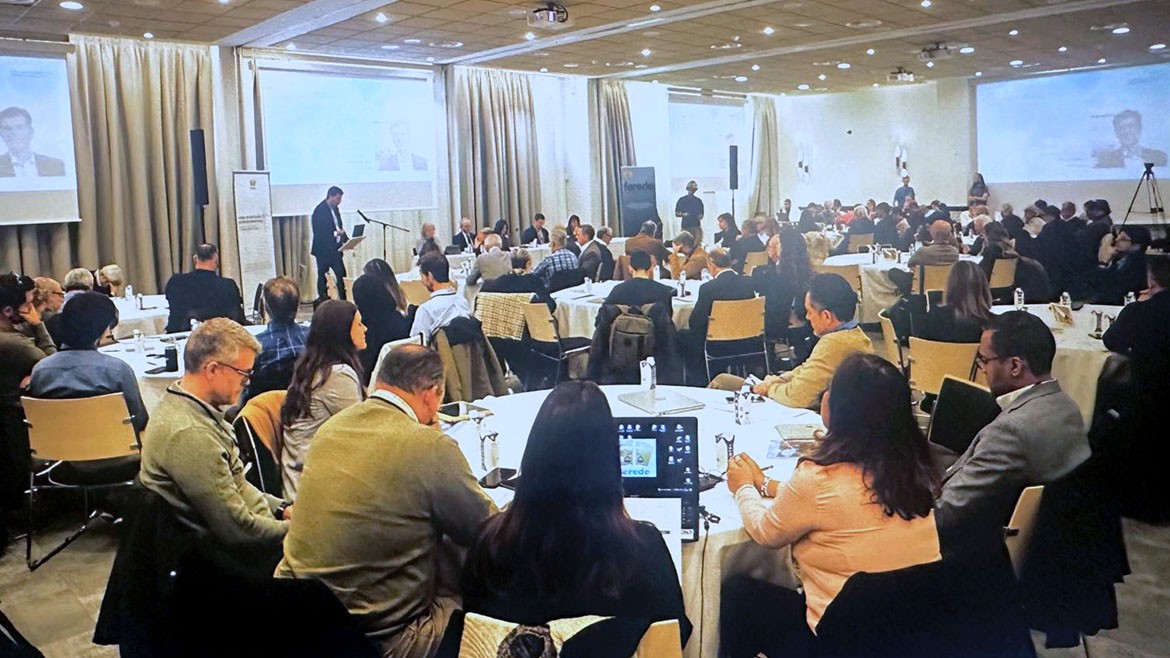
The third Interdenominational Reflection Forum, convened by the Federation of Evangelical Religious Entities in Spain (Ferede), focused on violence against women and children. The one-day gathering in Madrid brought together more than a hundred pastors, specialists and leaders from different denominations on 21 November to analyse the reality from biblical, social, legal and pastoral perspectives.
“We are concerned about the steady stream of news about sexual abuse... it causes unjust damage to the Protestant witness in our country”, warned Carolina Bueno, executive secretary of Ferede, at the opening. Both she and Esteban Muñoz de Morales, evangelical pastor and president of Ferede, emphasised that the church is called to be a safe haven, especially for women and children: “Every abuse and every silence cause harm”.
The gathering, which was intense and participatory thanks to a format of short presentations and spaces for open questions and dialogue at tables, brought clarity to a topic that is not often addressed in a monographic way. The conference highlighted the good work already being done by some entities and organisations in the evangelical sphere, but at the same time showed that there is still much room for improvement in pastoral and ministerial training and reflection.
All Evangelical Focus news and opinion, on your WhatsApp.
Naming violence and refining language
The director of FIET and Project Rescue Spain, Fiona Bellshaw, stressed the need to “name what is happening properly”. She recalled that violence manifests itself in many forms—physical, psychological, sexual, digital, trafficking, intimate partner, vicarious, femicide—and that sexual abuse affects all environments: “One in seven boys and one in four girls suffer abuse; silence and fear hide it”.
She proposed five foundations for a safe church: clear protocols, confidential channels, external alliances, annual training, and responsible communication.
Asun Quintana, president the advocacy group Seneca Falls and of the Working Group on Woman and Society of the Spanish Evangelical Alliance, expressed a similar view. “Violence is only the tip of the iceberg”, she warned, emphasising that there are cultural roots and structures that perpetuate inequality. She recalled that, historically, women have been treated as inferior—a distortion resulting from sin—and that true transformation requires education in equality. Laws help, she said, but they are not enough: if the church does not act, “evil gains ground”. She also warned that spiritual authority should never be confused with violence.
‘Enough with the cover-ups’
Pastor and theologian Eduardo Delás insisted that the lack of reporting creates the appearance of normality: “The habit of not reporting gives evil the appearance of being okay”. He emphasised that Jesus dismantled power structures and called for service, not domination.
He proposed three lines of action: following Jesus with clear words in the face of abuse; de-dogmatising to open the windows to the ‘fresh air of the gospel’; and de-hierarchising spaces where abusive power is reproduced: “It shall not be so among you”.
The legal perspective: the victim is the focus
Lawyer and expert in human trafficking, Ezequiel Escobar, outlined the different forms of gender-based violence, from stalking to economic violence and crimes committed in the name of “honour”.
He reminded the audience that the response must always focus on the victim: “Decisions are made from the perspective of protecting the victim, not from the position of the aggressor”.
Violence and mental health
Psychologist Ester Martínez explained the devastating effects of abuse on the brain of victims: hyperactivation of fear, mental fog, emotional dependence, anxiety and dissociation.
She warned against “minimising what is happening” when a woman or child decides to speak, and pointed out that many stories of violence have cultural, family or even spiritual roots. “Churches must be places of zero tolerance of abuse”, she concluded.
Pastoral intervention: courage and limits
Pastor and family therapist Marcos Zapata, who serves as president of the Spanish Evangelical Alliance and one of the members of Mesa Salmo 15 called for firm intervention.
Zapata presented five key steps in pastoral intervention: Believe the victim and listen without challenging; Act immediately: life is more important than the reputation of the church; Refer to professionals, acknowledging your pastoral limits; Confront sin without false neutrality; and Accompany in the long term, without exposing the victim publicly.
His intervention culminated with a phrase that marked the gathering: “Caution that tolerates abuse is a betrayal of the gospel”.

Fiona Bellshaw, Eduardo Delás, Carolina Bueno, Ezequiel Escobar and Asun Quintana, in one of the panels of the forum on abuse. / Photo: Joel Forster. A biblical denunciation of abuse
In the afternoon session, Andy Wickham of Pontea offered a biblical perspective on sexuality as a sacred reality that, outside of its context, causes deep pain.
He recalled that the Bible does not hide cases of abuse and denounces them openly, as in the story of David and Bathsheba, an episode he defined as “abuse of power and sexual violence”.
Current risks: pornography, trafficking and digital violence
Carolina Sánchez (of Amar Dragoste, working with prostituted women) and Eva Márquez (Diaconía, large evangelical social justice NGO) highlighted the seriousness of pornography, trafficking and new forms of online exploitation and abuse in teenage years.
Raquel Ramón, an evangelical pastor who teaches workshops for young people on the risks of certain behaviours, also called to educate teenagers in understanding the consequences of their actions online.
The age of exposure to pornographic content is around 8 years old, and phenomena such as OnlyFans are attracting teenagers and young people from all social strata. “Denying reality puts us at risk”, they stressed.
Towards truly safe churches
Pastor Julio García Celorio called for the recognition that goodwill is not enough: responsibility, training and accountability are necessary.
The need to detect warning signs, prevent through education and digital skills, intervene without blaming and provide pastoral support was highlighted.
Conclusions
In the final conclusions, Carolina Bueno stated that the church must exercise a prophetic voice and review any perspective that perpetuates inequalities.
Esteban Muñoz de Morales closed the forum by recalling that “the defence of the weak is not optional”, adding that “violence has no place; victims do. We are responsible. We need protocols, resources and constant sensitivity”.
Within this framework, a new Protocol for the Prevention and Intervention in Situations of Violence against Women (in Spanish) was presented, a document developed by FEREDE together with experts as a practical tool for pastors and leadership teams.
The text, with a biblical and legal basis, establishes commitments for action, prevention measures, specific training, and concrete steps to intervene in cases of violence, always prioritising the dignity and safety of the victim.
Join us to make EF sustainable
Learn all about our #TogetherInThisMission initiative here (English).
Published in: Evangelical Focus - life & tech - “Caution that tolerates abuse is a betrayal of the gospel”