
‘Beauty has paid the price for a church obsessed with efficiency’
We speak with pastor and artist Andrés Pérez about culture, spirituality, art and artificial intelligence.
BENIDORM · 27 MARCH 2026 · 17:00 CET
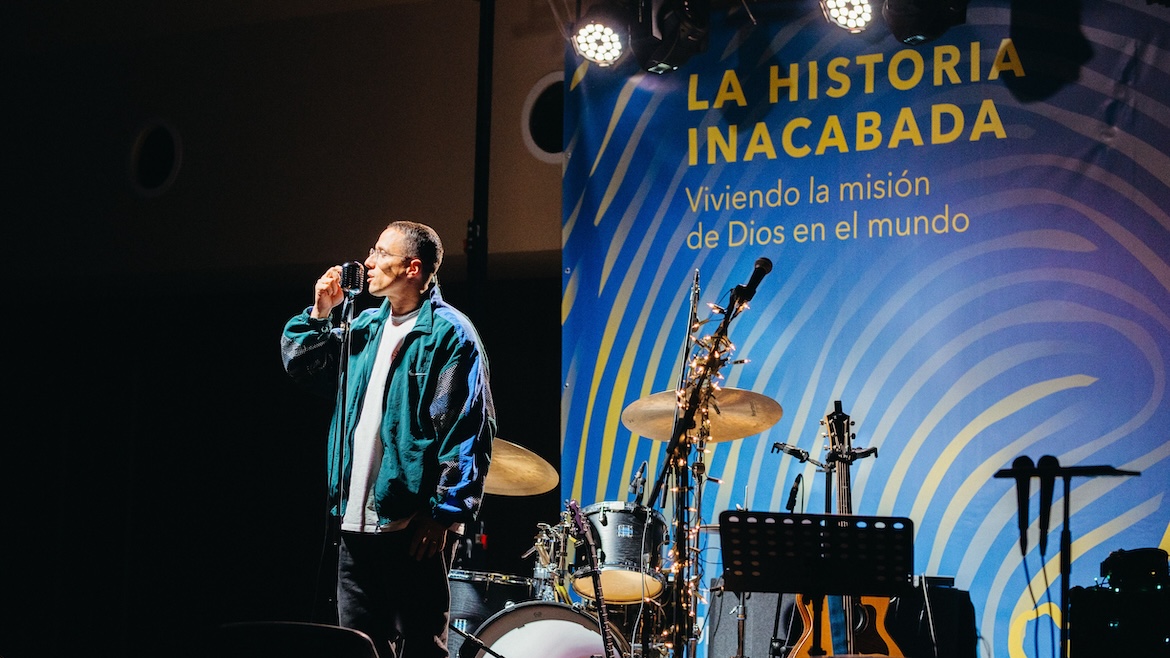
Andrés Pérez is the pastor of La Parroquia church in the Spanish city of Valencia, an artist and music producer, and one of the founders of the Spanish rap group Praxiz.
He spoke with Spanish news website, Protestante Digital about the challenges facing creativity within the evangelical community, and how the church can rediscover its artistic dimension.
All Evangelical Focus news and opinion, on your WhatsApp.
Art in the church
The main problem with art in the church within the evangelical world, Pérez says, is not so much a rejection, but rather a “progressive loss of interest in art”.
In many church contexts, beauty is considered “dispensable” compared to what is perceived as urgent or essential.
“The church no longer invests in beauty because it is not measurable. It cannot be put on a spreadsheet”
The trend comes from the surrounding culture, which is defined by productivity and efficiency.
“Everything has to be hyper-productive. We are surrounded by tutorials for optimising time and apps for organising our schedules. This spirit has also infected the church, and as a result, the pursuit of beauty has been relegated”.
According to Pérez, “the church no longer invests in beauty because it is not measurable. What a person feels or reflects on in front of a painting, for instance, cannot be put on a spreadsheet or measured with numbers”.
Nevertheless, the artist and pastor acknowledges that “there’s a greater openness to art in general, although there are still forms of expression that make us uncomfortable or are difficult to understand, and generate rejection”.

More biblical reflection
Pérez believes that restoring the place of art in the life of the Church will be a long process. That's why he thinks “reflection and biblical exposition on creativity, art and beauty are important”.
“This is just a drop in the bucket. It could take many years for a change in mindset to recover the sense of identity that creativity embodies”, he stresses.
Far from being discouraged, Pérez views this as a generational responsibility: “We have to do our part today. If we don't, people in ten years won't be able to enjoy this”.
God has made us creative
Pérez defends the idea that “God's identity is creative. When we approach art, beauty or a landscape, all of that somehow points us towards God”.
“We talk a lot about our identity as children of God. But the creative identity, which appears in the first verse of the Bible, is hardly ever mentioned”
Yet this biblical and identity-related aspect doesn't usually have a prominent presence in our sermons or group meditations. “We talk a lot about our identity as children of God. But the creative identity, which appears in the first verse of the Bible, is hardly ever mentioned”.
That’s why he believes it is necessary to approach the topic with patience and humility. “It must be done with love”.
He also warns that “sometimes artists can feel superior because they think they understand more than others. But we need to share these ideas gently”.

Spiritual interest in contemporary culture
Protestante Digital also spoke to Pérez about the growing interest in spirituality within popular culture, which is evident in Spain's pop star Rosalía's latest album.
He pointed out that many artists are exploring themes related to God and mentioned an interview with the singer of the Smashing Pumpkins, in which he said years ago that, in the music of the future: “God will be the topic of conversation”.
For Pérez, this reflects a broader spiritual quest: “When the secular world reaches a limit and stops answering profound questions, people begin to look elsewhere”.
“There may be some trends, but even amidst them, people are talking about the Lord and, in some cases, about Christ in a concrete way”, he added.
Artificial Intelligence and creativity
The art world is also changing as a result of the impact of AI on all processes, including artistic creation.
“To share the faith, you need to be walking the path yourself. Otherwise, it loses its meaning”
Some tasks can be delegated to technological tools, but others are part of the artist's spiritual process, “an inner work that strengthens the Christian artist: listening to God, being sensitive, and letting God work in you”.
If this process is lost, the result can be that “you end up doing things without truly believing in them. You share them because it's easier, but you haven't had time to reflect”. This implies a loss in both the final product and the process.
"To share the faith, you need to be walking the path yourself. Otherwise, it loses its meaning”, concludes Andrés.
Do you see a need for this kind of journalism?
Through news, interviews, opinion and analysis, we seek to build bridges between evangelical churches and the societies in which they live.
As a non-profit entity, the big challenge is to be sustainable, month by month. We invite you to make a difference! Join the readers who make Evangelical Focus possible.
Published in: Evangelical Focus - life & tech - ‘Beauty has paid the price for a church obsessed with efficiency’