
Education, family, values: “PISA tells us much about the state of our society”
The reference international report reached a record low in science, reading and math. France, Germany and Spain saw their worst results ever. Analyst Jaume Llenas gives a Christian perspective.
OECD, Onda Paz · 17 SEPTEMBER 2026 · 15:04 CET

The Organisation for Economic Cooperation and Development (OECD) has released the latest edition of the Programme for International Student Assessment (PISA), which tests the skills and knowledge of 15-year-old students in mathematics, reading, and science.
Over 760,000 students from 91 countries and regions participated in the assessment in 2025, making this the largest PISA ever. The main focus in this edition was science.
This year's PISA results show that student performance across OECD countries reached a record low in maths and reading, with around 30% of 15-year-olds estimated to be “low performers” in all three subjects.
All Evangelical Focus news and opinion, on your WhatsApp
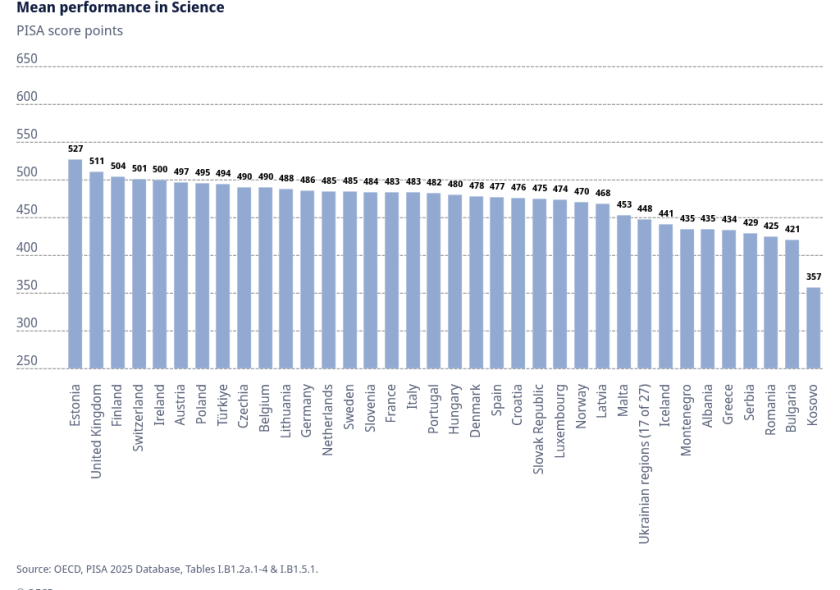
Science scores have remained quite stable, while mathematics scores fell by 22 points between 2015 and 2025, and reading recorded the “steepest decline”, with scores falling by 28 points in the same period.
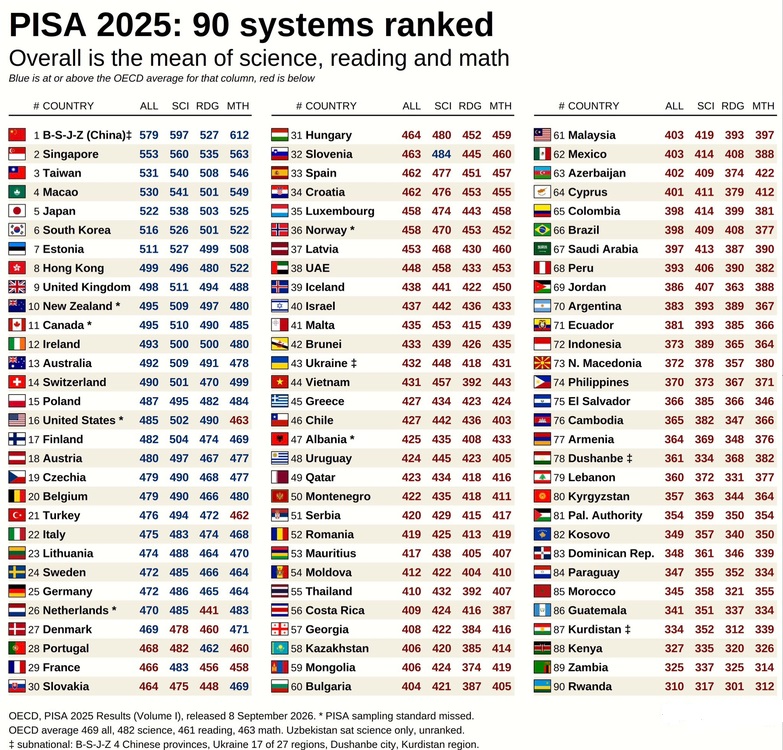
The highest scores in the three subjects were recorded in Beijing, Shanghai, and the Chinese provinces of Jiangsu and Zhejiang; Singapore; and Macao (China); followed by Chinese Taipei, Japan and South Korea.
Estonia leads the European countries
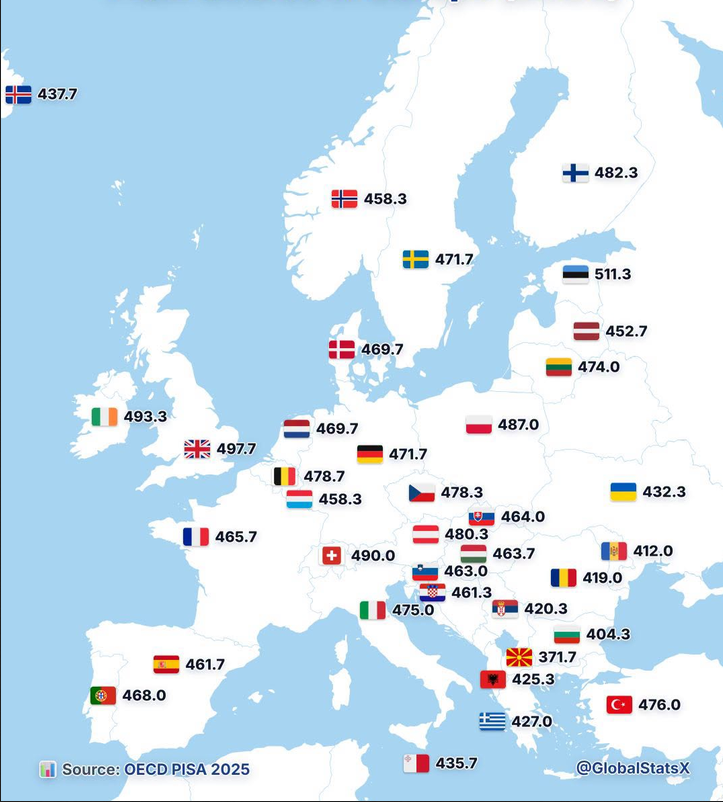
In Europe, only Estonia (7) and the United Kingdom (9) were among the top ten education systems on a global scale.
Meanwhile, Ireland, Switzerland, Poland, Finland, Austria and Czechia achieved a performance above the average.
In contrast, other European countries such as Croatia, Luxembourg, Malta, Greece, Romania, Cyprus, Spain and Bulgaria scored below the OECD average in all subjects.
European systems including Portugal, Germany, The Netherlands and France also recorded significant setbacks. The latter two saw their worst results ever.
“Between 2022 and 2025, the narrowing of socio-economic gaps largely reflected declines among advantaged students rather than improvements among disadvantaged students”, the authors of the report explain.
Attention span, use of AI and teachers
According to the authors of the report, shorter attention spans, excessive use of Artificial Intelligence, and the global teacher shortage are all contributing factors to the decline.
“PISA 2025 shows that reversing declines in student performance is urgent. The most successful education systems focus on fewer areas in greater depth, invest in teachers, engage parents and provide targeted support for the students and schools that need it the most”, said OECD Secretary General, Mathias Cormann.
“Technology and AI can strengthen learning and help prepare young people for the future, but only when used purposefully and not as a substitute for attention, effort and understanding”, he added.
Jaume Llenas: “We all need transformation”
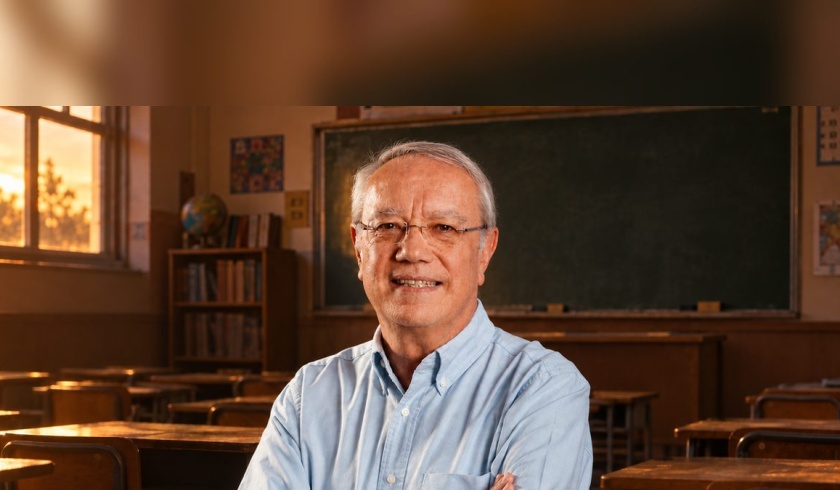
“The PISA report has become so well-known recently because it not only tells us about education, but also about the state of our society”, said Jaume Llenas, a lawyer and Christian cultural analyst, who serves with the Graduate Bible Groups (GBU. IFES Spain) and the Lausanne Movement in Spain
Speaking on the podcast The Pulse of Life by Spanish Christian radio station Onda Paz, Llenas said “PISA shows that apart from a few Asian countries, the rest of the world is falling behind”.
“The truth is that it’s not easy to solve a problem like this. [...] We need to ask ourselves what part of the problem is down to us and what I can do about it, whether or not I have children, because it’s a problem that affects society as a whole”, stressed Llenas.
Llenas mentioned as one of the keys “the laws, the government and the state” in every country, “what the authorities require of schools, teachers and pupils [...] funding for schools, teachers’ salaries”.
“A second, highly complex issue is what goes on inside schools: how teachers are trained and what ideology underpins that training”, he added. Tteachers are burdened with a huge amount of administrative work. Why? They need to spend time with their pupils, not doing paperwork or filling in reports”.
Llenas also believes that “families” are a very important factor in education. “Sometimes we only talk about the time students spend on computers, screens, phones, tablets, etc. But this isn’t the only bad thing; often, the problem lies in the values we hold as a family”.
Finally, “the difference between us and the Asian societies that are succeeding is the importance of hard work. There, children are told they have to work hard; whereas here, they are expected to enjoy themselves. Hard work isn’t seen as a virtue”.
“Society needs transformation, families need transformation, and we Christians also need transformation. If a Christian remains the same or has become worse after years of living as a Christian, this shows that the Holy Spirit is not at work there. That is what the PISA report reveals about us as a society, but also as a church”, he concluded.
You can find more information about PISA 2025 here.
Do you see a need for this kind of journalism?
Through news, interviews, opinion and analysis, we seek to build bridges between evangelical churches and the societies in which they live.
As a non-profit entity, the big challenge is to be sustainable, month by month. We invite you to make a difference! Join the readers who make Evangelical Focus possible.
Published in: Evangelical Focus - life & tech - Education, family, values: “PISA tells us much about the state of our society”