
Why are so few Gen Zs and millennials making leadership their top priority?
Many young adults associate leadership with stress, excessive responsibility, and poor work/life balance. The question is how might they hear us when we invite them to lead.
18 AUGUST 2026 · 17:01 CET
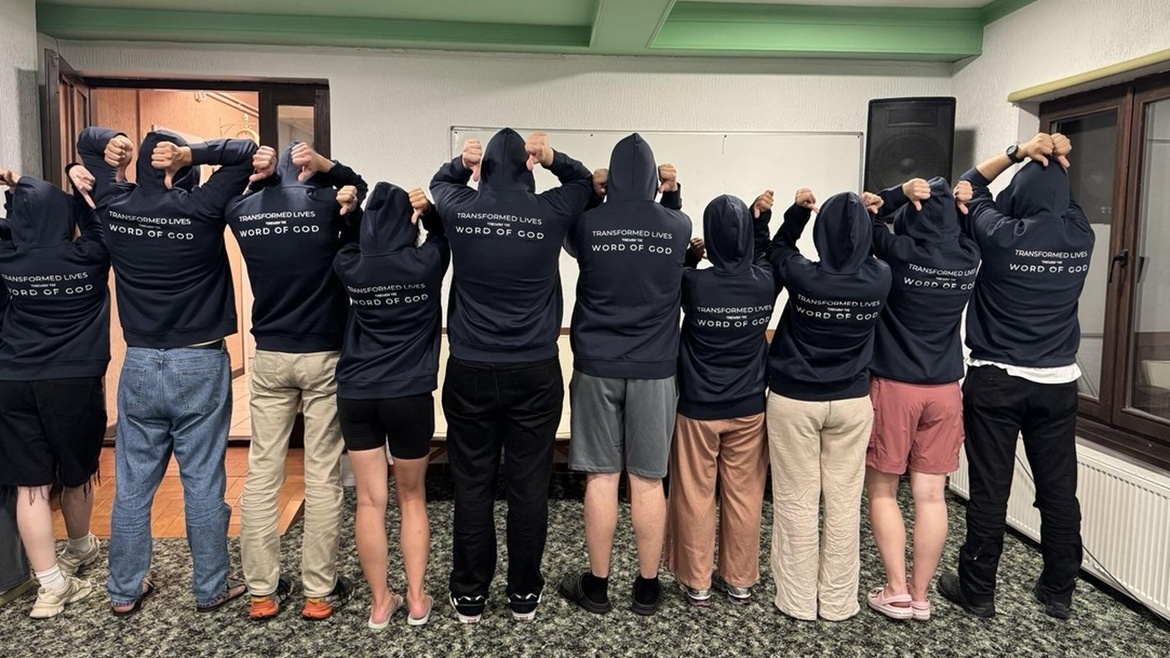
Some of the most encouraging moments in our Community Bible Study ministry happen quietly: someone agrees to facilitate a discussion, pray aloud in a group, give a short teaching, or help with tea, coffee, and snacks for the first time. They may not yet call it leadership, but something important has begun.
One of the great joys of ministry is watching young people step into leadership, discover their gifts, and begin to grow. That is why Deloitte’s 2026 Gen Z and Millennial Survey caught my attention.
All Evangelical Focus news and opinion, on your WhatsApp
The report says that, when asked about their primary career goal, only 6 percent of Gen Zs and millennials identified achieving a leadership position as their top priority (p. 14). The report then explains several reasons behind this reluctance:
Among those who are not prioritizing leadership roles, the most commonly cited barriers are stress and burnout (50 % of Gen Zs and 49 % of millennials), excessive responsibility (50 % of Gen Zs and 48 % of millennials), and concerns about work/life balance (41 % of Gen Zs and 46 % of millennials). Leadership, as it is currently experienced, is often associated with significant well-being tradeoffs, leading many Gen Zs and millennials to question whether it is worth the cost (p. 14).
When asked about their career, only 6 percent of Gen Zs and millennials identified achieving a leadership position as their top priority
These findings raise an important question for churches and Christian organizations. If many young adults associate leadership with stress, excessive responsibility, and poor work/life balance, how might they hear us when we invite them to lead?
Barna’s article The Pastoral Succession Crisis Is Only Getting More Complicated notes that, as of 2022, only 16 percent of Protestant senior pastors were 40 years old or younger, and the average age among pastors was 52. These figures should make churches and Christian organizations pause, because the challenge is not only finding future leaders but also helping young Christians imagine leadership as a healthy and faithful calling. We need to ask how appealing leadership roles appear to young Christians in our churches and ministries. We also need to consider whether we are encouraging a healthy work/life balance among young leaders, many of whom are busy students or young professionals willing to volunteer their time and talents.
Do we have enough young leaders in senior positions who can testify from experience that leadership in the church is not as daunting as it may appear from the outside?
The apostle Paul encouraged believers, “Follow my example, as I follow the example of Christ” (1 Corinthians 11:1). This matters because young leaders are shaped not only by what we ask them to do, but also by what they see in us. His words remind us that Christian leadership is always rooted in Christ: we follow others only as they follow Him. Leadership is never only about what we teach; it is also about what we live.
Jesus is still calling the next generation of leaders to come and follow Him, and He will make them fishers of men (Matthew 4:19). He spent time with young disciples who had potential and formed them into leaders. Were they ready when they started? Of course not. I wonder how many of them even thought of leadership as something they were meant to pursue.
Could our next step be similar to the examples of Paul and Jesus? Could we invite the young people around us to follow Christ as we follow Him? Let’s start by spending time with them, getting to know them, listening to their questions, and encouraging them to focus on Jesus. Let’s not begin with our need for young leaders. Let’s begin with the young people God has already placed around us. Let’s love them well, point them to Jesus, and then watch whom He calls and equips to serve as leaders.
Antti Ronkainen, Regional Coordinator for Europe of Community Bible Study
Author’s note: I used Microsoft Copilot as an editing assistant while preparing this article, particularly for improving grammar, flow, clarity, and style. The reflections and final decisions are my own.
Do you see a need for this kind of journalism?
Through news, interviews, opinion and analysis, we seek to build bridges between evangelical churches and the societies in which they live.
As a non-profit entity, the big challenge is to be sustainable, month by month. We invite you to make a difference! Join the readers who make Evangelical Focus possible.
Published in: Evangelical Focus - The Next Generation - Why are so few Gen Zs and millennials making leadership their top priority?