
Catholic and evangelical charismatics united?
Is dialogue truly being promoted if one lacks the courage to say and do the things one believes?
01 SEPTEMBER 2026 · 11:45 CET
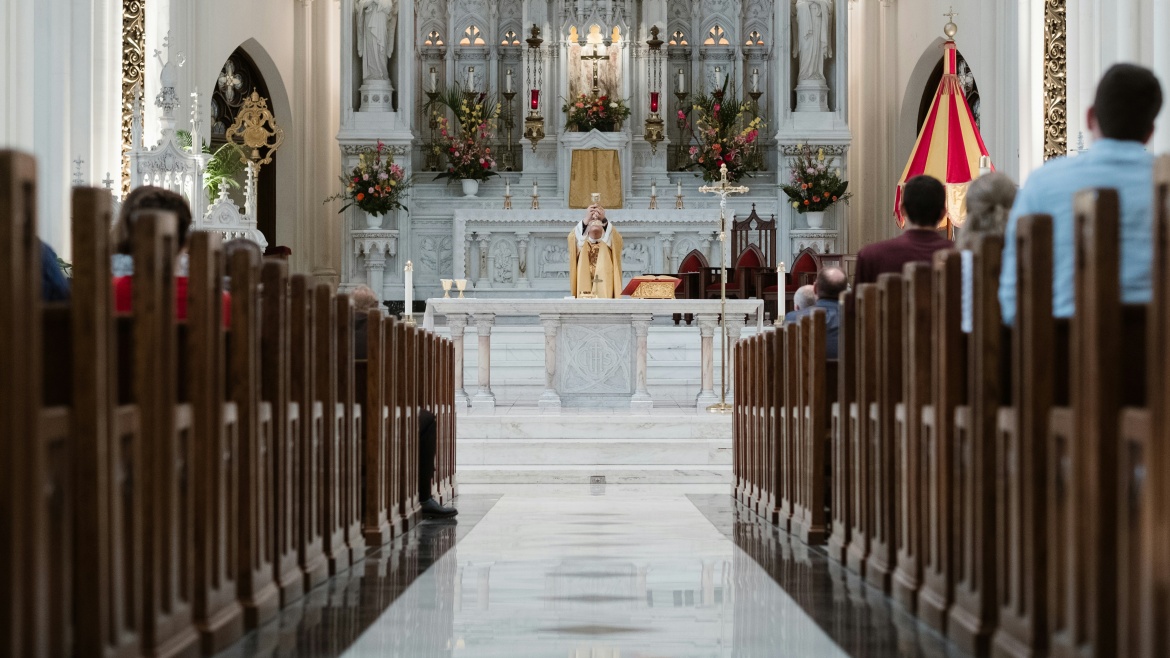
Building a bridge between institutional Roman Catholicism and the Pentecostal and Evangelical churches. This is the mission of the Roman Catholic charismatic movement as described in Filippo D’Alessandro’s book, God’s Dream: Christian Unity in the Power of the Spirit (Italian edition: Il sogno di Dio. L’unità dei cristiani nella potenza dello Spirito, Rimini: Edizioni Rinnovamento nello Spirito Santo, 2026).
The author speaks on this subject with authority, as he serves as one of the regional directors of the Rinnovamento nello Spirito Santo (“Renewal in the Holy Spirit,” i.e., the Italian Roman Catholic Charismatic movement) and as one of its national delegates for Christian unity.
The book brings together various contributions, all aimed at illustrating the purpose of charismatic ecumenism: in the words of Pope Francis during a meeting with Pentecostal pastors in 2020, it is a matter of “creating communion and collaboration among the various charismatic communities” (35).
All Evangelical Focus news and opinion, on your WhatsApp
Or, in the author’s own words, “to create connections between our Pentecostal brothers and sisters and the priests and bishops in the region” and thus to serve as “a link” (200).
The Pentecostal movement is viewed as a “current of grace” that cuts across denominational lines, and the baptism of the Holy Spirit associated with it is seen as an “ecumenical grace”
The book does not offer a history of the Roman Catholic charismatic movement that began in 1967, but it does contain several significant stories intertwined with the author’s biography, such as Pope Francis’s meetings with Italian and international Pentecostal leaders.The Pentecostal movement as a whole is viewed as a “current of grace” that cuts across denominational lines, and the baptism of the Holy Spirit associated with it is seen as an “ecumenical grace” (91).
In other chapters, D’Alessandro sets forth the Roman Catholic view of the charismatic experience. It is situated within the sacramental journey and is seen as an activation, a reawakening, or a “thawing” of the sacrament of Baptism.
Therefore, in the Roman Catholic understanding, it in no way calls into question the hierarchical and sacramental structure of the Roman Catholic Church, nor the Marian dogmas and the devotions associated with them. So to speak, it integrates the charismatic experience into Roman Catholic life by adding something extra but taking nothing away.
D’Alessandro is an admirer of Pope Francis and particularly praises the encyclical Fratelli tutti (“All Brothers,” 2020), establishing the universal brotherhood regardless of different religions, and the Abu Dhabi Document on Human Fraternity (2019), signed jointly with the Grand Imam of Al-Azhar, where the diversity of religions is presented as the will of God.
For him, ecumenical dialogue and interreligious dialogue, though distinct, go hand in hand because both express the catholicity of Roman Catholicism—its longing for the unity of mankind.
When offering suggestions on how to organize events with Pentecostals, he advises avoiding devotional expressions related to Mary and the saints, references to sensitive topics such as indulgences and purgatory, as well as Marian apparitions and private revelations
At times, his language is reminiscent of the Gospels (when, for example, he speaks of the communion of those who are “born-again,” 116), but the framework of his thought is Roman Catholic because being born again for him coincides with being baptized—not necessarily with being a believer in Jesus Christ.From a Roman Catholic perspective, every baptized person is born again regardless of his/her faith in Christ. But is this the case according to the Bible?
When offering suggestions on how to organize events and meetings with Pentecostal Evangelicals, he advises avoiding devotional expressions related to Mary and the saints, references to sensitive topics such as indulgences and purgatory, as well as Marian apparitions and private revelations (204).
The intention, therefore, is—if not to conceal, then at least to try to downplay—the specific characteristics of Roman Catholicism.
Without wishing to question people’s good faith, one cannot help but wonder whether these practices are spiritually honest. Is dialogue truly being promoted if one lacks the courage to say and do the things one believes?
Furthermore, how can Evangelicals who participate in these gatherings be so naive as to think that there is authentic Evangelical spirituality if the faith of Charismatic Catholics does not abandon the non-biblical—if not anti-biblical—elements of its creed and practice?
In the book’s introduction, Bishop Derio Olivero, president of the Italian Episcopal Conference’s Commission for Ecumenism, writes that the fear of ecumenism stems “from a fragile or poorly understood identity” (9). This is not necessarily true.
Ecumenical attempts which hide identities or cloak them in charismatic language, without reforming them from within, do not correspond to the Lord Jesus’ prayer to the Father in John 17
In fact, the opposite is true. The more solid one’s evangelical identity is (i.e., grounded in Scripture and its message), the more one recognizes that ecumenical attempts which hide identities or cloak them in charismatic language without reforming them from within do not correspond to the Lord Jesus’ prayer to the Father in John 17.After praying: “they may be one, even as we are one” (v. 11), the Lord goes on to say: “Sanctify them in the truth; your word is truth” (v. 17). Unity and truth go together. When true dialogue takes place, neither hiding nor camouflage should occur.
If a person is born again, born of the Spirit, and a disciple of Jesus Christ, the Roman Catholic baggage—composed of traditions that are foreign to and contrary to Scripture—must be reformed, not simply and tactically concealed.
Saying this to our charismatic Catholic friends does not mean being opposed to dialogue. It means engaging in dialogue in truth, submitting all we are and do to the Word of God. Other paths to unity are shortcuts, perhaps useful for Roman Catholic ecumenism, but not for biblical unity.
Do you see a need for this kind of journalism?
Through news, interviews, opinion and analysis, we seek to build bridges between evangelical churches and the societies in which they live.
As a non-profit entity, the big challenge is to be sustainable, month by month. We invite you to make a difference! Join the readers who make Evangelical Focus possible.
Published in: Evangelical Focus - Vatican Files - Catholic and evangelical charismatics united?