
Church growth in the midst of war
War, societal trauma, forced displacement, the need for food and safety, and disillusionment with institutions, created a new space for interaction between society and church communities.
10 NOVEMBER 2026 · 13:07 CET
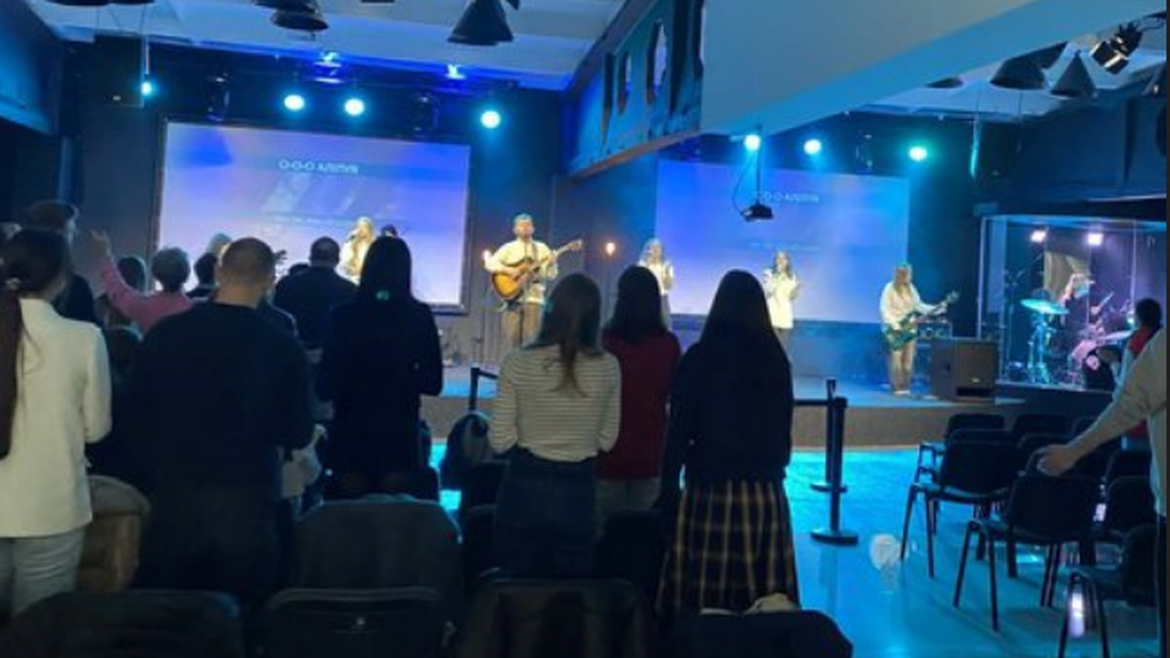
Full-scale war has radically altered the conditions under which Ukrainian churches operate. Occupation, hostilities, forced displacement of the population, destruction of infrastructure and the mass migration of ministers have left religious communities facing the threat of downsizing or ceasing their activities altogether.
At the same time, a number of churches, especially in de-occupied and frontline areas, have seen a noticeable numerical growth.
People who previously had no experience of regular church attendance have begun attending services; the number of conversions, baptisms and new ministers has increased.
All Evangelical Focus news and opinion, on your WhatsApp
This text has been prepared for a special issue of Vista Journal on the Ukrainian church and mission in the fifth year of the full-scale war.
The article therefore serves mainly a contextual purpose: it does not describe the full range of church mission but analyses one specific phenomenon — the growth of some Protestant congregations under crisis conditions.
In this study, congregation size is not equated to spiritual maturity or biblical faithfulness. However, quantitative measures are used as an accessible and comparable measure of the extent to which a church is able to maintain its viability, attract people and expand its ministry.
The conclusions were developed inductively: by comparing the practices of churches that have experienced growth and by synthesising the testimonies of their ministers and members.
The claim of growth should not be understood as uniform growth across all Protestant churches, but rather as documented positive trends within specific denominations and regions.
According to the Razumkov Centre, the proportion of citizens identifying as members of Protestant and Evangelical churches rose from 1.4 per cent in 2023 to 2.5 per cent in 2024 and 2.6 per cent in 2025, despite the methodological limitations of wartime research.[1]
Occupation, hostilities, forced displacement, destruction of infrastructure and the mass migration of ministers have left religious communities facing the threat of downsizing or ceasing their activities
Denominational statistics also confirm this growth: the Ukrainian Christian Evangelical Church reported 4,618 baptisms in 2023 and positive trends in frontline regions.The European Baptist Federation, citing Ukrainian Baptists, reported 86 new churches and 10,154 baptisms during the first three years of the full-scale war.[2]
The available material does not provide grounds for compiling a universal ranking of factors or the establishing of a direct cause-and-effect relationship.
However, it does allow us to identify consistent patterns that recurred across different regions and communities. Regional variations must also be taken into account.
The most notable examples of growth were recorded in territories that had experienced occupation and were later liberated, as well as in frontline or near-frontline areas under Ukrainian government control.
It was precisely in these places that public trust in churches was often shaped by their conduct during this critical period. Ukrainian communities abroad were not included in this analysis because the migration context requires a separate methodology.
Research methodology
The study combined several methods of data collection and verification. Between 2023 and 2024, desk-based research was carried out.
This involved the monitoring of national media, social media, news channels, information resources of Protestant associations, as well as publications and blogs by church leaders.
The main qualitative method consisted of over 40 semi-structured in-depth interviews with church ministers at various levels: leaders of denominations, bishops, regional pastors, local church pastors, youth leaders, and other senior clergy.
Respondents were informed of the project’s aims and that the information obtained would be used anonymously and consent for the publication of personally identifiable quotes was sought separately.
Those who previously had no experience of regular church attendance have begun attending services; the number of conversions, baptisms and new ministers has increased
To verify the findings, additional interviews were conducted with leaders of church organisations, regional ministers and church members.The quantitative component consisted of a questionnaire administered during church and educational events. A total of 35 questionnaires were analysed.
The sample included representatives of Baptist, Evangelical Christian, Pentecostal, Charismatic, and Mennonite congregations.
In addition, around ten written or oral responses were received from socially active individuals who do not belong to Protestant churches.
Qualitative data was analysed through inductive thematic coding and comparative case analysis. Firstly, recurring thematic units were identified from the interviews, questionnaires and parallel discussions: types of decisions, ministry practices, descriptions of growth, leadership crises, and changes in worship and language practices.
These units were then grouped into broader themes and compared between congregations experiencing significant growth and those without such growth.
The final six factors were formulated as broader themes that recurred across various interviews and were corroborated by questionnaires and desk-based research.
As the aim was to identify effective practices, particular attention was paid to ministers of growing congregations.
At the same time, interviews with ministers from churches showing no noticeable numerical growth accounted for approximately half of the sample.
This allowed for a comparison of different models of operation, bearing in mind that, in wartime conditions, the very survival of the congregation is also an important indicator of resilience.
These methodological limitations do not mean that external factors were ignored. On the contrary, war, societal trauma, loss of home, forced displacement, the need for food and safety, as well as disillusionment with various institutions, created a new space for interaction between society and church communities.
However, these factors were treated as context rather than as a subject of analysis in their own right.
This article explores which internal practices enabled churches to respond to these external challenges.
1. Leadership as a source of trust and organisational resilience
Church growth was most often associated with mature, courageous, and approachable leadership.[3]
The most notable examples of growth were recorded in territories that experienced occupation and were later liberated, as well as in frontline or near-frontline areas under Ukrainian government control
In wartime conditions, the importance of the pastor was determined not only by the quality of their preaching or administrative skills, but by their presence alongside the people, their willingness to share in the danger, to open their own home, and to maintain personal relationships.One respondent described such a minister as someone in whose presence others feel warmth, acceptance and trust: “A pastor capable of establishing a congregation is a minister ‘who radiates warmth’; he opens his home, befriends people and does not limit relationships to formal ministry.” [4]
Personal courage and self-sacrifice took on particular importance. Congregations held in high regard pastors who remained with their people during the occupation, returned to ministry immediately after the territory was liberated, or supported scattered church members. Such behaviour created moral capital that could not be replaced by formal status.
A second critical element was the ability to make decisions when information was limited.
Ministers had to decide how to use buildings and resources, organise evacuations, delegate authority, consider how to redeploy personnel, and formulate positions on the war, mobilisation, chaplaincy, and emigration.
In areas under relatively long occupation, such as parts of the Kharkiv or Kherson regions, they also had to think about relations with Russian or Crimean religious circles.
In a crisis situation, uncertainty concealed behind general spiritual platitudes undermined trust more than an honest acknowledgement of the complexity of the issue.
Love for people, practised rather than merely professed, proved to be a key factor. In situations of general vulnerability, people were especially sensitive to the difference between sincere attention and the formal delivery of a programme, between focus on a target and focus on relationships.
New visitors assessed not only the amount of assistance received, but also how they were treated. When a person was seen as the focus of ministry, rather than as a means to statistical growth, they were more likely to remain in the congregation and bring others along.
As one respondent put it, “Christ did not die for the church’s programmes… He died for people. When people are the goal, not a means to an end, they remain in the congregation and bring friends along.” [5]
At the same time, authoritarianism, an inability to admit mistakes, the defence of one’s pre-war reputation at any cost, and replacing responsibility with claims of a special spiritual position all limited development. I
In wartime, communities did not need an infallible leader, but an honest and responsible minister capable of calling a spade a spade, correcting wrong decisions, and remaining true to the values they proclaimed.
Oleksandr Savych emphasises this in his interview: “I realised one important thing about leadership: during a crisis, the mission remains unchanged, but the methods of achieving it may change…In times of crisis, we need leaders who have faith and vision.” [6]
2. Teamwork, discipleship and delegation
The war has demonstrated the limitations of a model in which all activity depends on a single strong leader.
The departure of a pastor, a loss of contact or his being overwhelmed could paralyse the congregation if other ministers lacked the authority and experience to make independent decisions.
The most resilient churches were those where discipleship, mentoring, and the transfer of responsibility were long-standing practices, rather than only topics at training events.
As Mykhailo Cherenkov noted in his article Identity of Ukrainian Evangelical Churches: Ten Key Factors and Challenges in the Context of War and Rumours of War: “Today there are more questions than ever — about leaders and leadership, about education and enlightenment… about passing on the faith and ministry to new generations” [7] .
A minister’s public activity did not always imply an ability to train successors.
Mentoring often goes unnoticed because it happens through personal relationships, but this study supported the conclusion that mentoring is what gives a community continuity in its leadership and ministry staff: “In the post-Soviet space, public engagement was often perceived as a sign of spiritual strength, whilst unobtrusive personal work with people and the training of successors were underestimated.” [8]
In several cases, younger brothers who had been prepared for ministry long before the invasion became the backbone of church leadership following the departure of senior leaders.
Crisis teams required a high level of mutual trust. Decisions often had to be made quickly, between unpalatable alternatives, and without the possibility of broad discussion.
Therefore, the leadership’s authority was built not on being error-free, but on clear values, a track record of faithfulness, and a willingness to correct mistakes together.
Teams were most effective when they encouraged initiative, did not punish reasonable experimentation, and did not turn every failure into a conflict.
In rapidly changing circumstances, what mattered was not the flawlessness of the plan, but the ability to revise it in a timely manner, whilst maintaining team unity and accountability to the community. [9]
Therefore, strong leadership and teamwork are not mutually exclusive. A pastor’s personal authority provides direction, whilst discipleship and delegation empower the congregation to act in changing circumstances without constant centralised control.
Mykhailo Brytsyn, Director of the Mission Eurasia Religious Freedom Initiative.
This is the first part of an article first appeared in the September 2026 edition of Vista Journal. Download the latest edition or read individual articles here.
Endnotes
[1] Razumkov Centre, “Religiosity, Trust in the Church, Confessional Affiliation and Inter-Church Relations in Ukrainian Society (November, 2023).” ; Razumkov Centre. “Religiosity, Trust in the Church, Confessional Division and Inter-Church Relations in Ukrainian Society (October, 2024).” ; Razumkov Centre. “Religiosity, Confessional Affiliation and Inter-Church Relations in Ukrainian Society (November, 2025).” ; Accessed 7 September 2026.
[2] Ukrainian Christian Evangelical Church, 2024 “Over the past year, UCCE congregations have baptised more than 4,600 new believers, distributed 200,000 charitable meals and 1.5 million copies of the Gospel” ; European Baptist Federation,2025, “Three Years of Resistance, Struggle and Hope,” Accessed 7 September 2026.
[3] Kesumawati Kesumawati, Joni Manumpak Parulian Gultom. “Effective Pastoral Leadership in Church Growth and Renewal.” Journal of the American Institute. 2025. Vol. 2, no. 2. pp. 156–168. DOI: 10.71364/ny9dea85.
[4] Serhiy Huts, In-depth interview with the author as part of research, 2023–2024. Unpublished material.
[5] Oleg Krykun: In-depth interview conducted by the author as part of the research, 2023–2024. Unpublished material.
[6] Oleksandr Savych. Religious Information Service of Ukraine (RISU). 7 March 2025.
[7] Mykhailo Cherenkov. ‘Identity of Ukrainian Evangelical Churches: Ten Key Factors and Challenges in the Context of War and Rumours of War’. Bogomyslie: Literary and Theological Almanac. 2024. Vol. 34, No. 1. pp. 134–144.
[8] Dmytro Bodiu, In-depth interview conducted by the author as part of the research, 2023–2024. Unpublished material.
[9] Lausanne Movement. “Future Leadership.” Lausanne Occasional Paper No. 41. Lausanne Committee for World Evangelisatio, 2004. (accessed 8 July 2026).
Do you see a need for this kind of journalism?
Through news, interviews, opinion and analysis, we seek to build bridges between evangelical churches and the societies in which they live.
As a non-profit entity, the big challenge is to be sustainable, month by month. We invite you to make a difference! Join the readers who make Evangelical Focus possible.
Published in: Evangelical Focus - Vista Journal - Church growth in the midst of war