
Stand for truth!
Last week my wife and I hosted Vera, who has been volunteering on the eastern frontline in Ukraine retrieving wounded soldiers. She told us of her hurt and incomprehension that US believers would so easily swallow Kremlin narratives.
26 OCTOBER 2026 · 09:52 CET
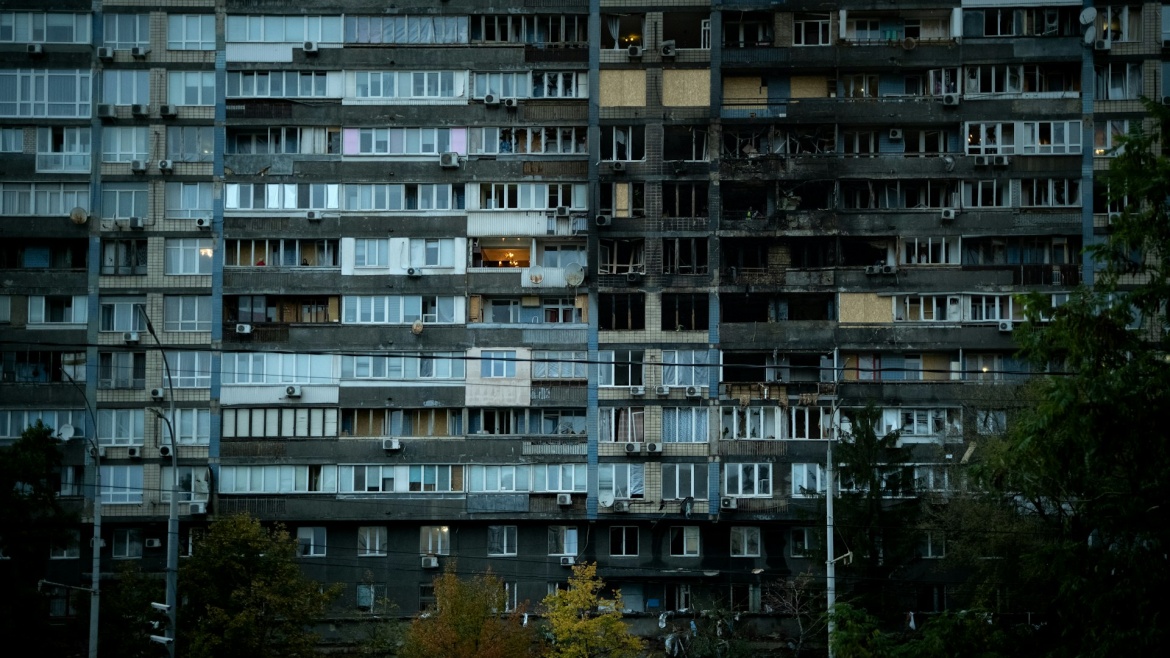
Washington’s capitulation to Moscow has caused me sleepless nights this week.
I toss and turn as I wonder what is happening at that very moment to our friends in Kyiv, or other Ukrainian cities. How do Ukrainians feel about an American president who now stands together with a dictator inflicting death and destruction on their families, their cities, their country, their freedom, their future, their hopes? And who repeats patent lies originating in the Kremlin?
On Wednesday night, an Iskander missile equipped with a cluster warhead detonated above Kyiv, designed to inflict maximum casualties over an area of 400 by 400 meters.
All Evangelical Focus news and opinion, on your WhatsApp
Clearly this type of missile was intended to cause maximum destruction to Kyiv’s historic district and injuring as many civilians as possible.
Here’s how Ira, a young schoolteacher we visited in Kyiv in March, described the attack on Facebook this week:
Last night was brutal. There were several waves of ballistic missiles, about an hour apart, so that as soon as you start calming down and try going back to sleep, you are yanked back to reality by another explosion. Even though we usually had about 2 minutes to shelter, there was no advance warning from our US partners. There was an earlier threat to halt the intelligence reports if Ukraine doesn’t surrender.
Another worrisome report came from the frontline. There were suddent limitations on the use of Starlink terminals which disabled several frontline missions…
These two reports hit harder than the ballistics. This backstabbing from your partner pierces your heart and makes you wonder where all the values you’d heard so much about went. However, we don’t have much of a choice. We’ll keep fighting with or without the support of the US, because this war is about our survival both as a nation and each of us individually.
We enormously value the strong voices of support from the European officials and from all our friends in the US.
Last week my wife and I hosted another young Ukrainian woman, Vera, who has been volunteering on the eastern frontline retrieving wounded soldiers. She has seen much death and suffering.
She told us of her hurt and incomprehension on her visits to the US that American believers would so easily swallow Kremlin narratives against her country and support a president with scant regard for truth.
Wherever we are and whatever influence we may have, big or small, we all must stand for truth and oppose the lies. For hybird warfare has been under way for some time now, affecting us all during coffee-break conversations and family gatherings.
As the American mid-term elections approach, we have been warned to expect a barrage of disinformation to create confusion and doubt concerning the reliability of the voting machinery, as well as whether Ukraine deserves support, whether the facts can be known, or whether helping Ukraine is worth the cost.
[Warning: this is an extra-long Weekly Word given the gravity and urgency of the topic.]
So what are some of these lies? And how can we respond? How can we learn to discern the truth?
1. “Russia was forced to defend itself against NATO”
The claim: NATO expansion, Western military assistance to Ukraine, and alleged Western encirclement left Russia no choice but to act.
Response: Russia made a sovereign decision to invade a neighbouring country. Ukraine was not a NATO member when the full-scale invasion began in February 2022.
NATO’s enlargement and European security disputes are legitimate subjects for debate, but they do not give Russia a legal right to invade Ukraine or dictate its foreign policy.
2. “Ukraine is run by Nazis”
The claim: Ukraine’s government is supposedly a Nazi or fascist regime that must be removed.
Response: Ukraine has far-right groups, as do many European countries, and their influence can be scrutinised. But Ukraine is a pluralistic political society, and its president, Volodymyr Zelenskyy, is Jewish.
The existence of extremists does not make the country a Nazi state. The Kremlin uses the historical trauma of the Second World War to portray an invasion as a moral crusade.
3. “Ukraine is not a real country”
The claim: Ukraine is historically Russian territory, Ukrainians and Russians are essentially one people, and Ukrainian statehood is an artificial Western creation.
Response: Ukraine has a distinct language, culture, political history and national identity. It declared independence in 1991, confirmed by an overwhelming majority in a nationwide referendum – including Crimea (see map above).
Russia itself recognised Ukraine’s independence and borders. Historical connections between two peoples do not cancel a nation’s right to self-determination.
4. “Russia invaded to protect Russian speakers and stop a genocide in Donbas”
The claim: Ukraine was systematically exterminating Russian-speaking people in eastern Ukraine, making Russian military intervention necessary.
Response: The Donbas conflict, which began in 2014, caused real civilian suffering. But the Kremlin’s claim of genocide was not supported by credible evidence establishing genocide.
Russian-speaking Ukrainians are not a single political group, and many havefought to defend Ukraine. Protecting a linguistic minority does not justify a full-scale invasion.
5. “The West is fighting Russia to the last Ukrainian”
The claim: America and Europe are deliberately prolonging the war to weaken Russia, while Ukrainians are merely pawns.
Response: This narrative erases Ukrainian agency: Ukrainians themselves are resisting an invasion and have repeatedly expressed a desire to preserve their country’s independence. It also diverts attention from Russia’s decision to continue the war.
6. “Ukraine is hopelessly corrupt, so Western aid is being stolen”
The claim: Ukraine is so corrupt that military and financial assistance inevitably disappears into private pockets.
Response: With its Soviet past, Ukraine has a long history of corruption. Corruption investigations and reforms matter. But claims that aid is all stolen, or that there is no meaningful monitoring, go beyond the evidence.
The EU membership process is demanding accountability in numerous areas. Ukraine has improved steadily since 2015, now ranking 104 out of 182 countries on the Transparency Index list. Russia ranks 152/182 and has steadily worsened since 2015.
7. “Ukraine cannot win, so it should surrender territory now”
The claim: Russia is too powerful to resist, further aid merely causes unnecessary deaths, and a settlement accepting Russian territorial gains is the only realistic option
Responsw: This is often presented as realism rather than propaganda. The battlefield situation and the costs of continuing the war are legitimate questions.
But predictions of inevitable Ukrainian defeat are not facts, and a peace agreement imposed through military conquest can reward aggression and leave the country vulnerable to renewed attack. The terms and security guarantees of any settlement matter enormously.
8. “Both sides lie, so nobody can know the truth”
The claim: Ukraine, Russia and Western governments all produce propaganda, so every account is equally suspect.
Response: Governments do shape information, and individual claims should be checked. But it does not follow that all claims are equally credible.
Independent investigations, satellite imagery, verified video, documentary evidence and multiple witness accounts can establish facts. Deliberately manufacturing uncertainty is itself a powerful propaganda technique.
9. “Ukraine is persecuting Orthodox believers”
The claim: Ukraine is trying to eradicate authentic traditional Orthodoxy, replacing it with an artificially created rival church, supported by the West.
Response: Historically the Ukrainian Orthodox Church (UOC) has been connected to the Moscow patriarch. Although it officially declared independence from Moscow in 2022 after the invasion, Kyiv disputes whether it fully severed its institutional connections.
Some clergy have been prosecuted for passing sensitive information on to Moscow. The Orthodox Church of Ukraine (OCU) was recognised by the Ecumenical Patriarch in Constantinople (Istanbul) in 2019.
Over 900 Ukrainian places of worship have been damaged or destroyed by Russian forces during the war. Many pastors and clergy have been imprisoned, tortured or killed.
For American consumption: The Kremlin takes existing divisions in American society and amplifies the messages most likely to weaken support for Ukraine. Investigations have documented Russian influence operations targeting American audiences with fabricated content and divisive messaging, such as:
10. “Ukraine is a money pit, and Americans should put America first”
This appeals to legitimate concerns about government spending, inflation, border security and domestic needs.
The misleading leap is to portray all assistance to Ukraine as money wasted, without considering the strategic costs of a Russian victory, the different forms of aid, or the value of supporting a country’s defence against aggression.
11. “Zelenskyy is manipulating the West and refusing peace”
The narrative portrays Ukraine’s president as an untrustworthy leader who prolongs the war to remain in power. Disputes over negotiations and the conduct of Ukrainian leaders are legitimate topics, but the narrative often omits Russia’s own demands, military actions and responsibility for the invasion.
More recent Russian messaging has particularly sought to present Ukraine as the obstacle to a settlement, parroted by the American president.
12. “The war is really a conspiracy by the American deep state”
This presents Ukraine as a tool of intelligence agencies, arms manufacturers or a shadowy establishment seeking to profit from perpetual war. Defence contracts and government decisions should be scrutinised, but allegations of a coordinated conspiracy require evidence.
The narrative turns legitimate questions about accountability into a reason to dismiss Ukraine’s right to defend itself.
13. “Ukraine has secret American bioweapons laboratories”
Russia has repeatedly exploited the existence of legitimate biological research facilities in Ukraine to allege secret programmes to develop biological weapons.
The presence of laboratories working on public health and biological safety does not establish a weapons programme. The OECD has documented how this conspiracy theory circulated among American conspiracy-oriented accounts, was amplified in other media, and was then repeated by Russian state propaganda.
For European consumption and wider: The messaging changes to suit the audience. In Europe, it often focuses on economic pain and war fatigue. Elsewhere, Russia frequently presents itself as an opponent of Western domination.
14. “Europe is destroying itself by supporting Ukraine”
The claim is that sanctions, energy costs, military spending and aid to refugees are ruining European economies. The real costs of the war are undeniable. But the claim becomes propaganda when it ignores Russia’s responsibility for the conflict, exaggerates economic collapse, or treats sanctions as the sole cause of Europe’s difficulties.
These are arguments repeated by far-right politicians.
15. “Europe’s leaders are warmongers who do not want peace”
This narrative depicts European governments as deliberately sabotaging peace efforts and pursuing war out of hatred of Russia. It exploits public anxiety about escalation and military conscription.
The crucial distinction is between debating the best path to peace and assuming that any refusal to accept Russia’s demands means a desire for war.
16. “Russia is defending traditional Christian values against a decadent West”
This is particularly relevant to Christian audiences. The Kremlin presents Russia as a defender of Christianity, family and traditional morality against a supposedly godless, morally corrupt Europe.
It sometimes draws on the language of spiritual warfare, portraying Ukraine and its Western supporters as agents of evil.
The contradiction is stark: appeals to Christian civilisation are used to justify a war involving the killing of civilians, destruction of homes and churches, deportation of children and attempts to subjugate a neighbouring people.
17. “The West lectures the world while practising colonialism itself”
In Africa, Asia and Latin America, Russian messaging often draws on memories of Western colonialism, intervention and double standards. It portrays Moscow as the champion of a multipolar world resisting Western domination.
This can resonate where Western governments have lost credibility. The misleading move is to present Russia as anti-imperialist while denying Ukraine the very sovereignty and self-determination that anti-colonial movements defend.
18. “Ukrainian refugees are a burden, ungrateful, or dangerous”
Disinformation seeks to encourage resentment towards Ukrainians living elsewhere by spreading misleading stories about their behaviour, benefits, crime or political loyalties.
Such claims can exploit genuine pressures on housing and public services, but individual incidents do not justify generalisations about millions of displaced people.
Research identifies the discrediting of Ukrainian refugees as a recurring theme in Russian influence activity.
How to recognise the pattern
When you encounter a claim about Ukraine, ask five questions.
1. Does it erase the starting point?
2. Does it discuss NATO, corruption or historical grievances while omitting Russia’s decision to invade or Russia’s own rampant corruption?
3. Does it deny Ukrainian agency? Are Ukrainians portrayed merely as pawns of Washington, rather than people defending their own country?
4. Does it turn a real problem into an absolute claim? “Ukraine has corruption” becomes “all aid is stolen.” “There are extremists” becomes “Ukraine is Nazi.” A genuine concern is used to support a sweeping conclusion.
5. Does it demand concessions only from Ukraine? Is peace defined as Ukraine surrendering territory, while Russian withdrawal, accountability and security guarantees are treated as irrelevant? Is the evidence independently verifiable?
Look for primary documents, multiple independent investigations, reputable fact-checkers and evidence that can be checked beyond a single social media post.
Let’s all stand for truth! And stand with the Ukrainians – for their sake and for ours.
Jeff Fountain, Director of the Schuman Centre for European Studies. This article was first published on the author's blog, Weekly Word.
Do you see a need for this kind of journalism?
Through news, interviews, opinion and analysis, we seek to build bridges between evangelical churches and the societies in which they live.
As a non-profit entity, the big challenge is to be sustainable, month by month. We invite you to make a difference! Join the readers who make Evangelical Focus possible.
Published in: Evangelical Focus - Window on Europe - Stand for truth!