
In Peru, evangelicals grow in rural areas as young people distance themselves from religious institutions
The decline of Catholicism in the country of Pope Leo XIV is linked to a loss of confidence in the institution, finds the Institute of Peruvian Studies.
Infobae, Evangélico Digital · LIMA · 05 JUNE 2025 · 10:57 CET
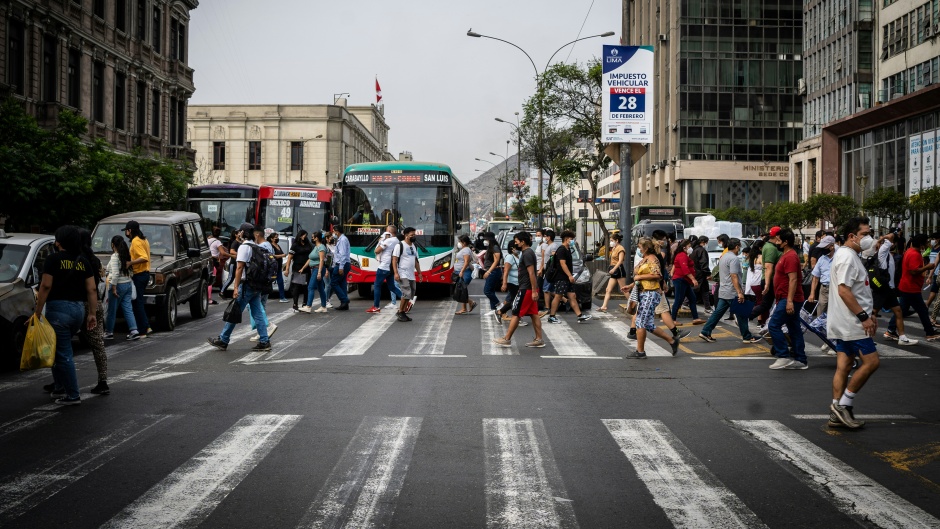
According to data from a recent survey by the Institute of Peruvian Studies (IEP), the number of Roman Catholics in the Republic of Peru has clearly declined in recent years, while the evangelicals have significantly increased.
The report confirms that a religious transformation is taking place, affecting the Roman Catholic predominance defined the country for centuries. The spiritual map began to change within the last 20 years, in the line of Argentina, Chile, Brazil and Guatemala, countries in Latin America where the growth of free evangelical churches has become obvious as well.
The IEP is a social science research centre that conducts "independent, pluralistic and interdisciplinary studies on Peru and Latin America". It is one of the main think tanks in the country.

Only evangelicals grow
The IEP survey shows that while in November 2024, 63.5% of the Peruvian population identified as Roman Catholic, in May 2025, it dropped to 60.2%, amid a series of internal events that questioned the Church's institutional image.
Evangelicals are the only religious group to grow during that period, rising from 8.4% to 11.3%. According to historical studies, in 1996, only 4.4% of Peruvians identified as evangelical Christians. A similar study by the IEP in May 2024, showed that 27% of respondents in rural areas identify as evangelical Christians.
Those who claimed to be of “another religion” decrease one point to 13%, those who said they were agnostic or atheist declined further from 2% to 1%. The “nones” group (without religious affiliation) increased from 11% to 12% of the population.

Evangelicals in the public sphere
As a result of this growth, and also a factor that favours it, evangelicals increasingly appear in public spaces, especially in political spheres.
National parliamentarianos Milagros Jáuregui de Aguayo and Alejandro Muñante are very active in thier fields, not only in fighting for life and the family, but also in promoting policies focused on the vulnerable, such as children, the indigenous population, public health, orphanages, adoptions, and the reintegration of foster children.
Young people without religious affiliation
Verónica Lecaros, a theologian and the head of the theology degree programme at the Pontifical Catholic University of Peru, believes that young people play a key role in the growing number of people without religious affiliation.
“Young people, especially university students, have distanced themselves from religion. Many of them are not atheists, but they feel disappointed", she explained.
Loss of trust
“The election of Prevost (Leo XIV) would not be reflected in a poll at this stage. It could take several weeks to register. Therefore, past trends prevailed”, explained Cecilia Tovar, a philosopher and member of the Bartolomé de las Casas Institute.
The widespread decline and disappointment is linked to scandals that have damaged the image of some Roman Catholic institutions.
One example is the Sodalitium Christianae Vitae (SCV), a highly influential Catholic association founded in Peru in 1971. The Vatican dissolved it definitively on 14 April 2025 after decades of complaints and investigations.
The SCV accumulated wealth and power within the upper echelons of Lima society. Its reputation was, however, called into question by allegations of physical and psychological abuse. “It was seen as a group of rich people by the general public”, recalled Lecaros.
Nevertheless, for Lecaros, the downfall of the SCV did not completely damage the image of the Roman Catholic Church. The final straw was the case of Cardinal Juan Luis Cipriani, the former Archbishop of Lima, accused of alleged sexual abuse of a minor in 1983.
At the beginning of 2025, this new scandal hit Peruvian Catholicism hard. The accusation was surprising because of the profile of the accused, who was a member of Opus Dei and one of the most influential figures in the Peruvian Church for two decades.
The case sparked debates about the lack of accountability within the Catholic hierarchy. While there are no studies that directly measure the impact of this case on religious affiliation, many experts believe that it contributed to the disillusionment of many believers.
Join us to make EF sustainable
Learn all about our #TogetherInThisMission initiative here (English).
Published in: Evangelical Focus - world - In Peru, evangelicals grow in rural areas as young people distance themselves from religious institutions