
‘American Evangelicalism is in the news, and Europeans think we are all the same. Now, let’s be gracious but bold as Christ’s ambassadors’
A new report on French television warns of the influence of evangelicals in European politics. Julia Doxat-Purser responds based on her decades of experience in political dialogue in Brussels.
02 OCTOBER 2025 · 13:14 CET
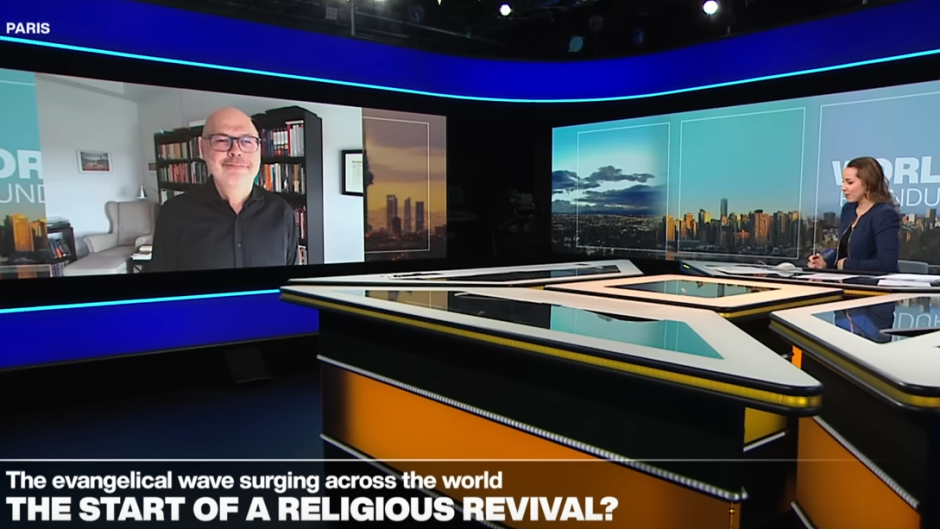
A programme on public television channel France 2 that questioned the actions and doctrine of evangelicals in the country has caused much controversy in France. The day before, on 25 September, another French news channel, France24, broadcast (this time in English) another report on evangelicals and their growing influence.
“The evangelical Christian lobby has been winning the hearts and minds of ordinary people with success in one particular demographic: disaffected young white men”, said the report, which can be viewed on France24 English's YouTube channel. “They have been recruited en masse by influencers and podcasters like the late Charlie Kirk, credited with turning a new generation towards Christian nationalism”.
Beyond the US, the report moves to Brazil, where evangelical growth is said to have been used by former President Jair Bolsonaro, as a bargaining chip to establish himself in power.
The reporter then jumps to France, explaining that “in a country that prides itself on its secularism, conservative Christians are now trying to influence politics, with the National Council of French Evangelicals [CNEF, the evangelical alliance], sending lobbyists into the halls of power”.
Finally, the journalistic analysis piece arrives in the European Union, where it points to the Alliance Defending Freedom, a US group that “is determined to apply the same tactics in Europe”.
André Gagné: “European evangelicals detach themselves from the US”
In a subsequent interview, André Gagné, Chair of the Department of Theological Studies at Concordia University in Montreal, Canada, is interviewed. The headlines on screen show messages such as: ‘The evangelical wave surging across the world’.
After explaining the essentials of evangelicalism, the expert clarifies that a faith group that has great variety worldwide should not be generalised. “The reflex is to associate evangelical Christians with the US”, he says, but in Europe, for example, “evangelicals only represent around 2.5%, about 22 to 23 million people”.
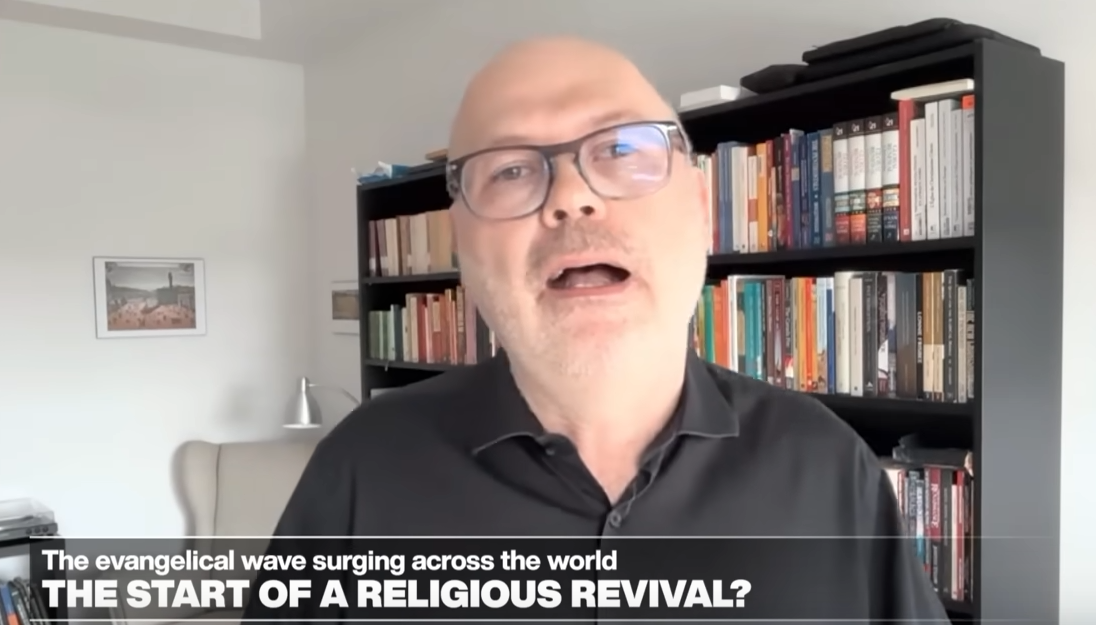
Professor André Gagné speaking at France24's section on evangelical influence in European politics. / Snapshot: France 24 English. According to Gagné's estimates, there are about 5 million evangelicals in the United Kingdom, 2 million in Germany and 1 million in France, the European countries with the largest number of churches.
Asked about their interest in influencing politics, he says that “evangelicals have their concerns”, including in particular religious freedom, which they also consider to be declining in Europe. In general, their “conservative values really differ from those we see in a secular society (...) When they have opportunities to speak their minds, they take them”.
Gagné believes that as part of their ‘activism’, evangelicals “get involved in elections”. But ‘due to their small numbers in Europe, the impact of evangelicals is not really significant’. In Eastern Europe, evangelicals sometimes join other Christian traditions to “cooperate and get one voice to share the things that are important to them”.
The professor emphasises, however, that “most evangelicals in Europe do not want to be associated with the type of Christian nationalist agenda that is pushed in the US”. Some even publicly distance themselves.
The influence of European evangelicals, he concludes, is “played out in more subtle ways because they do not have the demographics that are present, of course, in the US”.
Julia Doxat-Purser: “Not surprising that European media are interested in Evangelicalism”
Julia Doxat-Purser is a key figure in the 30-year effort by evangelicals to build dialogue with politics at the European level.
As socio-political representative of the European Evangelical Alliance (EEA), she considers that “it is not surprising that European media are interested in Evangelicalism, considering how prevalent Evangelicals are in US political news”.
In comments to Evangelical Focus after watching the France24 broadcast, she explains: “Of course, journalists will be wondering what European Evangelicals are up to as they are likely to think that we Europeans are just like our US cousins. France 24 chose to interview a Canadian expert who gave a reasonably accurate description of Evangelicalism, including pointing out that the differences between Europe and the US”.
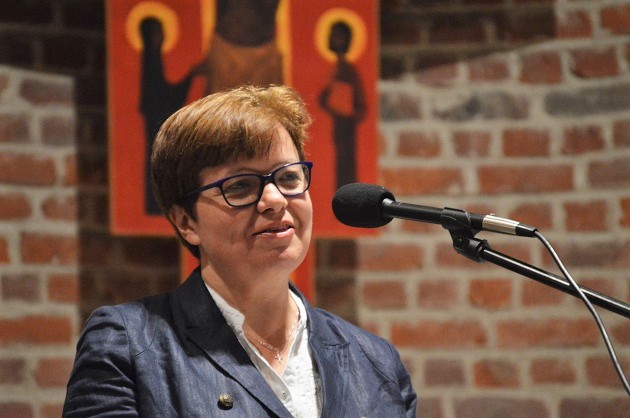
Julia Doxat-Purser, socio-political representative of the European Evangelical Alliance. Doxat-Purser, who has come to know political discourse in Brussels and also in Eastern Europe, considers that André Gagné “conveyed that it would be normal for Evangelicals to want to speak up in politics on issues that are important to them”.
For the member of the European Evangelical Alliance team, which represents some 23 million people on the continent, “in a democracy, of course everyone should be allowed to raise their voice. Evangelicals speaking up in politics isn't about trying to impose anything but arguing our point, praying and hoping to convince”.
“It was not covered in the interview, but there are some in Europe who want to silence those who speak up to oppose abortion or gay marriage, branding them as dangerous extremists. It is this kind of view that is dangerous”.
Doxat-Purser agrees with Gagné's observation that “most European Evangelicals, while sharing conservative views on some issues, are uncomfortable with how it seems many US Evangelicals do politics”.
“We believe that the Lord is neither Republican nor Democrat, Conservative nor Liberal”
“We want to see biblical values influence society and we would love to see Christian believers serving God in public life, alongside those with other worldviews. However, we believe that the Lord is neither Republican nor Democrat, Conservative nor Liberal”.
Being evangelical should never be automatically linked to a particular party affiliation. “While individual Christians may join political parties, the Church itself should be strictly non-partisan on party politics, even if we are most definitely partisan on good government and biblical values”.
But she admits that “with American Evangelicalism being in the news, it is inevitable that Europeans will think that all Evangelicals are the same. Now, more than ever, we need to be gracious but bold as Christ's ambassadors”, she concludes. “Let's be seen and heard as Good News People”.
Join us to make EF sustainable
Learn all about our #TogetherInThisMission initiative here (English).
Published in: Evangelical Focus - europe - ‘American Evangelicalism is in the news, and Europeans think we are all the same. Now, let’s be gracious but bold as Christ’s ambassadors’