
“We must insist on a public expression of faith that is both humble and confident”
We talk to professor, author and lecturer Paul S. Williams about the challenges of discipleship in a fast-paced world, the pressure of secularism, and what it means to have a relevant faith<
02 DECEMBER 2025 · 16:15 CET
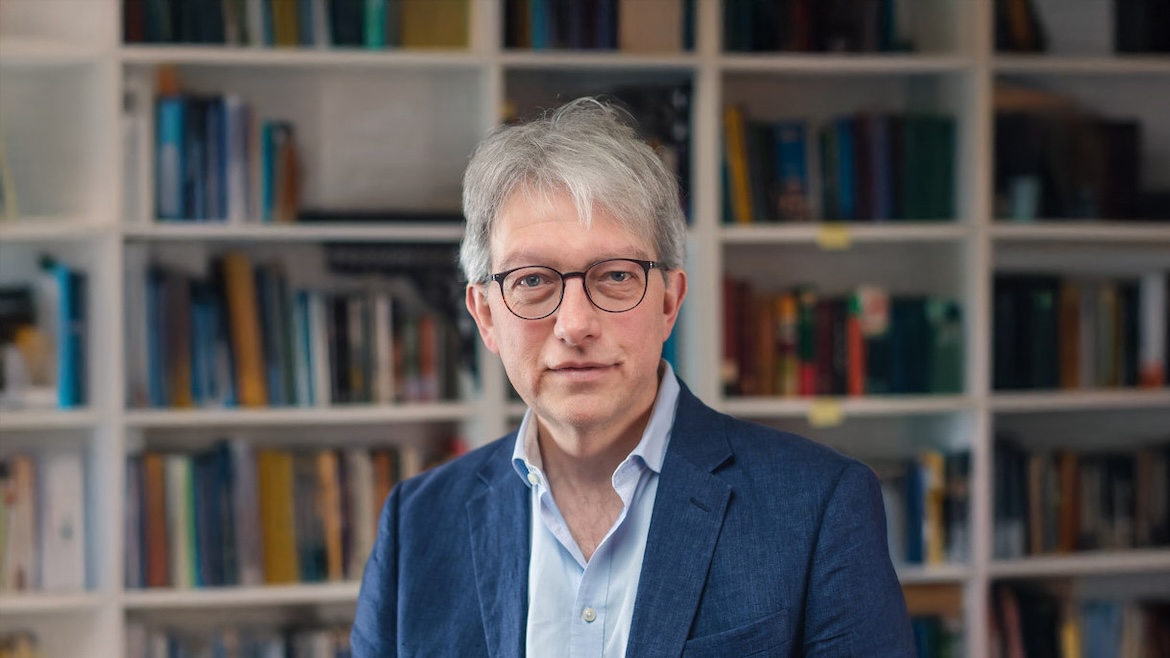
Paul S. Williams is a world-renowned voice on discipleship in public life, as well as on mission in the workplace and in secular culture.
He is the director of the British and Foreign Bible Society and has had a long academic career at Regent College in Vancouver, as a professor and researcher in theology, discipleship, spirituality in the workplace and mission in the public sphere.
Williams's approach integrates economics, political philosophy, and theology, areas he knows well from his experience as an economist and advisor to international organisations.
All Evangelical Focus news and opinion, on your WhatsApp.
His professional, academic, and ministerial experience has inspired innovative projects such as Integra, an initiative that aims to help Christians connect their faith with all aspects of their lives and respond missionally to the challenges of contemporary culture.
As an author, he is known for his book Exiles on Mission, in which Williams provides Christians with tools to flourish in an increasingly secular environment.
Married to Sarah and a father of two daughters, he continues to promote a vision of integral discipleship that addresses the challenges of the 21st century.
Williams will give the keynote speech at Forum GBU, an event organised by United Bible Groups (GBU, IFES Spain) in the south-eastern Spanish city of Alicante, which will be attended by over 700 people.
Prior to the event, Williams answered to questions by Spanish news website Protestante Digital.
Question. One of the key aspects of your work is discipleship. How do you understand the call to discipleship within the current context of Western Europe?
Answer. Disciples are characterised by being learners and the first lesson we all are asked to learn is the lesson of following.
To follow Jesus is to imitate him, trust him and obey him in the context we find ourselves in. Like all contexts, our current context in Western Europe presents challenges to these things.
Our society celebrates reputation, image and control for the individual, rather than humility, sacrifice for others and vulnerability. It trusts in wealth, technology and political power rather than in dependence on God and the wisdom of the Holy Spirit.
Those things, combined with the distractions of entertainment and digital technology inhibit our obedience.
The biggest challenge to changing all this is our busyness and perhaps the greatest opportunity for radical discipleship is to relentlessly insist on slowing down our lives and laying hold of solitude to pray and allow our imaginations to be cleansed so we can see as God sees and hear what God is saying and respond to it.
Q. In the Western world, the trend towards secularism seems to be pushing faith to the margins of the public sphere. What do you think are the most important challenges for Christians in this environment?
A. This pushing of faith to the margins can tempt us in a number of ways, especially if we feel that we ‘ought’ to be at the centre (as we were in the past).
In this case we feel angry and shamed that we have lost our previous level of influence. This makes us feel that we don’t belong and its uncomfortable.
Therefore, we might withdraw into the personal and private arena and keep our ‘Christian culture’ alive in our own community, perhaps occasionally expressing critiques of secular culture in an angry tone from the margins.
On the other hand, we might be so desperate to fit in that we compromise our public faith in order to avoid being marginalised and silenced or critiqued.
The challenge is to recognise that we have no intrinsic right to be influencing anything: our identity is precisely to be witnesses of another kingdom and another power. Jesus told us to expect persecution.
We may often be completely misunderstood, but we must insist on a public expression of faith that is both humble and confident regardless of how we are then treated or perceived.
The gospel cannot be confined to a personal private arena. It makes claims on all people and all nations.
Q. In recent months, a kind of 'awakening' seems to have emerged among younger generations in different parts of Europe. Do you think this new generation is more open to exploring spirituality than previous ones? If so, what opportunities does this present for evangelicals?
A. All the evidence suggests that younger generations are more open to exploring spiritual truths and especially christianity and that many are actively seeking at this time.
Much of this comes from the failure of secularity to provide satisfying answers to the deepest questions and needs of human life.
In some parts of Europe, the search for deeper and better answers for life and human society is being met by an unexpected and powerful presence of the Holy Spirit - there are many accounts of people who have had dreams of Jesus, or that have read the Bible on their own and encounted Jesus through Scripture, or who have asked Christian friends and family to take them to church and have then come to faith.
Therefore, these are very exciting times and there are great opportunities because these seekers want the real thing - ‘full fat Christianity’ not a watered down version.
But we must also acknowledge that these younger generations are almost completely unchurched. Their knowledge of the Bible is close to zero. Their questions are many and quite different to those that we might be expecting.
So we must learn to have an open attitude towards these seekers, and a humility to learn how to trust the Holy Spirit and Scripture itself when we are unsure or unfamiliar with the kinds of questions that they want to ask.
Q. In what ways does personal identity shape the way we live out an authentic Christian faith?
A. Identity is incredibly important to Christian faith. It’s at the heart of the gospel that our identity changes, we must be born again as Jesus says.
We become a new creation. There is a vital shift from those who are ‘not a people’ and ‘rejected’ to being those who are the ‘people of God’ and ‘accepted’. We were far off but are now ‘adopted into God’s family’.
We become heirs and citizens of the kingdom. All these and other metaphors used in Scripture are ways of highlighting just how important our personal identity is to our salvation and redemption.
The sinful nature that we all have is alienated from God. Living out of it, which we do by default, cannot lead to a life that is close to God, that is intimate with God, in which the life and power of God flows, or that pleases God. Rather it leads to an enslaved misery.
All this changes when we encounter Jesus and are called by him into his kingdom, out of darkness and into light and receive the Spirit, bringing new life to our spirit so that we become alive to God.
Above all, when we encounter Jesus he calls us to himself so that we can know the Father, that is, so that we can know God not only as the Maker of Heaven and Earth (which he is) but as the One who cares for me, personally and particularly.
Knowing the love of God personally is completely life-changing. It’s impossible to really live the Christian life without the experience of knowing the love of the Father for us. This is the heart of the gospel - eternal life is to know the Father’s love according to Jesus prayer in John 17.
In some ways discipleship is a lifelong process of understanding and experiencing this truth ever more deeply and being ever more deeply transformed and set free to love in return.
Increasingly I realise that I am not fundamentally defined by my skills, my beauty (or lack of it!), my productivity, or even by what I have done for God.
Rather my identity is that, despite all my sin, I am loved by God. I am his beloved. And nothing at all can separate me from that love. This gives an extraordinary freedom, confidence and desire to live to please him.
Q. Finally, what do you expect from Forum GBU, where you will soon be speaking?
A. I am not quite sure what to expect but I am excited by the prospect. Sarah and I have very limited knowledge and experience of Spain and the Spanish church.
It’s an impressive gathering and I feel deeply honoured to be invited to speak.
I do feel more excited at what God is doing at this time than at any other time in my life and I have faith to talk about that, to share what I see and sense of the Spirit’s work, and of course to be amongst other believers who share that same desire and longing for God and his kingdom is a very uplifting prospect.
Join us to make EF sustainable
Learn all about our #TogetherInThisMission initiative here (English).
Published in: Evangelical Focus - europe - “We must insist on a public expression of faith that is both humble and confident”