
“Followers of Jesus have a radical counter-narrative to the fear and division that seem to rule the social media”
At its 2026 European meeting, the Refugee Highway Partnership will bring together churches and ministries working with forcibly displaced people. The focus this year is on the realities of children and young people.
MALAGA · 24 FEBRUARY 2026 · 15:38 CET
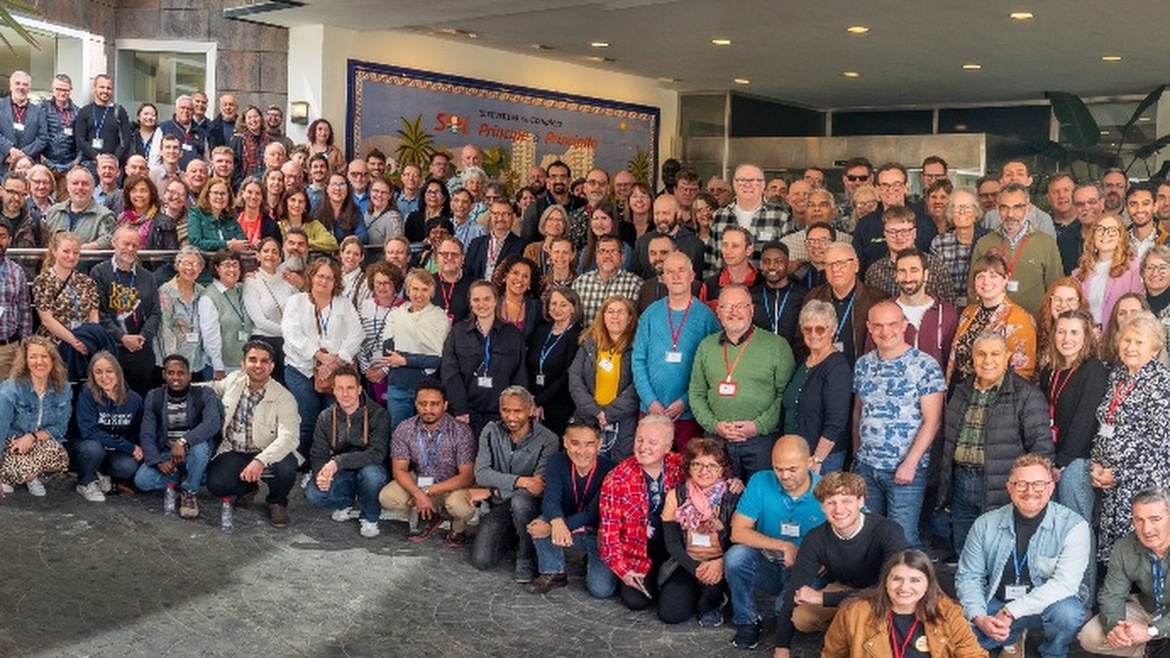
Some 150 Christian ministries in Europe network together in the Refugee Highway Partnership (RHP), a movement that serves forcibly displaced people and connects them with Christian communities.
Like other networks that work thematically from a common Christian perspective, the RHP seeks to share resources, provide training and encouragement, and mobilise churches and Christian organisations to action.
“We are motivated by our Biblical Mandate and we believe prayer to be foundational to our movement and ministry”, the group says on its website.
The gathering (known as roundtable) of 2026 will happen in Málaga (south of Spain) between 23-27 March.
All Evangelical Focus news and opinion, on your WhatsApp.
Evangelical Focus asked Whitney Gerdes, global education specialist at the International Association for Refugees (IAFR) and managing director of RHP Europe, about political trends in Europe regarding foreigners, the role of churches in welcoming displaced people, and who should attend the meeting. Gerdes has been living in Vienna (Austria) for almost two decades.
.jpg "“Followers of Jesus have a radical counter-narrative to the fear and division that seem to rule the social media”")
Question. How have you seen evolve the movement of Christians focusing on refugees and migrants in Europe after the pandemic?
Answer. The popularity of ministries or churches focusing on refugees has increased and decreased throughout the years, but I can confidently say that many have been focused on this group of people for years, and many have caught the vision for what God is doing in and among the forcibly displaced.
Since the pandemic, and even more since the invasion of Ukraine by Russia, there have been an increasing number of European churches and ministries committed to walking alongside those forcibly displaced in their communities.
Q. What have been de most discussed issues or challenges addressed by the groups that form the RHP?
A. Within the churches and ministries that make up the RHP network the most discussed topics are integration and what that looks like in each community and new home country.
As well as the weariness of volunteers and the displaced themselves due to protracted conflicts and the short news cycle that moves on quickly, and not least of all concerns over nationalism and the right response of the Church.
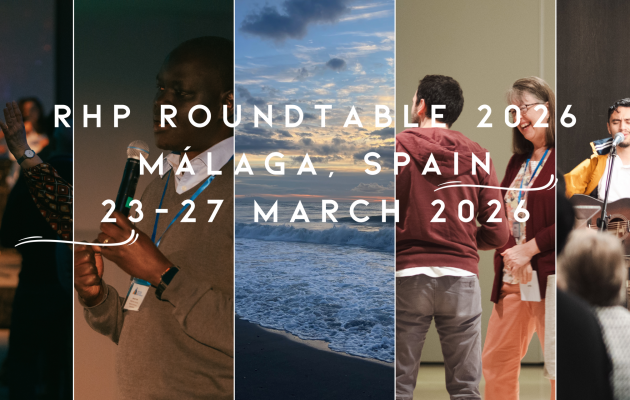
Information shared by RHP Europe about their March 2026 gathering, in Málaga.Q. In Europe, more and more political parties are talking about migration in negative terms. This, in addition to the rise of far-right nationalistic movements. How do Christian organisations working with asylum seekers and refugees respond to these narratives?
A. For the last few years, there has been, and continues to be, a swing toward suspicion of refugees. Many countries here in Europe are using migration as a political pawn and tool to drive fear-based voting. Christians have a critical role in bringing the heart of Jesus—who was an immigrant himself—into these spheres and discussions.
We, as followers of Jesus, have a radical counter-narrative to the fear and division that can seem to rule social media and the news. Because of the Gospel, we know God’s heart is for all of His image bearers and perhaps God has brought the migrant to our doorstep, and it is His kingdom moving not something to be feared.
All groups of people no matter their histories or passport status are capable of heartbreaking acts and beautiful contribution, our role as Jesus followers is to love because He first loved us.
That is also why publications like Evangelical Focus are so critical in this discussion: to shine a light on what God is doing in and through forced displacement and migration here in Europe.
Q. What specific realities do second generation kids (sons and daughters of migrants) in Europe live that make them unique compared to others in their generation?
A. Second-generation European children whose parents carry a story of forced displacement live in a different reality than their peers. Positively, they carry the ability to translate culture, they have learned how to adapt, and most often can speak multiple languages.
On the other side, since their parents experienced a very different school system in their home country, they are often on their own to navigate the education system.
Additionally, they may see the impact of trauma on their parents and carry great concern for them, and in some cases experience secondary trauma. These children and teens are filled with gifts and abilities and, with the right support, are key to the desired integration of their families and communities.
Q. What kind of people do you hope will attend RHP Europe's gathering in Malaga this year?
A. Everyone is invited to the RHP Europe Roundtable. However, we are specifically inviting those engaged with the forcibly displaced or migrants in their community. Even if you have just started to be involved or would like to start this is a great event to learn more about how to get more engaged with this community.
We are also excited to offer teaching and workshops specifically on this year’s theme around children and youth, so anyone engaged in this work is warmly welcome to attend.
Do you think there is a need for this kind of journalism?
Through news, interviews, opinion and analysis, we seek to build bridges between evangelical churches and the societies in which they live.
As a non-profit entity, the big challenge is to be sustainable, month by month. We invite you to make a difference: join the readers who make Evangelical Focus possible!
Published in: Evangelical Focus - europe - “Followers of Jesus have a radical counter-narrative to the fear and division that seem to rule the social media”