
UK ratifies its decision to decriminalise home abortions up to birth
The House of Lords rejects amendments calling for safety measures for women, such as an in-person consultation before receiving medication by post to induce an abortion outside a clinic.
LONDON · 19 MARCH 2026 · 11:16 CET
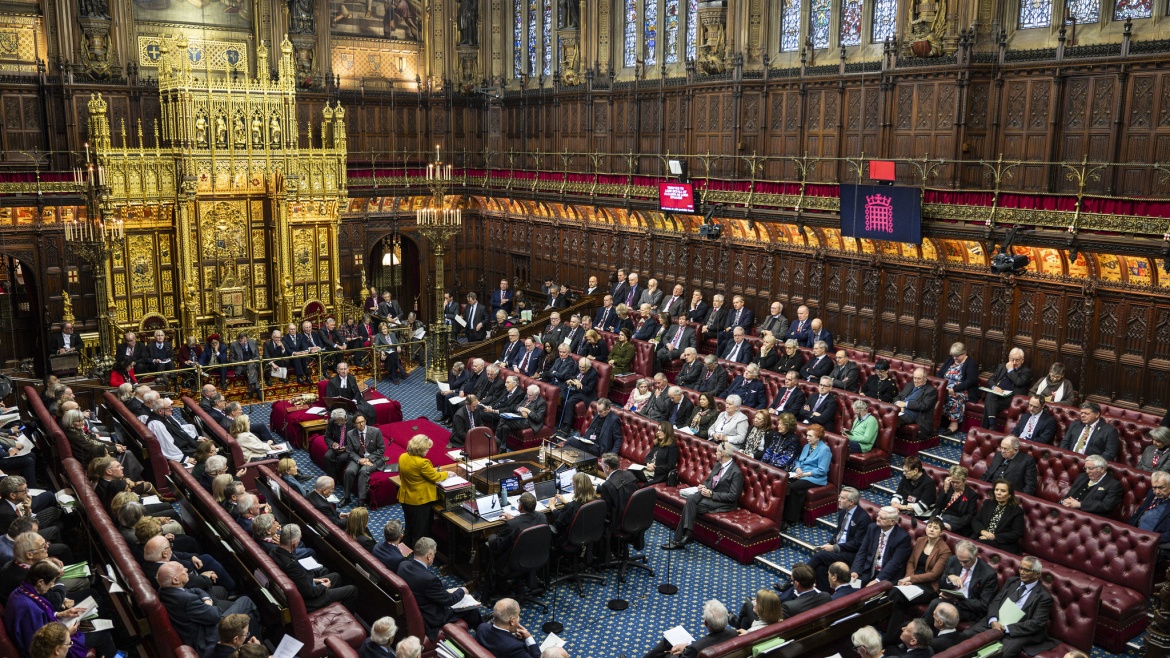
The House of Lords has not made any significant changes to the law passed in June by the United Kingdom lower house (House of Commons), which fully decriminalised abortion, including when performed shortly before the baby’s due date.
Pro-life groups had hoped that two amendments tabled by conservative politicians and representatives of the Church of England (which has representation in the House of Lords) would be accepted. But this was not the case.
All Evangelical Focus news and opinion, on your WhatsApp.
The House of Lords voted on Wednesday 18 March, with 185 against and 148 in favour, to reject an amendment to the bill that would have removed clause 206 – the part of the text that allows abortions beyond the legal limit of 24 weeks to no longer be considered a crime.
In effect, therefore, any abortion carried out outside a medical practice will go unpunished.
So-called ‘home’ or ‘DIY’ abortions have become much easier to carry out since the British government temporarily facilitated access to medication by post to terminate a pregnancy during the pandemic in 2020. Then, in 2022, these arrangements were made permanent, even though there were no longer any restrictions on accessing medical centres.
A second amendment was also rejected. It called for women to have at least one in-person consultation at a medical centre before carrying out an abortion elsewhere. It was defeated by 191 votes against to 119 in favour.
This means that, barring any surprises, the law decriminalising all forms of abortion up to birth will go ahead. The legal limit for having an abortion in healthcare centres will remain at 24 weeks, but there will be no consequences for those who have an abortion at home beyond that timeframe.
The latest abortion statistics released by the UK government show a record number of abortions. In 2023, 277,970 abortions were performed in England and Wales – 762 a day.
The most significant change since 1967
Abortion was first legalised in the UK in 1967.
Pro-life groups such as Right to Life regard the law now set to be passed as the most significant change in these 60 years. “If this bill becomes law, it will likely lead to a significant increase in the number of women performing late-term abortions at home, endangering the lives of many more women,” said this group, which organises pro-life marches every year.
They believe the new law will also encourage abortions based on the baby’s gender, a practice which, according to a recent survey by Savanta ComRes, is rejected by 89% of the British population.
Evangelicals express “deep concern”
The Evangelical Alliance UK reacted to the vote with “deep concern” over the “bad news” coming from Westminster. If the law does come into force, the evangelical body added, it is necessary to “ensure that women facing crisis pregnancies receive compassionate, life-affirming support, and that both mother and child are cared for with dignity before and after birth”.
The Society for the Protection of Unborn Children regrets that this liberalisation of the abortion law has been “pushed through without any pre-legislative scrutiny, public consultation or a detailed impact assessment”.
They believe the new law “will lead to late-term abortions being carried out on babies who, if born in hospital, would stand a good chance of surviving”.
Pardon for women who had illegal abortions
The parties that have pushed for the new law welcome the fact that women who have previously been punished for having illegal abortions will be pardoned, and that the focus is shifted away from the woman when terminations of pregnancy are carried out outside the legal time limits.
The Archbishop of Canterbury, Sarah Mullally, leader of the Church of England, took part in the debate in the House of Lords. She recalled the Anglican Church’s “principled opposition” to abortion, based on its understanding of the “infinite value of human life”.
Mullally acknowledged that within the Church of England there are also those who support abortion, but stated that, in her view, this new law “undoubtedly risks eroding the safeguards and enforcement of those legal limits, and inadvertently undermining the value of human life”.
More abortion in Europe
Attempts to further liberalise abortion laws are also taking place in other European countries.
The European Union has recently stated that its funds can be used for this purpose.
In 2024, France enshrined abortion as a fundamental right in its constitution, and countries such as Spain have also debated the issue.
Countries such as Ireland continue to record new record numbers of abortions.
Do you see a need for this kind of journalism?
Through news, interviews, opinion and analysis, we seek to build bridges between evangelical churches and the societies in which they live.
As a non-profit entity, the big challenge is to be sustainable, month by month. We invite you to make a difference! Join the readers who make Evangelical Focus possible.
Published in: Evangelical Focus - europe - UK ratifies its decision to decriminalise home abortions up to birth