
Spain must ‘examine its conscience’ following death of Noelia Castillo by euthanasia, says Evangelical Alliance
The Spanish evangelical body issues a statement analysing the assisted death of the young woman and warns that the right response to suffering is not to hasten death, but to increase care.
Protestante Digital · BARCELONA · 31 MARCH 2026 · 15:04 CET
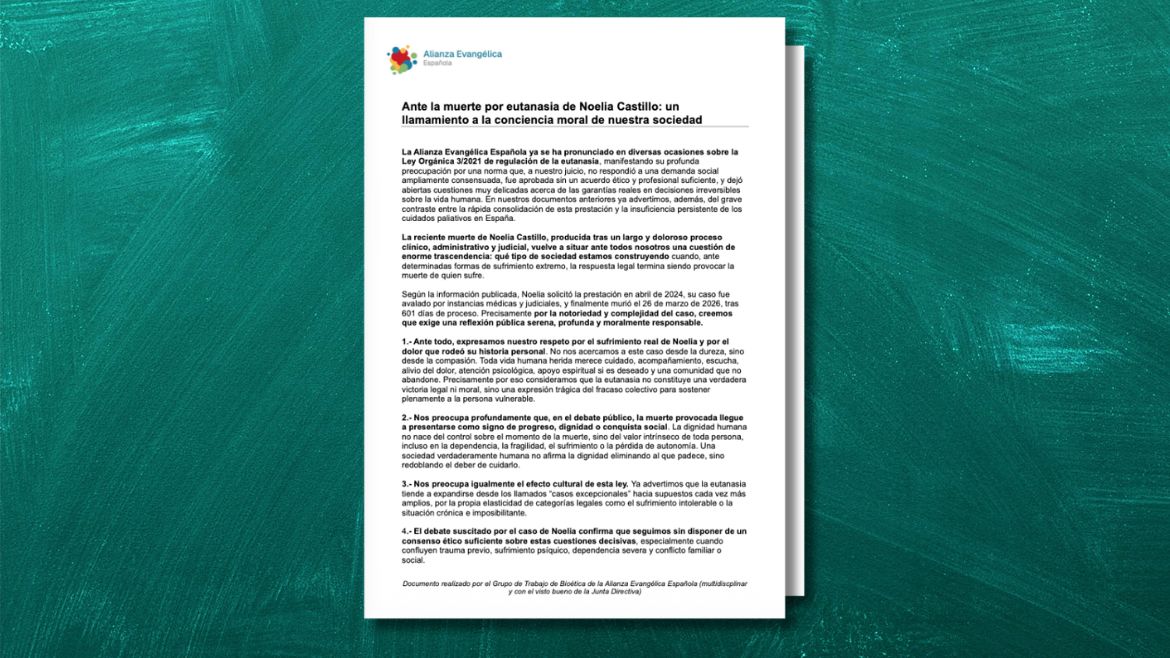
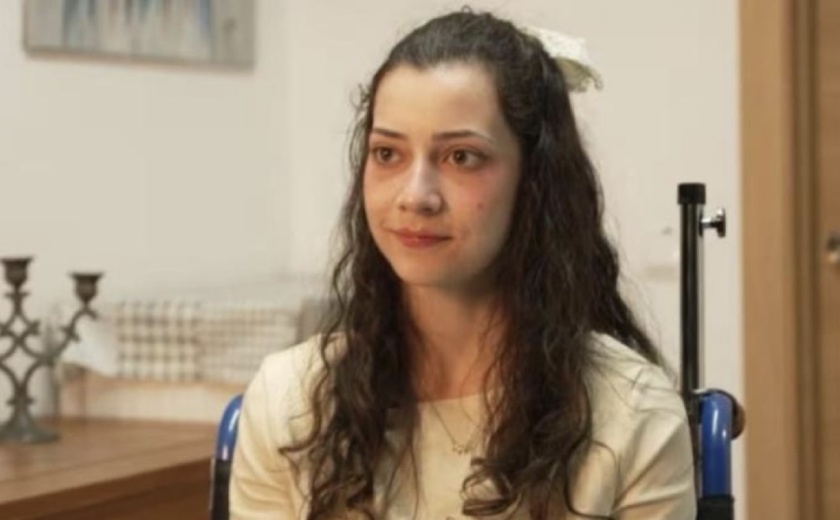
The Spanish Evangelical Alliance (AEE) has issued a statement regarding the euthanasia of the 25-year-old Spanish woman, Noelia Castillo, a case that shocked public opinion.
In a document entitled “An appeal to the moral conscience of our society”, the entity expresses its deep concern over the ethical drift represented by the normalisation of euthanasia and its consequences.
The statement, drawn up by the Bioethics and Health Working Group, with the backing of the AEE board, stresses that what happened to Noelia should not be a “cultural trophy”, but rather a cause for ‘examination of conscience’ for a country which, they believe, is prioritising assisted dying over comprehensive care.
All Evangelical Focus news and opinion, on your WhatsApp.
The position of the AEE on the euthanasia law was set out in detail in 2021, when the bill was debated and processed in Parliament, where it was eventually passed by a simple majority.
Furthermore, the 4th Bioethics Conference, co-organised by the Evangelical Alliance and the United Bible Groups (GBU) in 2022, included a stance of respect for life in its conclusions and denounced the shift towards euthanasia as a “slippery slope”, “being applied to an increasing number of patients who are not terminally ill”.
They also warned of the “clear lack of resources in palliative care for a dignified death, which contrasts with the massive expansion of the euthanasia law, which is being promoted as the only apparent option for terminally ill patients”.
Compassion versus ‘cultural drift’
In this latest statement, the AEE approaches the situation that has affected the public in recent weeks with empathy.
“We do not approach this case with harshness, but with compassion. Every human life in distress deserves care, support, a listening ear, and relief from pain”, they state.
However, the AEE is clear in its definition of the assistance received by Castillo: “We consider that euthanasia is not a true legal or moral victory, but rather a tragic expression of the collective failure to fully support vulnerable people”.
The Alliance also warns against presenting assisted dying as a sign of progress.
For the AEE, dignity “does not arise from control over the moment of death, but from the intrinsic value of every person, even in dependence, fragility, suffering, or loss of autonomy”.
Lack of palliative care
One of the most critical points in the statement highlights the “flexibility of legal categories”, such as “intolerable suffering”, which allows euthanasia to expand from exceptional cases to an increasingly broad range of circumstances.
The AEE condemns the contrast between the speed with which euthanasia is carried out, and “the persistent lack of palliative care in Spain”.
They urge the authorities to ensure that no one feels compelled to die for reasons unrelated to their clinical condition.
“We call on them to prioritise the necessary resources so that no one feels compelled to choose death due to neglect, loneliness, despair, or a lack of support”, states the AEE.
A proposal between two extremes
When faced with the dilemma between artificially prolonging suffering and induced death, evangelical Christians propose a third way, based on the legacy of the Reformation and the biblical worldview.
“We reject both therapeutic obstinacy and the deliberate elimination of the person. Between excessive treatment and euthanasia, there is a profoundly human path: that of appropriate therapeutic effort, comprehensive palliative care, spiritual care, and faithful companionship until the end”.
It is “essential”, they say, to strengthen “the ethical and healthcare safeguards that ensure no irreversible decision is taken without having explored all alternatives for care, psychological support, social support, and palliative care”, underlines the statement.
The evangelical group ends the document with a warning about the quality of democratic debate in Spain, lamenting that those who disagree with the law are morally discredited.
“If we call it progress to facilitate death rather than guarantee care, […] we need to thoroughly review the moral course we are taking”, concludes the AEE, reaffirming its commitment to defend a “culture of life” in the public sphere.
Do you see a need for this kind of journalism?
Through news, interviews, opinion and analysis, we seek to build bridges between evangelical churches and the societies in which they live.
As a non-profit entity, the big challenge is to be sustainable, month by month. We invite you to make a difference! Join the readers who make Evangelical Focus possible.
Published in: Evangelical Focus - europe - Spain must ‘examine its conscience’ following death of Noelia Castillo by euthanasia, says Evangelical Alliance