
UK’s assisted dying bill shelved after time for debate runs out: ‘Prayers have been answered’
Hundreds of amendments and a lengthy debate in both houses of parliament, combined with opposition from doctors, pro-life groups and a divided public, have put an end to the bill. Pro-assisted dying parliamentarians will have to start the process from scratch.
LONDON · 27 APRIL 2026 · 13:30 CET
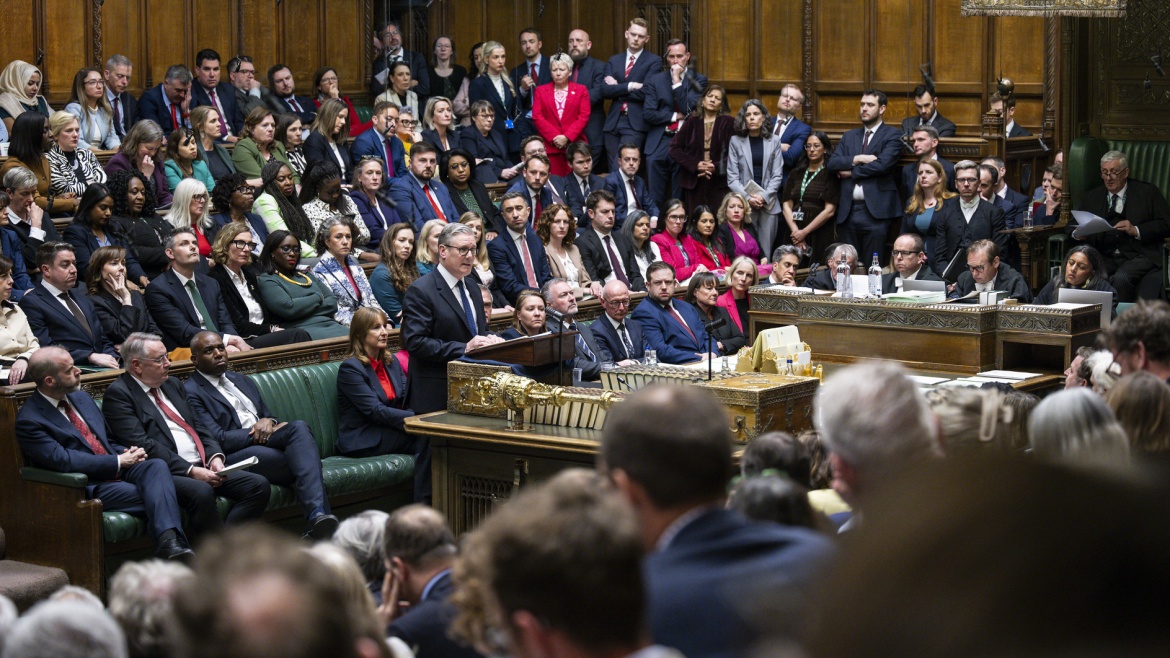
The United Kingdom will not pass a new assisted dying bill, viewed by its opponents as radical and a danger to the most vulnerable.
The rules of the UK Parliament (comprising the House of Commons and the House of Lords) required a final vote to be taken within the allotted time, which expired on Friday 24 April.
Consequently, the Terminally Ill Adults (End of Life) Bill, which was the subject of intense debate among MPs and peers in Westminster, has come to nothing. Parties wishing to legalise assisted suicide or euthanasia will have to start the debate process from scratch, once again, from May, when the new parliamentary session begins.
All Evangelical Focus news and opinion, on your WhatsApp.
Division inside the Prime Minister's own party
The bill had been proposed by Prime Minister Keir Starmer’s Labour Party, but met with opposition within his own government, with a significant vote against it from his own Health Secretary, Wes Streeting. This bill was not included in the Labour Party’s election manifesto with which they won the last general election.
Many in the opposition and civil society organisations consulted, such as medical associations, warned that, as drafted, the law put vulnerable people—particularly the elderly—at serious risk by exposing them to pressure to decide to end their own lives. Opponents believe the law would also make assisted suicide more accessible to groups struggling to reintegrate into society, such as war veterans.
Even MPs in favour of assisted dying have said that the text did not contain sufficient safeguards to ensure its proper use.
Polls in the UK show that a majority of citizens would be in favour of legalising assisted dying in principle, but surveys on this specific bill have shown that the majority do not trust that it has been properly drafted.
The record number of approximately 1,200 amendments to the text ultimately exhausted the available time.
Debate in Wales and a 'no' in Scotland
Davyd Smith, a Christian MP from the progressive parliamentary majority in the House of Commons, has expressed in a letter his relief and the need for MPs to learn from the “divisive debate of over 18 months”.
Leaders of faith communities in Wales expressed their opposition to this bill.
In March, the Scottish Parliament also brought an attempt at similar legislation to an end, in that case with a vote against it.
Evangelical Christians: “Grateful for answered prayers”
“Grateful for answered prayers after a long journey and for our EAUK advocacy team who worked tirelessly, meeting many MPs”, reacted Gavin Calver, CEO of the Evangelical Alliance UK, on social media. “It may return—but today, I thank Jesus it has not become law”.
The EAUK, which has been heavily involved in the debate over this bill, said over a year ago that this proposed legislation was “the biggest proposed change to our social fabric in a generation”.
The Christian Medical Fellowship, uniting over 4,000 medical doctors and 450 nurses in the UK, said: “The failure to progress highlights a difficult but important truth: it is not possible to construct an assisted suicide service that is safe, equitable, and resistant to placing unacceptable pressure on the most vulnerable”.
“The House of Lords deserves immense gratitude for doing exactly what it is there to do: carefully scrutinising legislation”, said the pro-life group Right To Life.
CARE, a Christian group focused on public policy, has also welcomed the conclusion of the process. “As Christians, we believe that every human being has intrinsic dignity because we are all made in God’s image. The right approach to help the sick, the frail and the dying is to ensure that gold-standard health, social and palliative care is available at the point of need”.
An early attempt to reintroduce the law?
The Church of England Bishop of Newcastle, who spoke at the debate in the House of Lords, said: “Whilst my faith informs my concern regarding our treatment of dignity—or the lack thereof—it is from my experience on the Select Committee that I have found that the more closely we have examined this bill, the more concerns have come into focus, not fewer”.
“For a bill of this magnitude in terms of societal change, the highest level of scrutiny is imperative”, concluded Helen-Ann Hartley.
It now remains to be seen whether pro-choice campaigners will reintroduce the bill in the near future. A recent survey by Whitestone Insight suggests that the number of Members of Parliament who would vote “yes” to this bill has fallen to 41%.
Do you see a need for this kind of journalism?
Through news, interviews, opinion and analysis, we seek to build bridges between evangelical churches and the societies in which they live.
As a non-profit entity, the big challenge is to be sustainable, month by month. We invite you to make a difference! Join the readers who make Evangelical Focus possible.
Published in: Evangelical Focus - europe - UK’s assisted dying bill shelved after time for debate runs out: ‘Prayers have been answered’