
Swiss Evangelical Alliance underlines “encounter and dialogue” in mission of Christians
This year, a joint delegated meeting of the German- and the French-speaking branches gathered 120 people in Murten. The Alliance seeks a middle ground between fundamentalism and liberalism.
Swiss Evangelical Alliance · MURTEN · 10 JUNE 2026 · 10:09 CET
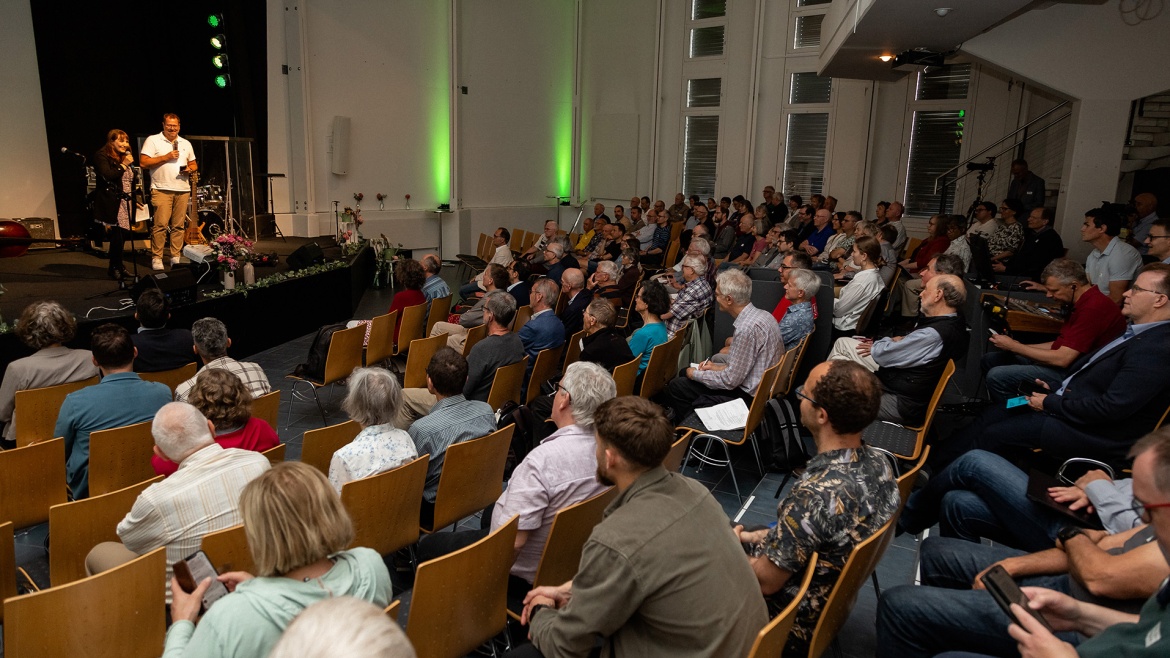
The joint Delegates’ Assembly of the SEA (German-speaking Switzerland) and the RES (French-speaking Switzerland), held every three to four years, brought together around 120 participants in Murten. Viviane Krucker-Baud and Christian Kuhn led the programme in both languages.
The invited speaker at the Delegates’ Assembly of the Swiss Evangelical Alliance SEA-RES in Murten did not mince his words: Dr Roland Hardmeier analysed the situation of Christianity in the Western world with both ruthless honesty and respect. Above all, however, he outlined a ‘middle way’ between fundamentalism and progressive relativism – a path he considered challenging, but the only one pointing towards the future.
All Evangelical Focus news and opinion, on your WhatsApp.
“What does it mean to be a Christian in the radical plurality of postmodernity, and what is an integral part of the Christian faith, without any ifs or buts?” To get to the bottom of this, Roland Hardmeier, who holds a doctorate in theology, first outlined the various forms of Christianity in a pointed manner to an audience of around 120 guests from German- and French-speaking Switzerland.
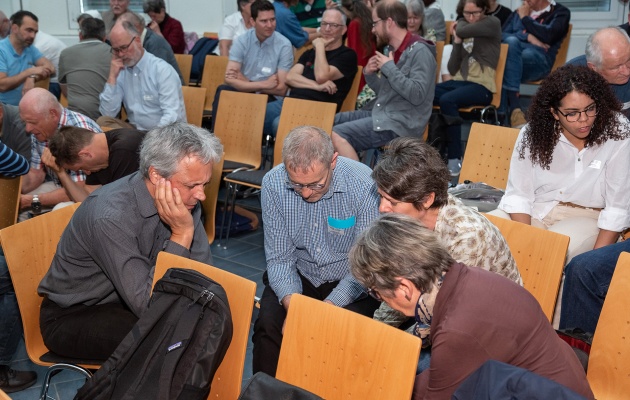
“Progressives are fundamentally engaged with the world and strive to rethink the tenets of faith in the light of the times. Conservatives tend to be more detached from the world and strive to preserve the faith in the face of the spirit of the age”, said Hardmeier, describing the fundamental difference.
The two poles in this broad spectrum offer security, he argued, but they come at a price. Fundamentalism is prone to one-sided views and conspiracy theories. Progressive relativism accepts a loss of faith in order to avoid clashing with the spirit of the age.
The Church as a counter-culture to individualism
Roland Hardmeier called to trust in the Bible as God’s Word, adhere to the fundamentals of the faith, search for truth and have a correct stance on ethical issues, as well as a renewed understanding of the Church as a community and thus a counterculture to postmodern individualism.
Time and again, this expert on the Alliance drew parallels with historical events from the 180-year history of the Evangelical Alliance to make it clear: it is well-positioned to continue along the middle path.
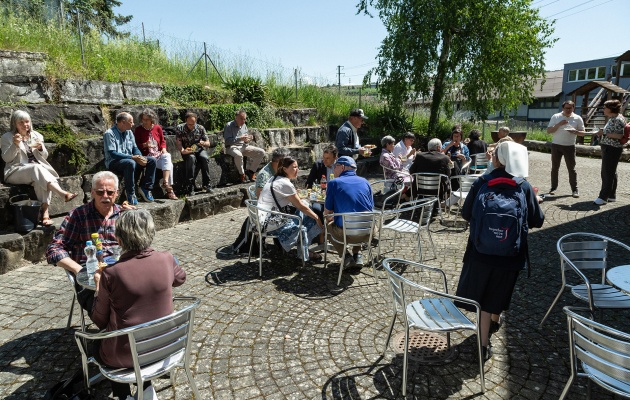
He underlined that even at its beginnings, the Evangelical Alliance did not invoke a vague unity, but agreed on a theological basis that included many and excluded some. “That is why this unity still exists after almost 200 years,” Roland Hardmeier is convinced.
The speaker added: “Despite massive social pressure, the early church did not abandon its confession of faith in Jesus. In their forms of worship and the way church life was lived, the early Christians were adaptable. In the substance of their faith, they were unshakeable.”
New Executive Committee elected
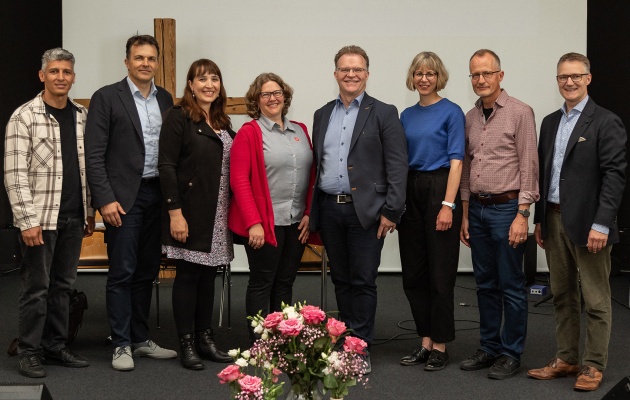
At the general meeting of the SEA, the German-speaking branch of the Evangelical Alliance re-elected President Beat Ungricht and the two Executive Committee members Heike Breitenstein and Sultan Assawahri. Equally without debate and unanimously, the delegates present elected Judith Dummermuth from The Salvation Army and Daniel Rath from the Federation of Free Evangelical Churches (FEG) as new members of the board. Kati Rechsteiner and Peter Schneeberger stepped down from the board after eight and nine years respectively.
Financially, the precarious situation of recent years has eased somewhat. As the 2025 annual accounts closed with a surplus, a small reserve could once again be built up.
Furthermore, the Swiss Evangelical Alliance German-speaking team led by Co-General Secretaries Viviane Krucker-Baud and Andi Bachmann-Roth looked back on a variety of encounters over the past year that demonstrated that for Christians to work together successfully – the core concern of the Evangelical Alliance – encounter, relationship and dialogue are essential.
Do you see a need for this kind of journalism?
Through news, interviews, opinion and analysis, we seek to build bridges between evangelical churches and the societies in which they live.
As a non-profit entity, the big challenge is to be sustainable, month by month. We invite you to make a difference! Join the readers who make Evangelical Focus possible.
Published in: Evangelical Focus - europe - Swiss Evangelical Alliance underlines “encounter and dialogue” in mission of Christians