
Hate crimes against Christians in Western Europe? Experts share the trends they are seeing on the ground
Evangelical representatives from France, Austria and Italy took part in an OSCE meeting held in Rome. Julia Doxat-Purser, from the European Evangelical Alliance, expressed concern about how evangelicals are portrayed in a ‘toxic atmosphere’ that increasingly fuels hatred towards ‘the other’.
ROME · 12 JUNE 2026 · 12:00 CET
Cropped(2).jpg)
Is there discrimination and hate crime against Christians in Europe? And specifically, can we speak of anti-Christian speech and actions in France, Spain, Italy and Austria?
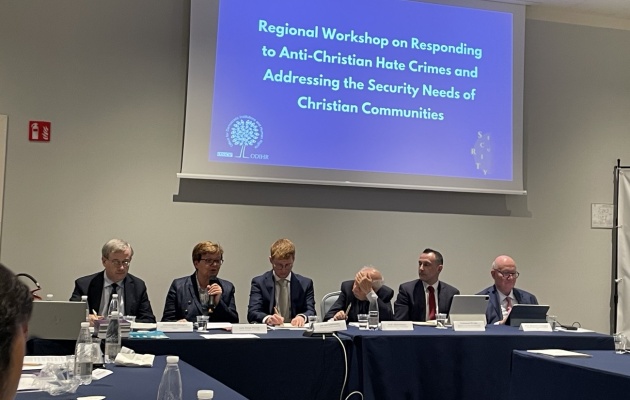
On 26 and 27 May, the city of Rome hosted an official meeting of the ODIHR, the branch of the OSCE (the largest security organisation in Europe) dedicated to democracy and human rights. The aim was “responding to anti-Christian hate crimes and addressing the security needs of Christian communities in Western Europe”.
All Evangelical Focus news and opinion, on your WhatsApp.
The thirty or so experts in attendance shared specific cases and figures from their respective countries and discussed how to cooperate more effectively to counter negative trends.
Evangelicals from four countries
Among the small group of invited participants was Julia Doxat-Purser, socio-political representative of the European Evangelical Alliance (EEA), who has extensive experience in promoting the defence of religious freedom and freedom of expression.
Also travelling to the Italian capital were lawyer Nancy Lefevre of the French Evangelical Alliance, Andrea Sturm-Lauter of the Austrian Evangelical Alliance, and Damaris Marletta of the Italian Evangelical Alliance.
The European Evangelical Alliance representative shared impressions of the meeting with Evangelical Focus.
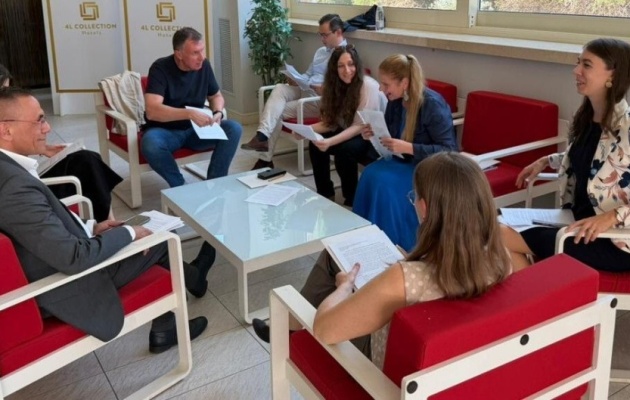
Julia Doxat-Purser: “Evangelicals often portrayed as strange sects or powerful extremists”
Question. What worries Christians most in Europe?
Answer. The types of hate crime vary across nations. Most Christians do not worry about them because they have not been directly affected. But all experts suspect there is considerable underreporting.
The European Evangelical Alliance urges all Christians to report hate crimes to the OSCE and/or to the Observatory on Intolerance or Discrimination Against Christians (OIDAC).
“Compared to Muslims and Jews, Christians still suffer far fewer hate crimes. We should not play the victim card”
Compared to Muslims and Jews, Christians still suffer far fewer hate crimes. We should not play the victim card. What worries the EEA and the national Evangelical Alliances represented at the meeting is that the situation could deteriorate.
Intolerance against ‘the other’ is growing. Bold but false accusations are being made and division is growing. Hatred simmers. Without attention from all of us, where might this corrosive atmosphere lead?
Evangelicals are sometimes caricatured as strange sects or powerful extremists who want to ruin democracy. There is a culture of contempt which fuels hatred and could lead to more violence.
Q. What were some good practices that stood out in the sessions or informal conversations of this two-day gathering?
A. It was encouraging to hear the concern from national police & anti-religious hatred leaders from several nations. They really care. But they are under-resourced and the local police cannot be experts in everything.
In Austria, there is a good practice, at least partly funded by the European Union, designed to make it really simple and easy to record crucial data. The police use it when assessing a crime scene, and it is helping to improve the prosecution rate.
Q. What trends should political bodies address to improve religious freedom?
A. The European Evangelical Alliance calls upon politicians and the media to play their part in pushing back against intolerance.
“It is wrong to label Christians as extremists simply because they may hold views on life or sexual relationships with which others disagree”
For example, it is wrong to label Christians as extremists simply because they may hold views on life or sexual relationships with which others disagree. We ask that democratic pluralism be respected.
Every European nation is made up of citizens with a diversity of worldviews, beliefs and opinions. We are not all the same, we will not always agree. We do need to find ways to live together with our deepest differences in a civil public sphere.
Q. What could evangelical churches do better to explain themselves to society in a way that avoids stereotyping in the media and on social media?
A. At the EEA, we truly believe that the media and politicians would be pleasantly surprised if they got to know evangelical Christians.
We want to see local churches reaching out to their politicians, inviting them to get to know them and see all the amazing ways they serve their communities. Evangelical Alliances should build positive relationships with the media and government.
Nancy Lefevre in France: Misinformation leads to greater discrimination
In a context of numerous television and press reports in France focusing on the growth of evangelical churches in the country, Nancy Lefevre explained to Evangelical Focus that she worries that France and other countries in Europe are moving from “misinformation and stigmatisation” to a “discrimination” that could end in “violence”.
The fact that the French Ministry of the Interior published (just the day after the Rome conference) a detailed national report on anti-religious acts for the year 2025 is very good news, she believes.
The Head of the Legal Department at the CNEF says there is a need for “religious literacy training for law enforcement bodies, but also, in increasingly secular countries, better religious literacy for society as a whole through education and fair media coverage”.
Lefevre viewed it as positive that the OSCE is taking anti-Christian attacks seriously because “freedom of religion and belief without security would be impossible to exercise in practice”.
If all anti-Christian attacks that occur are reported to the police, it will also be possible to “build a culture of trust in law enforcement”, especially among “Christian minority groups (for instance, those from the diaspora)”.
Do you see a need for this kind of journalism?
Through news, interviews, opinion and analysis, we seek to build bridges between evangelical churches and the societies in which they live.
As a non-profit entity, the big challenge is to be sustainable, month by month. We invite you to make a difference! Join the readers who make Evangelical Focus possible.
Published in: Evangelical Focus - europe - Hate crimes against Christians in Western Europe? Experts share the trends they are seeing on the ground