
Evangelical father takes right to share faith with son to Strasbourg, following denial by Spain’s Constitutional Court
The case of a father who was barred by the Spanish courts from taking his young son to church or teaching him about the faith, due to the mother’s opposition, has been referred to the European Court of Human Rights.
Protestante Digital · MADRID · 21 SEPTEMBER 2026 · 15:29 CET
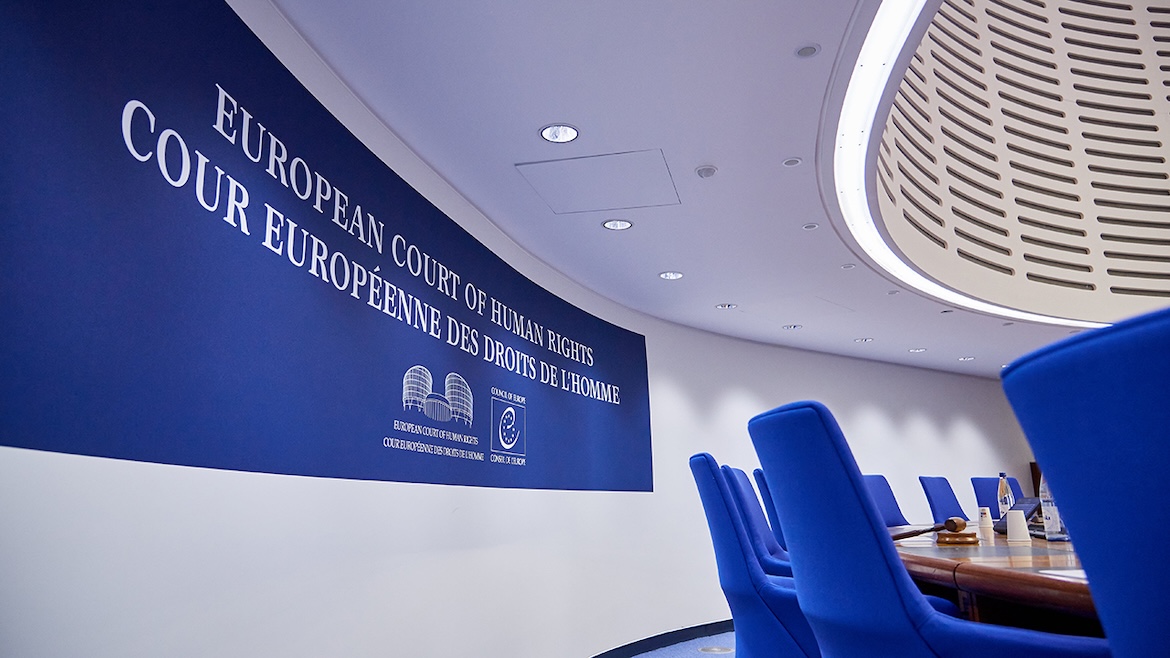
The European Court of Human Rights (ECHR) is examining a case which, if admitted for consideration, could lead to a review of a legal principle that the court itself established just three years ago. This concerns the case of a father of evangelical faith whom the courts in Spain have prohibited from teaching his son any religious content or taking him to church, following opposition from the child’s mother.
The dispute has reached Strasbourg after all legal avenues in Spain have been exhausted, including the Constitutional Court (TC), which unanimously rejected the claimant’s appeal, relying on a previous precedent set by the ECHR itself.
All Evangelical Focus news and opinion, on your WhatsApp
Religious freedom in conflict
The case originated in 2022, when the mother of a child born in 2016 applied to the Alcobendas Court of First Instance to be granted sole authority to decide on her son’s religious upbringing until he reached the age of twelve. She alleged that the father, following the separation, had begun taking the child to an evangelical church, reading him passages from the Bible and showing him faith-related content on a tablet, without her consent.
As argued during the case, before their separation, both parents had agreed not to provide the child with any religious upbringing. The court considered that this prior agreement – rather than a negative view of the Evangelical faith itself – was the criterion that should prevail whilst the child was not sufficiently mature to decide for himself.
Consequently, it granted the mother sole parental authority in this matter and expressly prohibited the father from taking the child to church, showing him Bible passages or “indoctrinating him in the Evangelical faith”. The Madrid Provincial Court of Appeal upheld the decision in 2023.
The father lodged an appeal for constitutional protection before the Constitutional Court, arguing that the ruling infringed his freedom of religion (Article 16 of the Constitution) and his right to ensure his son received a religious upbringing in accordance with his own convictions (Article 27.3). He maintained that the right to pass on one’s faith to one’s children forms part of the essential content of freedom of religion, even in the event of disagreement between the parents.
A precedent set by the European court
In its judgement of May 2025, the Constitutional Court unanimously dismissed the appeal. The court’s central argument distinguishes between two dimensions of religious freedom: an internal dimension, relating to the believer’s own conduct, which would remain protected given that the father can continue to practise his faith without any restriction; and an external dimension, that of ‘sharing’ one’s convictions with third parties, which may indeed be restricted when that third party is a minor and there is a conflict with the other parent.
In resolving the case, the Constitutional Court emphasised the judgment of the European Court of Human Rights (ECHR) of 19 May 2022 (case T.C. v. Italy), in which Strasbourg upheld an Italian court’s order that a Jehovah’s Witness father refrain from actively involving his daughter in his religious activities, without this constituting unequal treatment on religious grounds.
The ECHR had stated at the time that the decisive criterion must be the best interests of the child and the need to reconcile the educational choices of both parents, not an assessment of whether a particular faith is beneficial or harmful.
The case in Strasbourg
The father has exhausted all domestic legal remedies in Spain and has taken the case to the ECHR. Should the Court rule on the merits of the case, a judgement in either direction would have implications beyond this specific case: it would establish to what extent a parent may share their faith with a minor child when the other parent objects, and what scope the State – through its courts – retains to intervene in that private sphere.
The Federation of Evangelical Religious Organisations of Spain (FEREDE) has announced that it will intervene as a third party (amicus curiae) in this case, as it considers that it is relevant to religious freedom within the family. As explained by FEREDE, through this role “it does not form part of the legal proceedings but asks the court to allow it to provide arguments and context to help it reach a more informed decision. It does not defend either party to the dispute, but rather offers a broader perspective on the consequences the decision will have beyond the specific case”.
Do you see a need for this kind of journalism?
Through news, interviews, opinion and analysis, we seek to build bridges between evangelical churches and the societies in which they live.
As a non-profit entity, the big challenge is to be sustainable, month by month. We invite you to make a difference! Join the readers who make Evangelical Focus possible.
Published in: Evangelical Focus - europe - Evangelical father takes right to share faith with son to Strasbourg, following denial by Spain’s Constitutional Court