
Do constitutional freedoms make people uncomfortable? A civic defence of ‘The Change’
The gathering of 35,000 Christians in Madrid last weekend can and should be debated, just like any other public event. But it should not be treated as a democratic anomaly simply because it is evangelical, large-scale and visible.
MADRID · 07 MAY 2026 · 12:05 CET
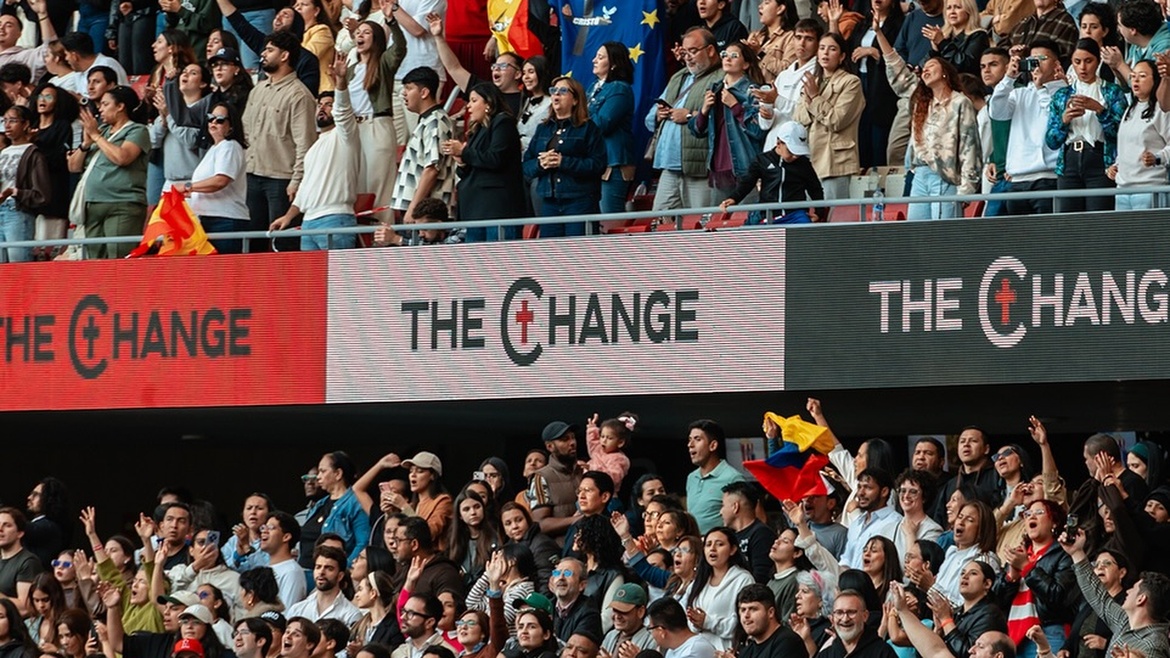
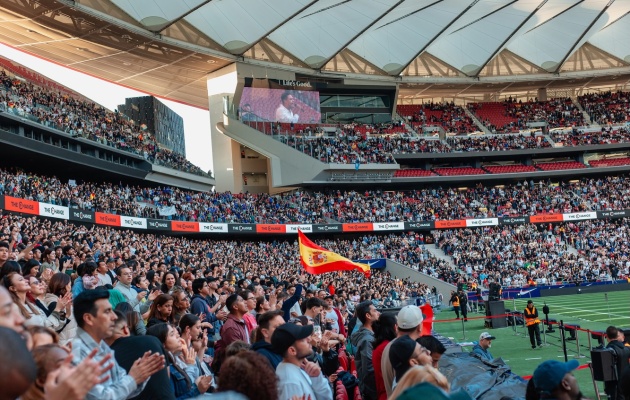
Last weekend, Madrid’s Metropolitano Stadium welcomed tens of thousands of people gathered for the event ‘The Change’. What for many was a day of music, prayer, testimony and public expression of the Christian faith, for others quickly became a subject of suspicion, ridicule and attack.
The event went from being a large religious gathering to dominating headlines, television talk shows and heated discussions on social media.
It is legitimate for an event of this magnitude to be scrutinised. It is legitimate to question its organisation, its aesthetics, its messages, its guests or its methods of communication.
All Evangelical Focus news and opinion, on your WhatsApp.
In a free society, criticism is part of public debate, but what is worrying is that a significant proportion of the reactions have not been limited to evaluating the event, but have led to a general disparagement of those who took part in it, to a caricaturisation of the evangelical faith and, in some cases, to an evident contempt towards a minority religious expression and towards a significant part of the migrant population that forms part of it.
That is why this column does not aim to offer a spiritual or theological defence of ‘The Change’. The point here is not to assess its songs, its sermons, its prayer practices or its charismatic sensibility. Nor is it a call for everyone to share in what was experienced there.
Religious freedom is not merely the right to believe in private. It is also the right to publicly manifest one’s faith, to assemble, to sing, to preach, to pray, to invite others
The answer, from a democratic and constitutional perspective, must be unequivocal: yes.
Religious freedom is not merely the right to believe in private. It is also the right to publicly manifest one’s faith, to assemble, to sing, to preach, to pray, to invite others and to participate in social life in accordance with one’s own convictions.
A pluralistic society is not one that confines religion to the private sphere, but one that allows different worldviews, religious or otherwise, to be expressed under the same rules.
The Change can and should be debated, just like any other public event. But it should not be treated as a democratic anomaly simply because it is evangelical, large-scale and visible.
Are we willing to defend freedoms when those who exercise them do not look like us, do not speak like us, do not pray like us?
The real debate is not whether we all like ‘The Change’; the real debate is whether we are willing to defend freedoms when those who exercise them do not look like us, do not speak like us, do not pray like us or do not express their faith in a way that is familiar to us.
Based on this conviction, I propose a calm reflection on what has happened: a defence that is not confessional, but civic; not based on religious adherence to the event, but on the principles of freedom, pluralism, equality and respect that underpin a truly democratic society.
1. Religious freedom is not merely a private matter
The Spanish Constitution does not protect only private or domestic belief. Article 16 guarantees the freedom of ideology, religion and worship “of individuals and communities”, including in their public manifestations, with the sole limitation being public order as protected by law.
Therefore, those who argue that religion can exist “as long as it does not come out into the streets” are defending an impoverished conception of religious freedom.
Religious freedom includes worship, assembly, teaching, public expression, the dissemination of beliefs and community activities.
Furthermore, Spain's Organic Law on Religious Freedom expressly recognises the right to assemble or demonstrate publicly for religious purposes, as well as to disseminate and propagate one’s own creed.
Defending ‘The Change’ means defending the view that evangelicals have the same right to a public presence as any other cultural, political, trade union, artistic, sporting or ideological group.
2. The public space does not belong solely to secular ideologies
Madrid can host political demonstrations, concerts, parades, sporting celebrations, feminist marches, trade union events, Catholic processions, LGTBIQ+ events, music festivals, neighbourhood protests and also an evangelical event.
Democratic pluralism does not mean that beliefs which make part of society uncomfortable should disappear from the public sphere. It consists of allowing many different beliefs to be expressed under the same rules.
If a stadium can be filled for a concert, a rally, a final or a festival, it can also be filled for a religious gathering.
What matters is not whether the content is religious or not; what matters is whether the law is followed, safety is ensured, the venue is properly booked, and the rights of others are respected.
3. Making fun of a religion is also freedom; despising its believers is quite another matter
The media and the public have the right to criticise, be ironic about, and even satirise a religious event. Freedom of expression also protects harsh, uncomfortable or irreverent opinions.
The Constitution itself recognises the right to express and disseminate thoughts, ideas and opinions by any means.
It is not legitimate, in terms of democratic coexistence, to caricature thousands of citizens, treating them as fanatical, undesirable foreigners or inferior people
It is not legitimate, in terms of democratic coexistence, to caricature thousands of citizens, treating them as backward, fanatical, undesirable foreigners or inferior people simply because they are Evangelicals, Latinos or believers.
Freedom of expression protects criticism of the event. But religious freedom and equality before the law also require that mockery not be turned into the stigmatisation of a religious minority.
The Constitution prohibits discrimination on grounds of religion, opinion or any other personal or social condition.
4. The fact that the event was evangelical does not make it suspect
Part of the media coverage seems surprised that there are so many evangelicals in Madrid or that many are Latin American. But that should not be presented as a threat. It is, quite simply, social diversity.
Spain is no longer religiously monolithic. There are Catholics, Evangelicals, Orthodox Christians, Muslims, Jews, Buddhists, people with no religion and many other groups.
Evangelical visibility is not a democratic anomaly; it is a normal consequence of a pluralistic society.
In fact, if thousands of migrant citizens or children of migrants find community, a sense of belonging, music, companionship and social networks in evangelical churches, that should not automatically be seen as a problem. It can also be a form of integration, mutual support and civic participation.
5. Dani Alves: one can criticise the decision without denying the right to the event
The presence of former FC Barcelona and Brazil football, Dani Alves, presence is probably the most sensitive and contentious aspect of the event. We should not avoid the issue or brush it aside with pious rhetoric.
It is legitimate that many people, especially those who are particularly sensitive to sexual violence and the suffering of victims, have felt repulsion, discomfort or concern at seeing him occupy a prominent place at a mass Christian gathering.
It is one thing to celebrate that a person claims to have found Christ, and quite another to immediately make them a role model, a central witness or a visible symbol before thousands of people
The rule of law determines criminal liability; but a Christian organisation must also consider the appropriateness of the event, the message it conveys and the effect it may have on those who have suffered abuse, violence or situations of power abused.
Furthermore, from a basic Christian perspective, it is problematic to grant public prominence to someone who, given their own recent journey of faith, must be considered a neophyte.
It is one thing to celebrate that a person claims to have found Christ, and quite another to immediately make them a role model, a central witness or a visible symbol before thousands of people.
Newborn faith needs accompaniment, discipleship, proven character and time. Not every powerful testimony is ready to be showcased on a mass platform.
Christian tradition has wisely cautioned against the hasty elevation of those who have only just begun their journey. Not out of contempt for them, but precisely out of care: care for the person who is just beginning their journey with the Lord, care for the community, care for the public message, and care for those who might feel hurt by such exposure.
Conversion should not be exploited, nor should spiritual restoration become a strategy for media impact.
That said, it is one thing to question that specific decision and quite another to use it to delegitimise 40,000 attendees, caricature evangelicals or deny a religious community’s right to assemble publicly.
A potentially mistaken judgement regarding an invitation does not nullify religious freedom. The imprudence of a platform does not render illegitimate the right of thousands of citizens to sing, pray and express their faith.
In a country governed by the rule of law, a person acquitted by a court is not permanently excluded from the public sphere, unless there is a judicial ruling limiting their rights.
However, at the same time, an acquittal does not oblige a Christian organisation to grant immediate public prominence, nor does it exempt it from assessing the pastoral and social impact of that decision.
Therefore, the conclusion must be twofold and honest: ‘The Change’ had every right to take place; Dani Alves’s participation was, at the very least, pastorally questionable and, in terms of communication, imprudent.
But that discussion does not justify attacking religious freedom, ridiculing an entire community, or turning thousands of believers into suspects simply for having gathered publicly.
6. Public prayer for leaders is not a political threat
It has also been presented as shocking that the organizers speak of praying for leaders, be it Pedro Sánchez, Ayuso, the King or Spain. But, from a civil perspective, praying for authorities is not equivalent to seizing power, imposing a theocracy or colonising institutions.
In a democracy, social groups express values and concerns. Some do so through manifestos, others through songs, others through strikes, others through prayer
As long as there is no coercion, irregular funding, threats or violation of rights, the public expression of a religious conviction regarding the common good falls within the scope of freedom of expression and assembly.
7. The measuring stick must be the same for everyone
The basic democratic principle is this: what is permitted for some must not be prohibited for others on the grounds of religion.
If a public authority permits cultural events, concerts, demonstrations or ideological gatherings in public spaces or private venues open to the public, it cannot regard an event as suspect simply because it is evangelical.
The Constitution recognises the right to peaceful, unarmed assembly, and permits the prohibition of gatherings in public spaces only where there are well-founded reasons to believe they will disrupt public order and endanger people or property.
It is not enough that someone finds it strange, excessive, emotional, Latin, evangelical or uncomfortable. Cultural discomfort is not a legitimate reason to restrict fundamental rights.
'The Change' and the democratic test of religious freedom
One may like ‘The Change’ Madrid more or less. Defending The Change does not require sharing its theology, its liturgical forms or all its organisational decisions.
Defending ‘The Change’ does not require sharing its theology, its liturgical forms or all its organisational decisions. Citizens have the right to assemble, express themselves and publicly celebrate their faith as they see fit
I conclude and repeat: the democratic question is not “do I like this event?”. The democratic question is: “do they have the right to hold it?”. And the answer, unequivocally, in a constitutional state, is yes.
Democratic pluralism does not consist of silencing religion, but of ensuring that all beliefs can be expressed under the same rules.
And I emphasise once again: criticising the event is legitimate. Disparaging its attendees for being Evangelicals, Latinos or believers is not. A mature democracy does not fear different voices expressing themselves; rather, it fears that only some have the cultural permission to do so.
Marcos Zapata, evangelical pastor in Lugo and president of the Spanish Evangelical Alliance.
Do you see a need for this kind of journalism?
Through news, interviews, opinion and analysis, we seek to build bridges between evangelical churches and the societies in which they live.
As a non-profit entity, the big challenge is to be sustainable, month by month. We invite you to make a difference! Join the readers who make Evangelical Focus possible.
Published in: Evangelical Focus - European perspectives - Do constitutional freedoms make people uncomfortable? A civic defence of ‘The Change’