
Policing, perceptions, and truth: Christian reflections on the death of Henry Nowak
When people are discussing a case like this, Christians can testify to a way that takes justice for all seriously but also seeks to be scrupulously fair and hopes for mercy for all involved.
03 JUNE 2026 · 15:07 CET
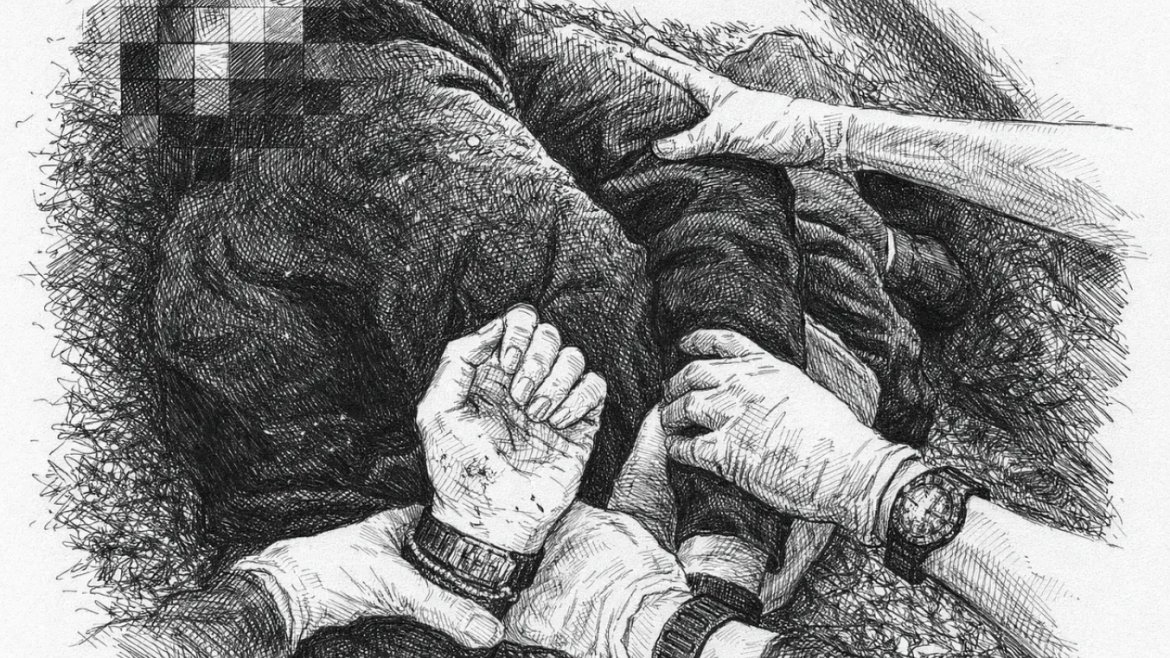
The story of Henry Nowak’s death in Southampton on 4 December 2025 is heart-breaking. As a father of a son of similar age, my heart was heavy listening to his father speaking outside the courthouse where Vickrum Digwa was found guilty of his murder on 1 June 2026.
Judge William Mousley described Nowak as, “a much loved, kind, hard-working and ambitious young man, devoted to his family and with a bright future”.[i]
Digwa was obsessed with weapons and that he launched an unprovoked attack on Nowak after they bumped into each other.
All Evangelical Focus news and opinion, on your WhatsApp.
Nowak asked Digwa in a non-threatening voice if he was a “bad man”, possibly because of the knife he saw on Digwa’s belt and because he was slightly inebriated.
It is clearly a deeply disturbing case. It is important for Christians to understand what happened and to know how to respond
Nowak was filming the interaction on his phone and Digwa seized it, provoking an unwitnessed altercation during which Digwa’s turban was knocked from his head.Enraged, Digwa stabbed Nowak four times – once in the chest, twice in the leg and once in the lower abdomen. The knife blade also cut Nowak’s face. Nowak tried to escape to safety, but ended up in the front garden of a nearby house.
Digwa filmed him as he deteriorated. His family came to the scene and he lied to them about what happened and asked his mother to take the murder weapon away.
The pain of loss for Nowak’s family at this senseless and brutal killing was compounded by the actions of police.
Nowak’s father clearly attributed sole blame for his son’s death to Digwa, but said that his son “did not die with dignity” and that “the way he was treated was inhumane and degrading”.[ii]
This is clearly a deeply disturbing case. It is important for Christians to understand what happened and to know how to respond.
Political reactions to the bodycam footage
Police bodycam footage from the incident was released after the trial, prompting widespread comment and outrage.
The footage was described as “harrowing” by Prime Minister Keir Starmer and “disturbing and tragic” by Home Secretary Shabana Mahmood.[iii]
Leader of Reform UK, Nigel Farage, likened Nowak’s death to that of George Floyd, who died in police custody in Minneapolis in 2020, asking why politicians who expressed outrage on that occasion have not done so over this case.[iv]
He alleged that the case shows a “two-tier” justice system in Britain, with ethnic minorities receiving precedence over white people.
Conservative politicians have also expressed concern that measures intended to reduce ethnic discrimination by police against members of minority ethnic groups may now be causing unfair treatment of white people.
Police bodycam footage of the incident was released after the trial, prompting widespread comment and outrage
Speaking in the Commons, shadow home secretary Chris Philp said that “police appeared more concerned with the accusation of racism… than they were with helping Henry”.[v]The claims of discrimination on ethnic grounds were compounded by the fact that Digwa claimed that the murder weapon was a kirpan – a Sikh ceremonial knife. This has been disputed by the Sikh Federation, who said the 21cm (8 inch) blade was not a kirpan.[vi]
Nevertheless, the law does allow exceptions to the usual ban on knives being carried in public for weapons with religious or ceremonial significance – whether a Sikh man’s kirpan or a Scottish man’s sgian-dubh.[vii]
Police and Crime Commissioner for Hampshire and the Isle of Wight, Donna Jones, has been somewhat less cautious.[xi]
She called Nowak’s killing a “national tragedy” and said the police response “raises serious concerns about police impartiality, fairness and judgement”.
She also called for a review of the legitimacy of people being allowed to carry knives in public for religious reasons. The government has also pledged to review this provision.
What does the footage show?
As I listened to the discussion of this case, an impression of the bodycam footage formed in my mind. I imagined aggressive police officers, swearing and handling Nowak roughly, accusing him of racism.
When I heard audio from the recording on the news, I noted no bleeping indicative of swearing and heard calm voices. I did not want to watch the video, but I felt compelled to do so when I decided to write on this story.
What I saw surprised me. The police officer who wore the camera spoke calmly and politely to Nowak, who was lying on the ground between a car and the front of a house.
He moved Nowak with assistance and positioned him in a more open space, putting him into the reco0very position, expressing concern that he might vomit. It looked to me as if he believed Nowak was drunk and was trying to prevent choking.
Nowak told him he had been stabbed and the officer told him he did not think so. I could not see any blood visible on the ground or on Nowak’s clothing and assume the officer did not either.
Meanwhile the killer told him that Nowak was the attacker and that he had been injured. The officer handcuffed Nowak, again gently, and kept him in the recovery position as Nowak said he could not breathe.
He read his rights to an unresponsive Nowak as another police officer began to examine him for stab wounds. She commented that his pupils were non-reactive and they called for an ambulance. This all happens within the space of a couple of minutes.
We know the police should not have handcuffed and arrested Nowak because we know what they did not know
The police officers in the footage made mistakes. They wrongly assumed that Digwa’s claim to be the victim was correct, but this impression had already been formed by the 999 call from Digwa’s brother – repeating the lies Digwa told him – that brought them to the scene.He reported an unprovoked racially motivated assault by a white man. This was what the officers were expecting to find, and they proceeded on that basis.
They did not realise that Nowak had been stabbed – the postmortem confirms that the fatal wound was deep inside the chest and that most of the blood he had lost was contained internally.
Sadly, it seems that Nowak would not have survived even if the police had taken immediate action to help him.
When we watch the bodycam footage, we know what is happening because we know that Nowak died. The police officers did not know what was happening.
As the Judge in Digwa’s trial said, “It was dark and Henry was wearing a dark top. The entry damage caused by the knife through it, would not have been obvious.
Whilst there was visible blood on Henry, it would not have clearly been seen coming from that wound and the clearly visible facial wound was not lifethreatening”.[viii]
It is also likely that the police officers assumed that Nowak was heavily under the influence of alcohol – in fact his blood alcohol level was below the drink-driving limit – and that this explained his impaired consciousness and the cut on his face resulted from a fall.
We know the police officers should not have handcuffed and arrested Nowak because we know what they did not know.
Importantly, however, from what I saw in the bodycam footage, the police officers acted professionally, with restraint and took action as soon as they realised Nowak was seriously unwell.
I saw no evidence in the bodycam footage that they were acting differently because of ethnicity than they would in other circumstances.
I find it troubling that some politicians were so quick to criticise the actions of these police officers before the investigation has been completed
Reports say that after the released footage ended, they removed the handcuffs – only around one minute after they were applied – and began CPR.They also took appropriate actions after the incident, with the Hampshire & Isle of Wight Constabulary referring itself to the Independent Office for Police Conduct (IOPC) and apologising for handcuffing and arresting Nowak as he was dying.
As of 2 June 2026, their investigation was still ongoing.[ix] However, the Telegraph has reported that the IOPC has said it has not yet found any evidence of misconduct on the part of the police officers.[x]
I find it troubling that some politicians have been so quick to criticise the actions of these police officers before the investigation has been completed.
In particular, the parallels drawn with the officer who killed George Floyd are not fair.
It is true that both Floyd and Nowak said they could not breathe, but in Floyd’s case that was because an officer was pressing on his neck as he lay on his front, whereas Nowak’s breathing trouble was because of his injuries and the officer was concerned to put him in a safe recovery position.
In short, George Floyd was killed by a policeman, Henry Nowak did not receive the prompt help he deserved because police officers profoundly misjudged a situation.
These were human beings doing their job in a challenging situation and had been lied to. I know from my own experience as a doctor how difficult it is to make an accurate judgement in the moment.
If that is true in a well-lit hospital ward with all the diagnostic tools at my disposal, how much harder is it in a dark front garden with a murderer lying in your ear?
It seems likely that the officers will be feeling deep sorrow and regret at what happened. It was reported on the afternoon of 2 June 2026 that one of the officers has resigned.
We need good police officers and if they are exonerated of misconduct, they should be allowed to continue in public service and supported to work through their experience.
How should concerned Christians think about this story?
First, we must pray for Nowak’s family, who have suffered a profound tragedy and deep loss. We can pray that they might know the comfort of God and to find refuge and hope in Christ.
Second, we should also pray for the police officers involved in this case. None of the reporting I have heard has acknowledged how this experience must be impacting them.
We should pray that they will be able to walk through this period of intense public scrutiny, official investigation and political comment without being overwhelmed.
Third, we can pray for due process and fairness in reviewing what can be learned from this tragic case. We can be thankful that the IOPC exists to conduct independent investigations and for a parliamentary system that allows laws to be reconsidered carefully when they prove problematic.
It is good that the details of Nowak’s case are being reviewed and that attention will be given to the appropriateness of exemptions for kirpans and other ceremonial knives.
Fourth, we should pray for politicians and other people of influence to be moderate in their comments as the investigations and reviews are conducted and that unwise comments do not stir up tensions against ethnic minorities.
We must pray for Nowak’s family, who have suffered a profound tragedy and deep loss. We can pray that they might know the comfort of God and to find refuge and hope in Christ
This is not a George Floyd type case. The idea that the white man was the perpetrator was not because of police prejudice but lies told by the murderer and his brother.Whatever lessons need to be learnt, it would be wrong to use this case to suggest that there is deep institutional racism against white people. And it would be even more wrong to use it for party political advantage.
Fifth, we must not be swept along with outrage and assumptions about policing and mut pray that others will not be either. There have already been protests in Southampton. We should pray for peace.
Sixth, we must pray for the Sikh community, that they would not be fearful of reprisals and that they will find a way to work with any restrictions on carrying kirpans – which have deep significance in their religion.
Of course, we also pray that they would come to know Christ as their security.
Seventh, we should also pray for Vickrum Digwa and his family, including his mother who has been charged with perverting justice by trying to conceal the murder weapon.
They deserve the punishment for their crimes that the state, as God’s instrument, should apply. But we should pray that they will repent of their sins to the only authority who can forgive them – God Himself.
Eigth, when people are discussing a case like this, Christians can testify to a different way to see it from the news headlines and political comment. A way that takes justice for all seriously but also seeks to be scrupulously fair and hopes for mercy for all involved.
Paul Coulter, author, executive director of the Centre for Christianity in Society in Northern Ireland. This article was first published on the author's blog, Connected Christianity. If you would like to be informed when the Christian Leadership Integrity Commitments are released, please subscribe to this blog.
Notes
[i] https://www.judiciary.uk/wp-content/uploads/2026/06/Digwa-Final-Sentencing-Remarks.pdf
[ii] https://www.bbc.co.uk/news/articles/c1d2w411rgro
[v] https://www.bbc.co.uk/news/articles/cq8pn9ng5zlo
[vi] https://www.bbc.co.uk/news/articles/c1d2w411rgro
[vii] https://www.gov.uk/buying-carrying-knives
[viii] https://www.judiciary.uk/wp-content/uploads/2026/06/Digwa-Final-Sentencing-Remarks.pdf
Do you see a need for this kind of journalism?
Through news, interviews, opinion and analysis, we seek to build bridges between evangelical churches and the societies in which they live.
As a non-profit entity, the big challenge is to be sustainable, month by month. We invite you to make a difference! Join the readers who make Evangelical Focus possible.
Published in: Evangelical Focus - European perspectives - Policing, perceptions, and truth: Christian reflections on the death of Henry Nowak