
At a parliament devoted to the Pope, everyone picks the pontiff who interests them most
Both the left and the right applauded Leo XIV's speech, in an unprecedented event in recent Spanish history.
09 JUNE 2026 · 15:58 CET
Just a few days ago, the Spanish Parliament hosted the commemoration of the 70th anniversary of the Evangelical Defence Commission, founded in 1956 to defend the rights of Spanish Protestants during Franco’s dictatorship.
The event was attended by evangelical leaders, institutional representatives, and officials in charge of religious affairs.
A documentary was screened and speeches were delivered. The government also announced that it is working to repay the historical debt owed to retired pastors who were unable to make contributions.
All Evangelical Focus news and opinion, on your WhatsApp.
Despite the strong political and institutional presence, neither the President nor the Speaker of Congress attended, nor did the opposition leaders.
The Pope's visit
It is striking that the platform of Congress was given to someone who has not been appointed by the Spanish people and who represents only a specific religious sector
It is striking that, in a place centred on secularism, where representatives elected by the people gather, a platform is given to someone who has not been appointed by the Spanish people and who represents only a specific religious sector of Spanish society, however large that sector may be.
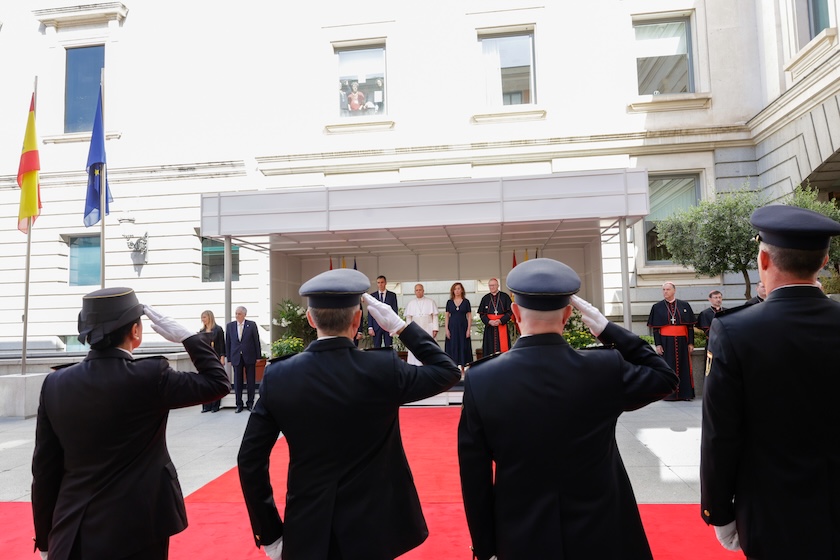
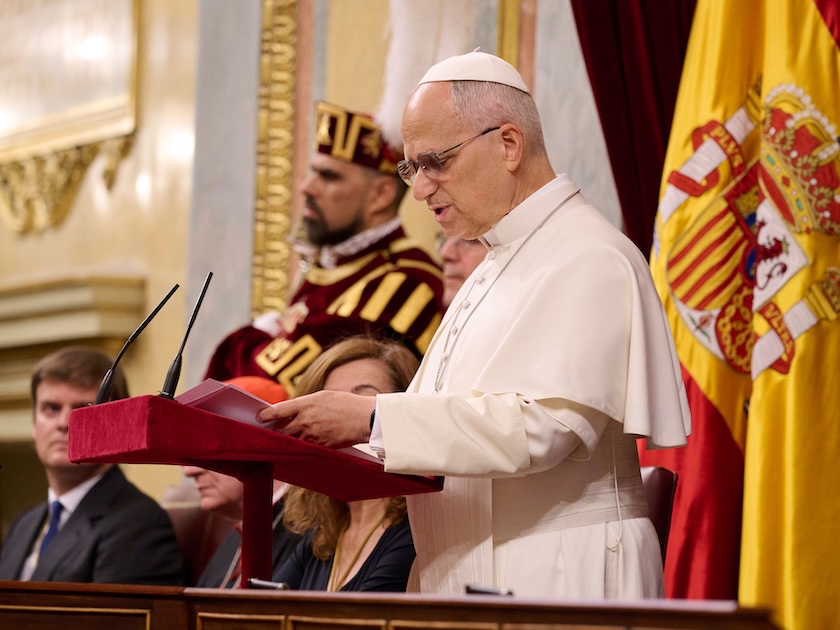
Pope Leo XIV shared the ideas that have characterised his brief time at the head of the Vatican.
In a conciliatory and measured tone, he appealed to history and to Spanish and European culture and the Christian values on which the European Union and the Charter of Fundamental Rights are founded.
There were no references to the Bible or Jesus, merely an allusion to the Ten Commandments, nor any direct quotations from the Gospels.
In front of a government that recently passed a law on euthanasia, the Pope presented the defence of life from conception to natural death as a “goal of civilisation”
He stressed the defence of human dignity in particular, stating that it “precedes any concession by the State”, based on the idea that there is something in the human being that no law can grant or take away, arising from the Christian worldview.
Ahead of a government that recently passed a law on euthanasia, he presented the defence of life from conception to natural death not as a religious dogma, but as a “goal of civilisation”.
The Pope also delved into the importance of human dignity in the face of threats posed by the military use of artificial intelligence, in line with the arguments set out in his recent encyclical.
Leo XIV underlined the need to address immigration by recognising the intrinsic value of every individual, and to explore all diplomatic options in conflicts between nations.
However, the speech lacked historical context in one key area: the reference to freedom of religion and conscience.
While the Pope defended religious freedom, he omitted the fact that the Catholic Church in Spain has opposed this idea from the time of the Inquisition until very recently.
For centuries, and systematically during the Franco regime the institution Leo XIV represents today was a driving force behind religious repression
During that period, with the support of the Catholic hierarchy, places of worship were closed, pastors were persecuted — some even shot — and thousands of citizens were denied the right to practise their faith.
Veiled self-criticism is not enough when speaking about religious freedom before the parliament of the country where those events took place.
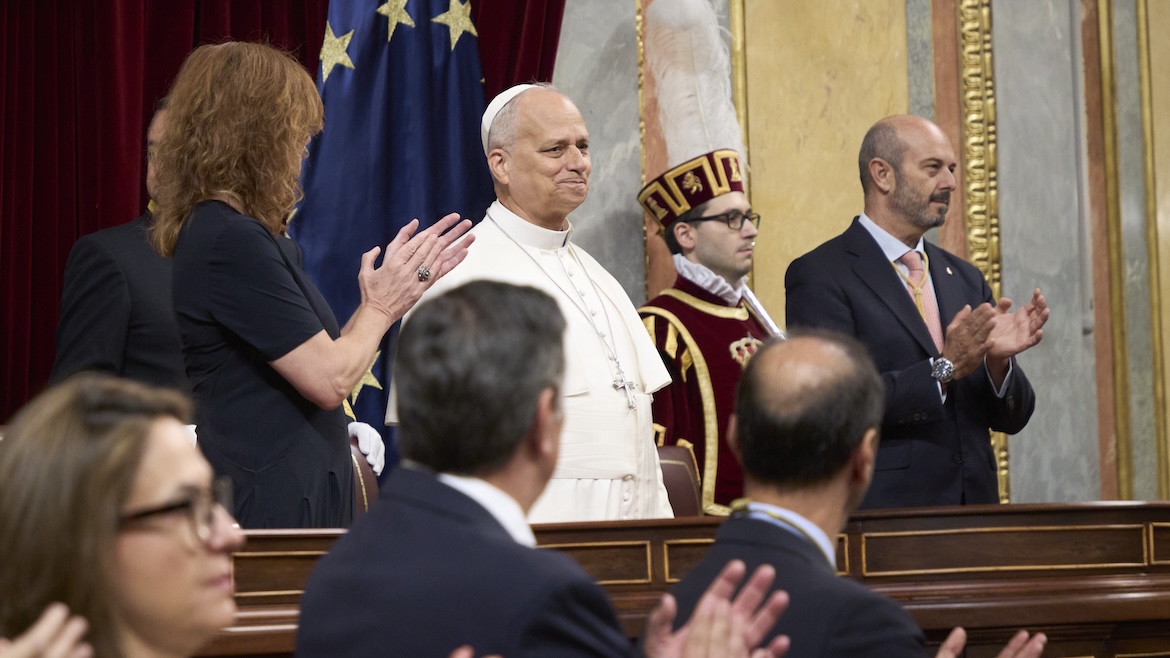
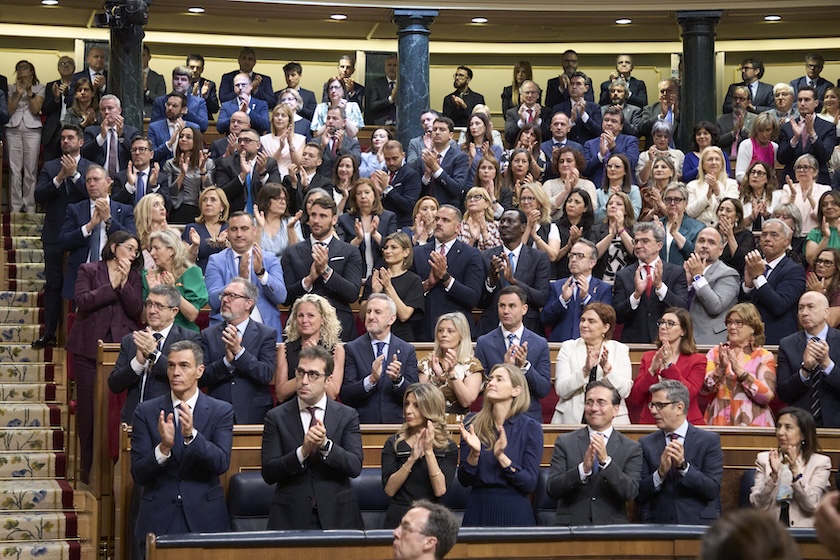
The visit ended with unanimous applause from the entire chamber.
Leo XIV explicitly called for 'de-escalating the language'. But parties swiftly edited the video clips that would best serve their purposes when posted on social media
Leo XIV explicitly called for 'de-escalating the language'. However, just a few minutes later, communications teams on both sides were editing the clips that would best serve their purposes when posted on social media.
Meanwhile, seventy years of evangelical history in Spain were commemorated in a chamber of parliament without a speaker, without the full government present and without an official photograph.
We do not say this with bitterness. We say it because, in a state that defines itself as secular, consistency between principle and practice is also a form of justice. Its absence also sends a message.
Daniel Hofkamp, journalist in Spain, director of Protestante Digital.
Do you see a need for this kind of journalism?
Through news, interviews, opinion and analysis, we seek to build bridges between evangelical churches and the societies in which they live.
As a non-profit entity, the big challenge is to be sustainable, month by month. We invite you to make a difference! Join the readers who make Evangelical Focus possible.
Published in: Evangelical Focus - European perspectives - At a parliament devoted to the Pope, everyone picks the pontiff who interests them most