
Resisting to the very end – at what cost?
The heroic personal struggles that conflate the political party’s mission with one’s personal project can lead to disaster – both for the individual and for the party. Something similar happens in churches when they become a pastor’s personal project.
29 JUNE 2026 · 15:45 CET
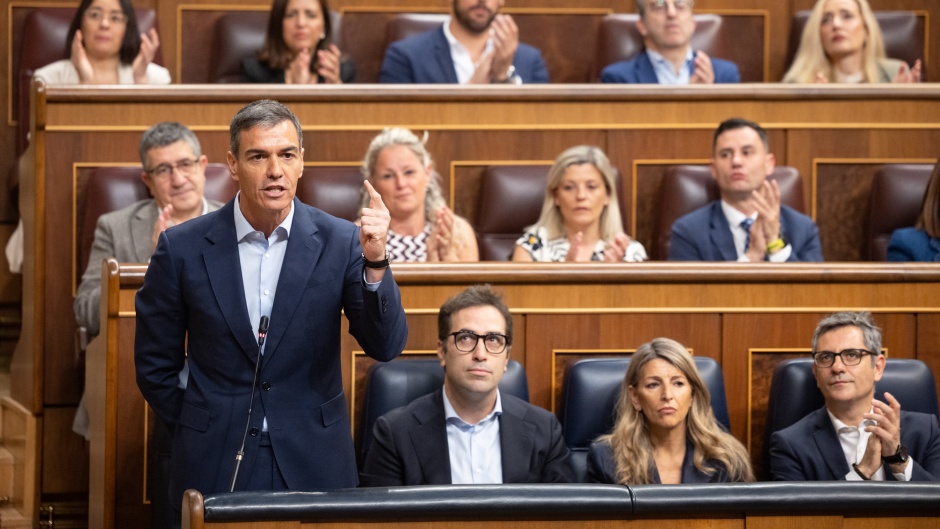
Pedro Sánchez, the Spanish president of the government, and secretary-general of the PSOE party (Social Democrats) finds himself in an unbearable situation with several corruption cases in the courts, including those of a former minister and right hand, the party's powerful national coordinator, and even a legal case around his own wife. The crises bearing down on him one after another.
His resilience is remarkable, surpassing all imagination; so too is his ability to secure the support that has kept his government afloat, through shifting political alliances that few are capable of forging.
All Evangelical Focus news and opinion, on your WhatsApp.
Some believe that this resistance is driven by a cult of personality. Those who voice dissent are labelled as traitors not merely to Sánchez, but to the party’s project
But Sánchez is holding out; he is not giving in. Some believe that this resistance is driven by a cult of personality. They argue that within the PSOE itself, Sánchez has worked to progressively concentrate power, weakening internal mechanisms of control and accountability and eliminating or stifling any possible dissent on the grounds that attacks against him are attacks against the party and that the current political climate does not allow for dissent; those who voice dissent are labelled as traitors not merely to Sánchez, but to the party’s project.
Some who know him say he displays a remarkable coldness; he forgets loyalties and abandons anyone without hesitation, and, of course, washes his hands of any responsibility for having appointed key figures in his inner circle who are now facing charges or in prison.
But there is another interpretation that is not incompatible with this: he is convinced that his historic responsibility is to implement profound changes in the country – changes which, in his view, are urgently needed. That is why he believes he must stand firm and not give up, conscious that these changes inevitably depend on him, that he has been destined for this task, and that this is why he has now come to the fore. And in this battle, he cannot take a single step back because his adversaries are, in truth, adversaries of Spain’s destiny of progress. So the question is not why to carry on, but “how one could not carry on”, as the prime minister told the parliament this week.
A pastor of a church can also begin concentrating power out of the conviction that they have a purpose to fulfil, a mission to resist
But is this situation really so unusual? Could it not happen in some form in our own midst? We are not immune to seeing ourselves as the pastor of a church who begins a process of concentrating power—not out of self-centredness, but out of the conviction that they have a purpose to fulfil, a mission in which he cannot waste time on debates because those who disagree are a stumbling block. And when calls for accountability begin, these are seen as a provocation, an attack on the spiritual authority bestowed by the Lord in a very personal way. From that point on, even considering resignation would be irresponsible. One must stand firm and not give in, in the name of the vision for the church that the pastor holds.
The church’s mission is not the pastor’s personal mission. Failing to understand this can burn out the pastor and end up leaving many people by the roadside
The heroic personal struggles that conflate the party’s project with a personal one can lead to disaster – not just for the individual, but for the party itself. I urge us to reflect on this risk as it applies to our own context. I admire the dedicated work of so many thousands of pastors who labour expecting no greater recognition than that of the Lord, so often subjected to a lack of understanding and loneliness. That is why it is so important that we never fall into the ‘Sánchez model’ and that our vision is kept clear at all times: the church’s mission is not the pastor’s personal mission; it is everyone’s. Failing to understand this can burn out the pastor and the church’s mission itself, leaving many people by the roadside.
X. Manuel Suárez, medical doctor in Galicia (Spain) and deptuy secretary general for International Affairs of the Spanish Evangelical Alliance.
Do you see a need for this kind of journalism?
Through news, interviews, opinion and analysis, we seek to build bridges between evangelical churches and the societies in which they live.
As a non-profit entity, the big challenge is to be sustainable, month by month. We invite you to make a difference! Join the readers who make Evangelical Focus possible.
Published in: Evangelical Focus - European perspectives - Resisting to the very end – at what cost?