
‘Therians’ and the West’s disorientation
By symbolically renouncing the human condition itself, this cultural dramatisation of the contemporary void erodes the very foundation of personal dignity.
26 FEBRUARY 2026 · 12:30 CET
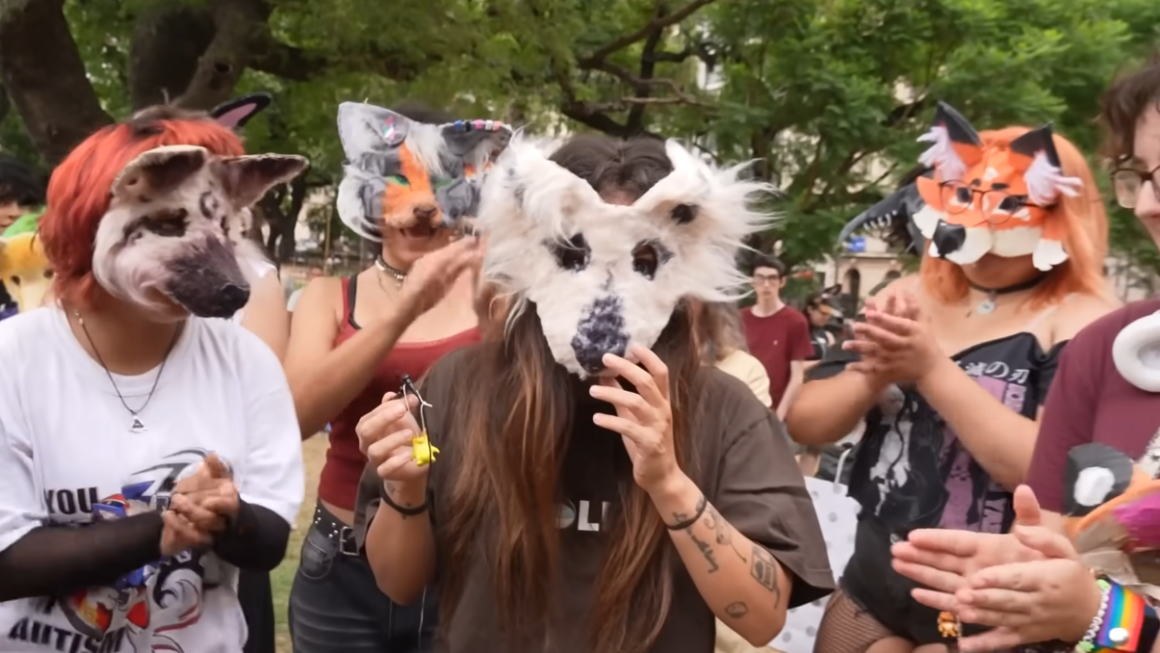
The phenomenon of ‘Therians’ does not constitute the fulfilment of any literal and specific biblical prophecy, as some have suggested. It is just one more symptom that reveals a state of moral decay.
It is a fashion or trend in which, in a childish way, people choose to identify with animals, both in their behaviour and through costumes that imitate their physical appearance.
All Evangelical Focus news and opinion, on your WhatsApp.
The zeitgeist (spirit of our time) leads to trends that are a manifestation of non-conformity, inner emptiness and difficulty in accepting oneself. They express insubordination and irony in the face of the given. But at the same time, they reveal a cultural degradation, a progressive vulgarisation and a tendency towards the ridiculous that characterises certain sectors of contemporary life.
Walt Whitman and animal life as a means of escape
I perceived something of this sensibility in the work of the US American poet Walt Whitman (1819-1892) [1], particularly in his anthological collection Leaves of Grass. In one of his most quoted poems, he writes with his characteristic creative finesse:
I think I could turn and live with animals, they are so placid and self-contain'd,
I stand and look at them long and long.
They do not sweat and whine about their condition,
They do not lie awake in the dark and weep for their sins,
They do not make me sick discussing their duty to God,
Not one is dissatisfied, not one is demented with the mania of owning things,
Not one kneels to another, nor to his kind that lived thousands of years ago,
Not one is respectable or unhappy over the whole earth.
So they show their relations to me and I accept them.
Beyond Whitman’s poetic intention, these verses reflect a deeply modern tension: the temptation to idealise the animal as an escape from the moral and spiritual complexity of human beings.
They hint at a weariness, an escape from ethical responsibility, conscience and the relationship with God.
A generation tired of everything
Contemporary rebellion, however, no longer possesses the aesthetic elegance of literary romanticism. It is that of a generation tired of thinking, which slips into the most vulgar ditches of relativism and pretends to live without ethical or transcendent references.
The truth of God, his creation and his moral law are not indifferent: they are uncomfortable and overwhelming.
The ‘Therian’ trend is more than an eccentricity. It is an expression of an identity crisis and a cultural dramatisation of the contemporary void.
A form of dehumanisation which, by symbolically renouncing the human condition itself, erodes the very foundation of personal dignity.
Why the incarnation of God matters
The Christian faith, on the other hand, affirms something radically different: human dignity is so great that God himself became man.
The incarnation of Jesus Christ confirms that humanity is not a biological accident or an interchangeable category, but the realm chosen by God to reveal himself and redeem. The human condition inevitably leads to ethical reflection. No one can avoid, in one way or another, the fundamental questions: who am I and why am I here? Who has placed me in this universe that surpasses me?
These questions are not mere intellectual exercises, but traces inscribed in the conscience.
There is a higher order and a moral law that transcends the material and the visible. It is this moral structure, inscribed in creation and confirmed by revelation, that gives human beings their true identity. Renouncing it does not liberate, it disorients. It does not ennoble, it fragments. It does not humanise, it disfigures.
Just as I occasionally reread Whitman, I often return to Blanca Castilla Cortázar’s essay Anthropology of Elegance [2], a brilliant philosophical and theological reflection on the human person. The author argues that true elegance does not depend on appearance or social status, but on the inner dignity with which a person presents themselves to others.
Castilla relates elegance to beauty, but she does so from an anthropological basis. For her, the key lies in modesty, understood as the protection of personal privacy. Modesty shows that human beings are persons and not objects: they are beings with dignity, created in the image and likeness of God. Unlike animals, which act on instinct, human beings feel modesty because they have an inner life and awareness of their own intimacy.
Her essay is also a critique of contemporary culture of exhibitionism and sexualisation, proposing a return to a vision in which the body expresses the person and elegance is a visible form of dignity.
True elegance comes from the awareness of being a person, created to love and be loved, and from the harmony between the exterior and the inner truth of the being.
Tomás Gómez Bueno, theologian, author and pastor of an evangelical church in the Dominican Republic.
Notes
1. Whitman, W. (1855/2007). Leaves of Grass. Oxford University Press.
2. Castilla de Cortázar, B. (2004). Persona femenina, persona masculina. Rialp
Do you see a need for this kind of journalism?
Through news, interviews, opinion and analysis, we seek to build bridges between evangelical churches and the societies in which they live.
As a non-profit entity, the big challenge is to be sustainable, month by month. We invite you to make a difference: join the readers who make Evangelical Focus possible!
Published in: Evangelical Focus - Latin American perspectives - ‘Therians’ and the West’s disorientation