
Culture wars on the baseball field
I have friends and readers on both sides of this issue, and I would like to keep it that way. Fifty years ago, gay people were widely stigmatized as perverts; today, defenders of a traditional view of sexuality are delegitimized as bigots.
23 JUNE 2026 · 10:10 CET
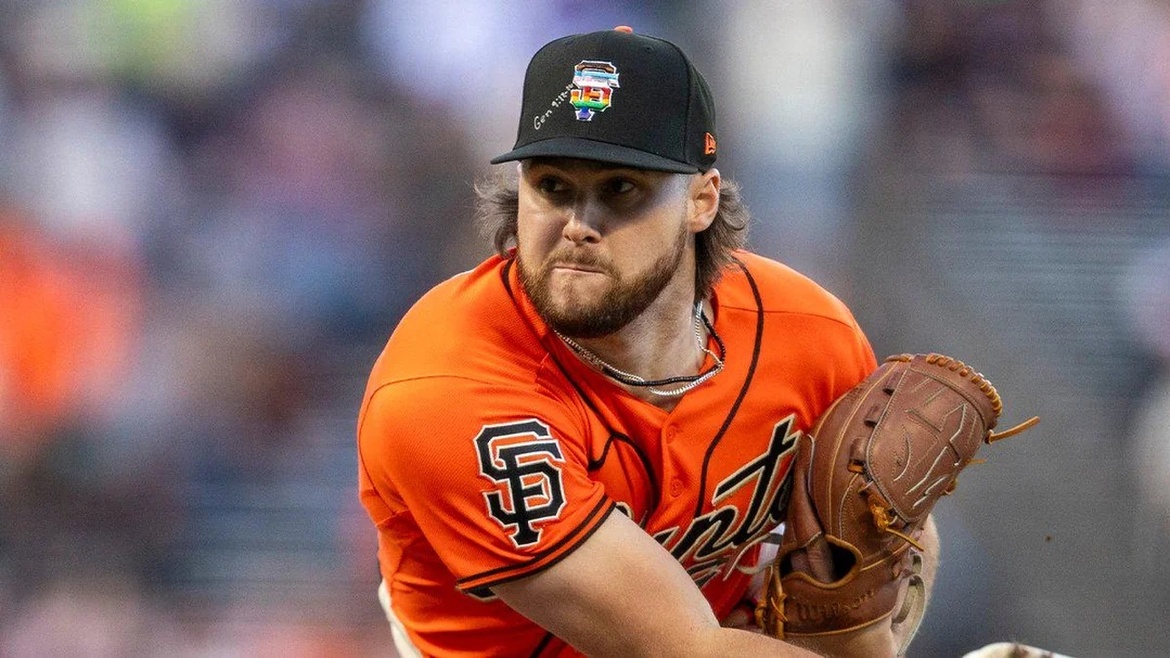
Professional sport often spotlights culture wars in a vivid manner, because the athletes speaking up have a prominent platform and no need to restrict themselves to saying what’s politically beneficial.
John Carlos and Tommie Smith are remembered not for the medals they won at the 1968 Olympics, but for their expression of protest while the U.S. national anthem was played. Former US football quarterback Colin Kaepernick’s decision to kneel during the national anthem falls in the same category.
All Evangelical Focus news and opinion, on your WhatsApp.
Three of the five pitchers whom the Giants used in the game wrote references to Genesis 9 on their caps, connecting the rainbow symbol to its appearance in the Bible
In the United States, June has become recognized as Pride Month, which honors and draws positive attention to the LGBT community. All but one of the 30 teams in Major League Baseball has a Pride Night. The San Francisco Giants, who play in the US city most associated with the LGBT movement, held theirs on June 12. Players wore caps with the team’s stylized “SF” logo in rainbow colors rather than usual orange.
However, three of the five pitchers whom the Giants used in the game wrote references to Genesis 9 on their caps, connecting the rainbow symbol to its appearance in the Bible after the great flood. A fourth pitcher wore the normal team cap instead of the Pride cap.
The reactions have been predictable. Fans and public officials in San Francisco expressed their disappointment with the players. Major League Baseball, trying to straddle an uncomfortable fence, warned the players that writing on their uniform violates league policy. The Giants team acknowledged the players’ right to make “personal choices” while affirming the organization’s commitment to inclusion. US Senator Josh Hawley wrote an angry letter to the MLB commissioner.
The LGBT movement has sought to position itself as a group entitled to freedom from discrimination, on the same level as women or racial groups
Sports teams are not necessarily opposed to Christians; their main interest is in good public relations. Many of them hold “Faith Nights” featuring Christian musicians and players giving their spiritual testimonies. As far as I know, however, no team produces special Christian merchandise comparable to Pride-themed caps or uniforms.
Analytically, the situation is simple. The LGBT movement has sought to position itself as a group entitled to freedom from discrimination, on the same level as women or racial groups. If one grants that premise, then calling homosexuality a sin becomes, potentially, as socially unacceptable as expressions of antisemitism or racism. In Finland, such expression can be characterized as hate speech and prosecuted; in Canada, the Supreme Court has effectively blocked a Christian university from operating a law school because the university is not LGBT-affirming.
On the other hand, traditional Christians object that they are following their conscience and their faith tradition and should not be forced into appearing to endorse behavior they don’t agree with.
Unfortunately, in the instances when these two rights clash, advocates on both sides frequently engage in strategic denigration rather than mutual respect
After the US Supreme Court’s Obergefell decision legalizing same-sex marriage, my call for respecting the conscience of dissenters from LGBT legitimacy was attacked as “loathsome” in an essay that circulated nationally. Ironically, when it appeared that a more conservative court might overturn Obergefell, a pro-LGBT law professor wrote an essay in the same newspaper, defending essentially the same compromise position, and no one called him a bigot.
I hope that all Christians who engage in discourse around LGBT issues will resolve to treat everyone else as made in God’s image, rather than as foes to be vanquished
Bruce Barron, author or coauthor of seven books on religion and politics and a former US congressional aide, was editor of the World Evangelical Alliance’s theology journal from 2018 to 2024. Subscribe to his blog at brucebarron.substack.com.
Do you see a need for this kind of journalism?
Through news, interviews, opinion and analysis, we seek to build bridges between evangelical churches and the societies in which they live.
As a non-profit entity, the big challenge is to be sustainable, month by month. We invite you to make a difference! Join the readers who make Evangelical Focus possible.
Published in: Evangelical Focus - North American perspectives - Culture wars on the baseball field