
Freemasonry, Gnosticism and syncretism in the church: Why are they incompatible with the gospel?
They offer an attractive spirituality adorned with medieval symbols and oriental rituals. But behind this façade lies a rejection of biblical revelation, sovereign grace and the sovereignty of Christ.
24 JUNE 2026 · 16:00 CET
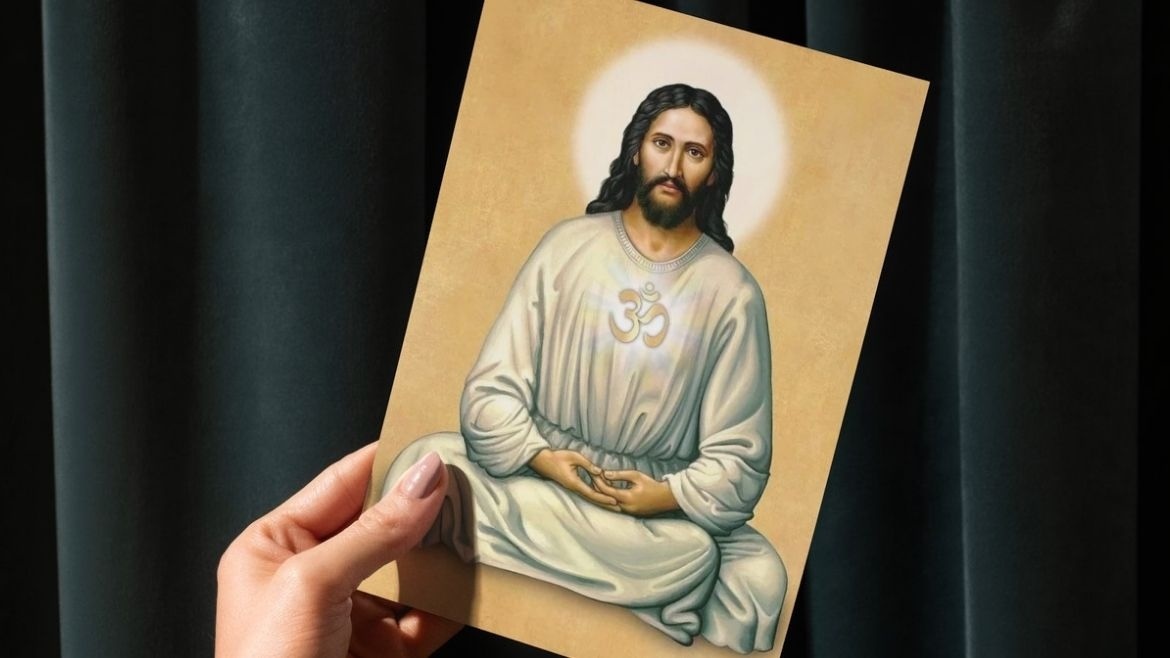
The recent controversy in the Spanish Reformed Episcopal Church (IERE), where a priest was accused of combining Masonry and yoga with his ministry, has exposed the doctrinal fragility of certain communities.
Protestante Digital reported on the details and resignations, but we will not stop there. Instead, we will analyse why Freemasonry, Gnosticism and other esoteric movements contradict biblical faith and why their adoption is dangerous for churches 1.
All Evangelical Focus news and opinion, on your WhatsApp.
What do these movements teach?
A “church” that blends Eastern and Western traditions
The Liberal Catholic Mar Thoma Church, linked to the priest in question, presents itself as a community that unites “the esoteric and mystical traditions of East and West”.
They claim that their goal is “the realisation and manifestation of their inner Christ”: each person would carry within them a spark of divinity; Jesus came to reveal it, and salvation would consist of awakening that spark through sacraments and meditation.
Furthermore, they state that the church aims to be Gnostic, helping its members to reach the “true Gnosis” through ancient paths of purification, illumination and union.
Another section promotes Sanatana Dharma (the eternal religion of Hinduism) and affirms that there is not enough contemporary evidence for the Gospel accounts; what is important is the Christ within you.
Overall, the official doctrine of this group mixes Christianity, Hinduism, Druidism and Theosophy with a syncretic spirituality 2.
The features of Gnosticism
Gnosticism was a religious movement of the 1st and 2nd centuries that taught that people harbour a spark of divinity trapped in a corrupt physical body.
For the Gnostics, matter was evil and salvation consisted of liberating oneself from the physical world through a secret knowledge communicated by a saviour.
They denied that Jesus had a real body, despised creation and promoted elitism, claiming that only the “enlightened” could be saved.
The early Church rejected those doctrines because they denied the goodness of creation, the incarnation of Christ and the universal nature of the gospel.
The principles of Freemasonry
Although the Freemasons are often presented as a philanthropic fraternity, many Christian leaders point out that it functions as a parallel religion.
There are several reasons why Christianity and Freemasonry are incompatible: (1) It is a religion and its rituals are a school of mysticism; (2) it promotes idolatry by creating a god based on human ideas; (3) it advocates universalism, suggesting that all religions lead to salvation; (4) it replaces grace with human effort, teaching that each initiate can work their own salvation; (5) it is based on secret oaths that destroy Christian communion; (6) it uses a syncretic name for God (Jahbulon), composed of pagan deities; and (7) it excludes Jesus from its rituals, removing his name from biblical texts to adapt them to pluralism.
The Catholic Church also denounced these practices in the encyclical Humanum Genus, where Pope Leo XIII warned that Christianity and Freemasonry are “essentially irreconcilable” and reaffirmed the prohibition of belonging to lodges 3.
Liberal Catholicism and Theosophy
Liberal Catholicism, from which the Mar Thoma branch derives, arose when several Old Catholic bishops adopted ideas from the Theosophical Society and theosophy.
One analysis explains that this church maintains sacramental rites, but promotes an open and personal interpretation of the Bible, embracing esoteric ideas.
Its liturgy includes teachings from various mystical traditions and is open to concepts such as karma and reincarnation. Some of its members consider Jesus to be a teacher or a symbol of divine love rather than the one true Saviour.
The Catholic Church has never been in communion with this movement due to its doctrinal differences.
Why are these doctrines dangerous?
1. They deny the authority of Scripture
The gospel is based on God's revelation in the Scriptures and in history: Christ came, died and resurrected at a specific time and place.
By suggesting that the New Testament lacks evidence and that the only important thing is inner experience, these groups reduce the Bible to a symbolic text.
The Bible is the only infallible rule of faith and conduct. When the inspiration of Scripture is replaced by subjective inspiration from gnostic visions, each individual becomes their own prophet.
The result is a distorted Christianity that is no longer anchored in the objective truth of the gospel.
2. They despise creation and the incarnation
Gnosticism considers matter to be evil and denies that Jesus took on a real body.
However, biblical Christianity affirms that God created the world and declared it good, and that in the incarnation, the Word became flesh.
Denying the incarnation is not a minor issue: without a true and fully human Christ, there is no crucifixion or resurrection.
The Epistle of John warns that 'any spirit that does not confess that Jesus Christ has come in the flesh is not of God' (1 John 4:2-3). Theosophy and liberal Catholicism repeat the Gnostic error by relativising the incarnation and embracing Eastern doctrines.
3. They deny grace through gnosis or human effort
Christianity teaches that we are saved by grace through faith, not by works (Ephesians 2:8-9). Masonry and Gnosticism propose paths of self-illumination or personal perfection: salvation is achieved through rituals, initiatory degrees, meditation and discipline.
This autosoteriology contradicts the doctrine of justification and minimises the efficacy of the cross.
4. They introduce syncretism and relativism
The combination of Hinduism, Druidism, liberal Catholicism and Freemasonry is a classic example of syncretism.
Rather than confessing that Jesus Christ is 'the way, the truth and the life' (John 14:6), the believer is invited to choose spiritual elements from different traditions. The Bible warns that “you cannot serve two masters”.
The inherent relativism of Freemasonry, which views all religions as equal expressions of the same God, dilutes the exclusivity of the gospel.
Furthermore, the use of mixed names of deities and the omission of the name of Jesus in Masonic rituals shows a rejection of biblical revelation.
5. They hide their teachings behind secrecy
The Lord Jesus Christ preached openly; his disciples announced the gospel in public places and synagogues. Masonry, on the other hand, is characterised by secret oaths.
This secrecy not only prevents fraternal correction, it also facilitates manipulation and indoctrination.
Authentic Christianity is practised in community and transparency: “All things, when they are put in evidence by the light, are manifested” (Ephesians 5:13). Secret societies are outside this light and are therefore incompatible with church life.
6. They ignore the law of God and the hope of the Kingdom
The Law of God is the standard of justice for individuals and societies. By embracing a mystical syncretism, these movements abandon the practical application of divine law.
The moral law revealed in the Old and New Testaments is valid today, and nations are called to obey God's commandments.
Gnosticism and Theosophy, by despising creation and history, have no interest in transforming culture under the Lordship of Christ.
We believe that the Kingdom of God advances in history through the preaching of the gospel and obedience to the commandments of God. Gnosticism, on the other hand, takes refuge in the 'inner world'; and Freemasonry works for independent moral progress; neither of them proclaims that Christ is Lord over the nations.
Discern and act
As leaders and believers, how should we respond to the infiltration of these teachings?
1. Reaffirm the sufficiency of Scripture
Theosophical relativism has no place in a church that confesses the inspiration of the Bible. We should return to expository reading and preaching of the Scriptures, allowing them to correct and console us.
2. Practice ecclesiastical discipline
The IERE failed when it did not correct a presbyter who embraced heretical doctrines.
Discipline is not an act of harshness, but of love: it seeks to restore the brother and protect the body of Christ. The elders and bishops are responsible for safeguarding sound doctrine.
3. Beware of spiritual syncretism
Yoga, Buddhist meditation or theosophy are not neutral tools; they are rooted in worldviews that deny fundamental truths of the faith.
Not everything that is 'spiritual' is good. We must examine everything with discernment and retain what is good.
4. Promote biblical theology
The theology of the Reformation, with its emphasis on the sovereignty of God, the centrality of Christ, justification by faith and the continuity of the moral law, offers a solid framework for addressing errors.
It also reminds us of the importance of reverent worship and ecclesiastical discipline.
5. Proclaim the complete gospel
The true gospel is not just a message of individual salvation; it is the announcement of the Kingdom of God. It presents Jesus as Lord of all things and calls all nations to submit to his commandments.
In a world captivated by mysticism, we must boldly proclaim that Christ died for our sins, was buried, and rose again on the third day (1 Corinthians 15:3-4). This message has the power to transform hearts and societies.
Conclusion
The case of the IERE is not an isolated anecdote, but a warning to the evangelical world.
The combination of Gnosticism, Freemasonry and Theosophy offers an attractive spirituality adorned with medieval symbols and oriental rituals. But behind this façade lies a rejection of biblical revelation, sovereign grace and the sovereignty of Christ.
These movements deny the authority of Scripture, despise the incarnation, promote relativist syncretism, and hide their errors under secret oaths.
The response cannot be complicit silence, but rather a determined return to the Reformed gospel: sola Scriptura, solus Christus, sola gratia, sola fide, soli Deo gloria.
If the church returns to these convictions, it will be able to discern and reject the counterfeits and continue its mission of making disciples of the nations.
In the words of the apostle: “guard what has been entrusted to your care. Turn away from godless chatter and the opposing ideas of what is falsely called knowledge” (1 Timothy 6:20).
José Hutter has been a pastor in an evangelical church in Madrid, Spain. He served as Chair of the Theology Group of the Spanish Evangelical Alliance.
Notes
1. Freemasonry and esotericism within the Anglican Church of Spain led to resignations. Evangelical Focus
2. Mar Thoma Liberal Catholic Church, sitio oficial, Mar Thoma LCC
3. Joe Carter, The FAQs: Is Freemasonry Compatible with Christianity? The Gospel Coalition. Cf. León XIII, Humanum Genus
4. Liberal Catholic Church, en Theosophy World Encyclopedia
Do you see a need for this kind of journalism?
Through news, interviews, opinion and analysis, we seek to build bridges between evangelical churches and the societies in which they live.
As a non-profit entity, the big challenge is to be sustainable, month by month. We invite you to make a difference! Join the readers who make Evangelical Focus possible.
Published in: Evangelical Focus - Theology - Freemasonry, Gnosticism and syncretism in the church: Why are they incompatible with the gospel?