
From Résistance to Liberté
In his films around Charles De Gaulle, Frenchman Antonin Baudry confronts us with the questions: what can you do when powerful forces seem to have already decided the future? What would we have done in June 1940?
02 NOVEMBER 2026 · 10:18 CET
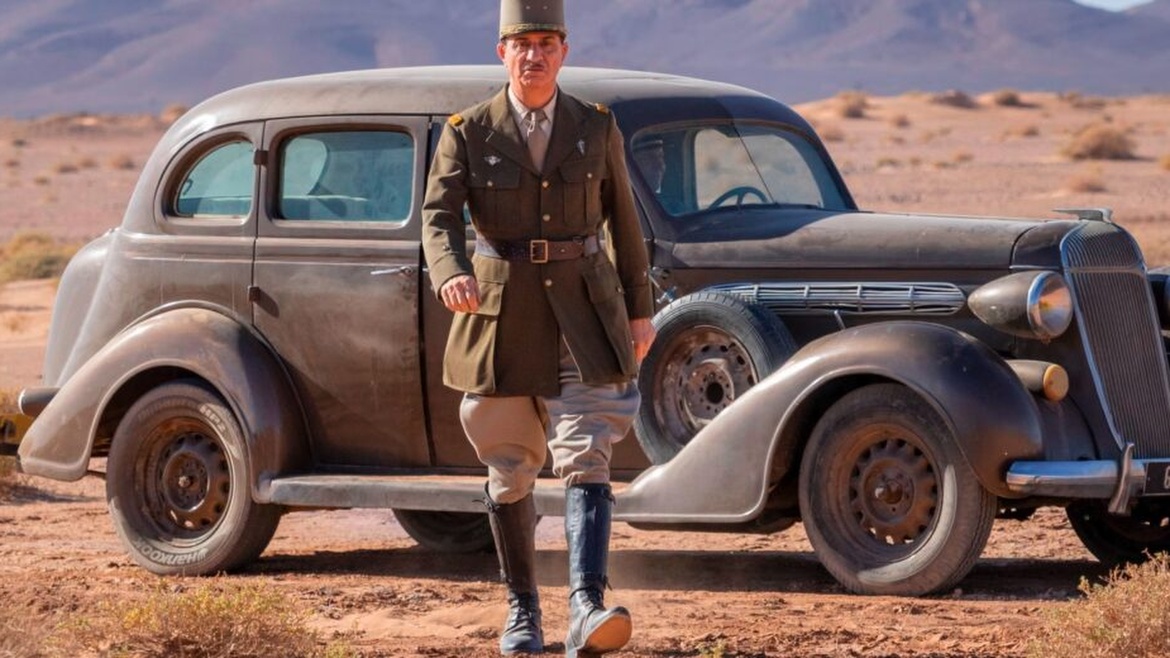
The parallels are striking.
A leader determined to fight for the moral dignity of his people and the survival of his nation refuses to accept surrender or defeat, despite facing overwhelming odds.
He is caught between an aggressive, ruthless enemy on the one hand and allies on the other who see him as a stubborn obstacle to their own plans, yet from whom he desperately needs weapons, vehicles and munitions.
All Evangelical Focus news and opinion, on your WhatsApp
Standing for the sovereignty of his own land, he refuses the fate of his nation to be decided by the big powers. He rejects the peace plan of an American president which carves up his nation and proposes a new buffer state.
La Bataille de Gaulle is a timely two-part biographical drama film released this summer, and tells the little-known story of a relatively obscure French general who took it upon himself to fight for Free France after his government’s capitulation to the Germans in June 1940.
One could easily assume the director had set out to make his audiences compare the fight for France’s freedom and sovereignty with that of Ukraine today.
Yet Frenchman Antonin Baudry insists he simply wanted to tell the neglected story of how Charles de Gaulle and the Free French kept alive the struggle for their country’s existence.
Baudry was fascinated by the unlikely beginnings of that struggle, when de Gaulle fled to England with very little authority, few followers and no certainty that France could be liberated.
He also wanted to show how young people had rallied to de Gaulle, becoming a key factor in his long-term success.
Baudry was moved by young people’s willingness to act when fear and denunciation made public opposition dangerous (as again they have just done in Serbia!).
The film shows that freedom didn’t just happen. De Gaulle did not act alone. Baudry featured both soldiers and civilians who played crucial roles in the liberation story.
It took blood, sweat and tears, brave and moral decisions on the part of individuals at all levels of society to risk everything to gain the freedom and justice.
Inspiration
De Gaulle, however, was the inspiration. From a BBC microphone, he called on his compatriots to continue the struggle. He knew that continuing the war meant further sacrifice.
He had no guarantee or even likelihood of success. Yet for him the moral question was clear: when those in authority accept defeat, what does loyalty to one’s country require?
Baudry confronts us with questions facing us all today: what can you do when powerful forces seem to have already decided the future? What would we have done in June 1940? Do we remain silent and protect ourselves, or do we take risks to show the aggressor and occupier?
Watching Baudry’s two films, De Gaulle: Résistance and De Gaulle: Liberté, one can’t help noting parallels with Ukraine, Russia’s brutal invasion and the Ukrainian leader who refuses to accept capitulation.
In February 2022, many expected Kyiv to fall within days. Russia’s forces were advancing towards the capital. Ukraine’s future appeared desperately uncertain.
President Zelensky remained in Kyiv, and posted videos appearing alongside his colleagues to show Ukrainians—and the world—that their government was still there.
The situations were different. De Gaulle had left a defeated France to build resistance abroad. Zelensky stayed in a capital that Ukrainian forces successfully defended.
But both challenged the assumption that a stronger aggressor could decide that a nation’s story was over.
De Gaulle had radio. Zelensky had a smartphone. Both understood that a leader’s voice could reach beyond government offices and military headquarters, offering people moral cause to stand firm when the future looked darkest.
Compelling
Baudry recognises these parallels. In one interview he recalled how many had assumed that Ukraine was finished when Russia invaded, yet Ukrainians chose to resist.
He found that determination deeply moving. He happened to be editing the scene in the Oval Office in the film when de Gaulle refuses President Roosevelt’s deal when the confrontation between Zelensky and Trump exploded on the world media. He found the comparison compelling.
De Gaulle desperately needed Britain and America. Without their resources and military strength, Nazi Germany could not have been defeated. Yet he also feared that the great powers would treat France as a country whose future they could settle among themselves.
Ukraine faces its own version of that dilemma. It depends on allies for weapons, finance, intelligence and diplomatic support. We watch de Gaulle’s struggle on film knowing that Paris was liberated.
There is also no assured ending to Ukraine’s story. Ukrainians must make decisions amid uncertainty, loss and exhaustion, without the comfort of knowing how history will judge the outcome.
The question looming now is: Might the French soon betray their own story by electing a president who promises to cut off aid to Ukraine?
Jeff Fountain, Director of the Schuman Centre for European Studies. This article was first published on the author's blog, Weekly Word.
Do you see a need for this kind of journalism?
Through news, interviews, opinion and analysis, we seek to build bridges between evangelical churches and the societies in which they live.
As a non-profit entity, the big challenge is to be sustainable, month by month. We invite you to make a difference! Join the readers who make Evangelical Focus possible.
Published in: Evangelical Focus - Window on Europe - From Résistance to Liberté