
Botrus Mansour: “Any linkage of this war to eschatology is highly problematic and makes evangelicals look detached”
In an interview with Evangelical Focus, the secretary general of the World Evangelical Alliance urges Christians to be sensitive to the reality of Iranians and to be careful not to impose their perceptions or eschatologies from cultures far removed from the Middle East.
JERUSALEM · 06 MARCH 2026 · 10:16 CET
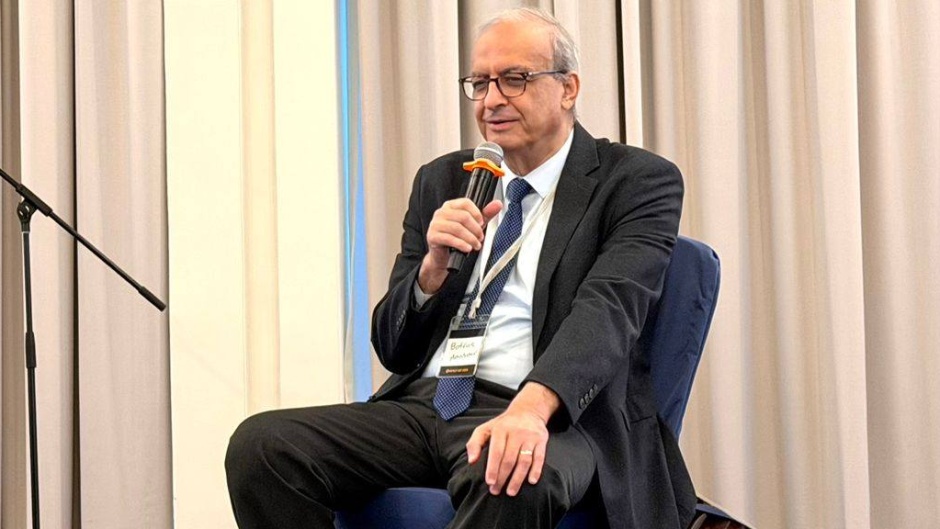
Botrus Mansour has been leading the World Evangelical Alliance for the past six months, which gives a voice to some 600 million evangelicals worldwide.
Mansour is a Nazareth-born Arab Christian who has worked for decades on projects that bring together Christians in the Middle East.
For all these reasons, his position on the war in Iran that broke out a week ago following the coordinated attack by the US and Israel against the theocratic regime of the Ayatollahs in Iran is particularly interesting to hear.
Evangelical Focus contacted him to find out his opinion on the ground, starting with Pastor Mansour's own experience of learning about the start of the attacks while he was visiting evangelical churches in the United Arab Emirates, a country that would soon also be caught up in the war.
All Evangelical Focus news and opinion, on your WhatsApp.
Question. You explained on social media that the first attacks against Iran caught you in Dubai as you were visiting evangelical leaders in that country. What thoughts came to your mind? And what were the conversations and feelings of Dubai evangelical leaders with whom you were meeting that day?
Answer. My response and a large number of my colleagues was of dismay and the question came: “Once again?!”
We have just started coming out of a 2-year war in Israel that caused big damage on every front: spiritual, social, psychological, in addition to huge harm in the whole region and especially Gaza.
The conversations we had there were sad ones. All of us were fed up with wars. Despite our perception of the Iranian regime, we are too experienced to be skeptical about such an attack solving anything. However, we assured ourselves and one another that God is good all the time and that He is on the throne.
Q. Right now, there are hundreds of thousands of Iranian Christians living in European countries. Many have clearly expressed joy and hope for a future without the Ayatollah regime and religious freedom. Others might be unhappy with what they see as an imperialist attack of the US. How should Christians in other countries support diaspora Iranian Christians even in the midst of a diverse range of feelings?
A. Iranians in general regardless of their faith should be respected and helped especially because of the hardship they have been enduring and what they see happening in their homeland.
As to Iranian Christians, these are heroes that should be embraced and supported as they have paid an immense price for taking a stand for Jesus. I think that other Christians should be sensitive to them without imposing any position towards their homeland. This is first and foremost their homeland not ours.
Q. You know the Middle East and its connections very well. Amid all the many Christian voices on social media (some siding with Iran, some with Israel or the USA...), what is your specific message to the evangelical churches globally? What insights can the WEA offer at this specific point and time?
A. I think the position is a nuanced one.
On the one hand, the Iranian regime is a dark one but there are many similar regimes in this fallen world. Who decides that a regime should be changed and who executes that?
Shouldn’t that be an international forum (the UN)? Such attempts to change regimes have failed in the past and caused great harm to countries and even regressed its situation (see Afghanistan, for example) or the situation of Christians (like in Iraq, for example).
You might know how you start a war but never know how it ends. Other countries will be drawn in and interests mixed up. And even shifts in world order can happen as a result of wars. For example, what is the impact of drawing the rich gulf states into the war?
Any linkage of this war to eschatology is highly problematic and makes evangelicals look detached. It can also disenfranchise us from others and from the noble message of the Prince of Peace.
From a biblical point of view, we call for peace and would like to augment peacemaking practices in the region and beyond. We believe that all other measures should be exhausted before taking the route of war. We also call for prayer for the casualties and mourn the loss of all lives.
Follow more news and statements of the World Evangelical Alliance on the WEA website.
Do you see a need for this kind of journalism?
Through news, interviews, opinion and analysis, we seek to build bridges between evangelical churches and the societies in which they live.
As a non-profit entity, the big challenge is to be sustainable, month by month. We invite you to make a difference! Join the readers who make Evangelical Focus possible.
Published in: Evangelical Focus - world - Botrus Mansour: “Any linkage of this war to eschatology is highly problematic and makes evangelicals look detached”