
A new Global Anglican Communion breaks with Canterbury to return to biblical faithfulness
At the conference held in Abuja (Nigeria), 340 bishops gathered to promote an alternative network of churches. The schism within global Anglicanism becomes a reality: major national churches with conservative theological views no longer recognise Canterbury as a spiritual authority.
GAFCON · ABUJA · 03 JUNE 2026 · 10:48 CET

Anglicanism is undergoing profound changes over the decades, which have led to the formation of the Global Fellowship of Confessing Anglicans (Gafcon).
The new Anglican network aims to restore the foundations of Anglicanism and remain steadfast in biblical teaching.
According to the leadership of the organisation, it has emerged in response to the loss of confidence in the Anglican Communion under Canterbury and the Church of England's guide.
All Evangelical Focus news and opinion, on your WhatsApp.
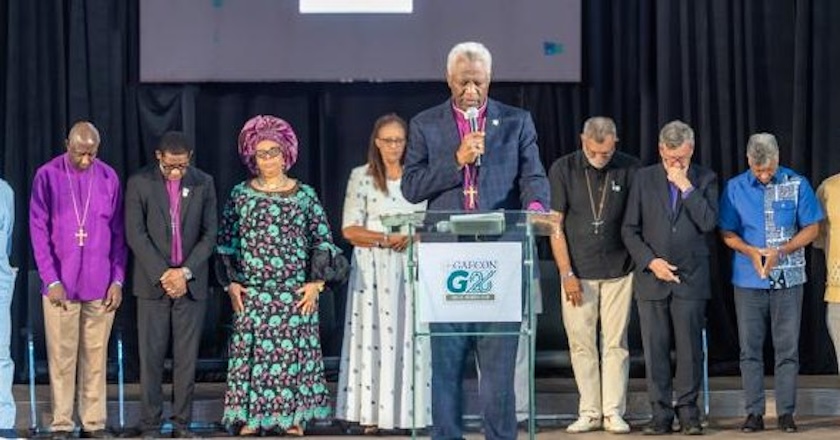
Between 3 and 6 March, 347 Anglican bishops from 27 provinces, along with 127 lay and clerical leaders, took a significant step in Abuja, Nigeria. They adopted a declaration known as the “Abuja Affirmation” at this founding conference held in the Nigerian capital.
This is one of the most significant steps in the growing internal fracture within world Anglicanism, particularly regarding doctrinal issues, the authority of scripture, and the stance on human sexuality.
Explicit rejection of Canterbury
The text states that the historical structures of the Anglican Communion have "failed" to uphold biblical doctrine and church discipline over the last decades.
It therefore openly rejects the so-called 'Instruments of Communion' linked to Canterbury, namely the Archbishop of Canterbury, the Lambeth Conference, the Anglican Consultative Council (ACC), and the Primates' Meeting.
According to Gafcon, these bodies have promoted institutional coexistence with provinces and leaders who “are moving away from the truth of the Gospel and the teaching of Jesus”.
“Reordering the Anglican Communion is now necessary”, read the document, because “a significant number of provinces who claim to be Anglican have abandoned the authority of Scripture”.
While the controversy over blessing same-sex couples appears to be one of the central issues, the statement insists that the problem is broader, affecting the very understanding of biblical authority and Christian doctrine.
Wrong teachings
The statement explicitly criticises the recent leadership of the Church of England, led by Justin Welby until October 2025 and then by Archbishop Sarah Mullally.
The signatories consider that Canterbury has legitimised positions contrary to historic biblical teaching by welcoming the provision of liturgical resources to bless same-sex unions and by presenting those doctrinal differences as “good disagreement” within the Anglican communion, and “not what it really is: false teaching”.
“The moral and spiritual authority of the See of Augustin has been severely compromised”, they add.
Gafcon also accuses official Anglican structures of “normalising hermeneutical pluralism” that compromises the authority of Scripture.
A “confessional communion”
In contrast to the current institutional model, this new Global Anglican Communion defines itself as a 'confessional' fellowship, based on shared faith rather than historical or administrative structures.
The Jerusalem Declaration, adopted by Gafcon in 2008, will be its key doctrinal reference, alongside the classic forms of the Anglican Reformation, such as the Thirty-Nine Articles and the 1662 Book of Common Prayer.
“There are not two communions, but two incompatible definitions of communion: one confessional and the other institutional”, the document states.
Participants claim that the new Global Anglican Communion is not an “alternative communion”, but “the historic Anglican Communion reordered from within”.
Leadership from the Global South
The Abuja gathering also confirmed the growing influence of the Global South.
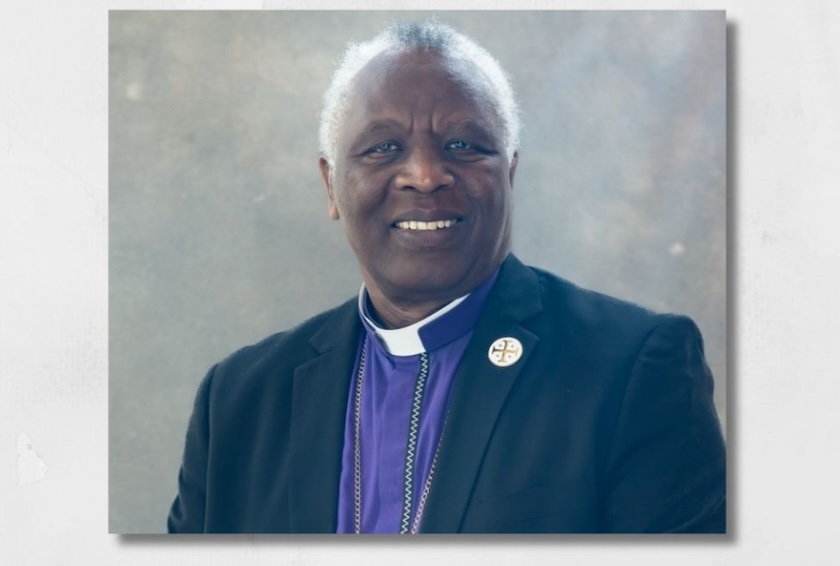
Laurent Mbanda from Rwanda was confirmed as president of the new Global Anglican Council, Miguel Uchôa from Brazil as vice-president, and Paul Donison from Canada as general secretary.
Gafcon says it represents a significant part of global orthodox Anglicanism, particularly in Africa, Asia, and Latin America, regions where Anglican churches generally hold conservative doctrinal positions.
Progressive disengagement from Canterbury
The bishops in Abuja called for a “principled disengagement” from Canterbury.
The new communion must not attend future meetings convened by Canterbury, or collaborate within the official structures of the current Anglican Communion.
Furthermore, provinces and dioceses are encouraged to amend their constitutions to remove any reference to being in communion with the See of Canterbury, although they recognise that these processes may take years and involve complex canonical changes.
Gafcon also reaffirms its support both for Anglicans who remain within provinces considered “revisionist” and for those who have established “Gafcon-authenticated jurisdictions”, including the Anglican Network in Europe, which is present in the UK and Europe.
A long-standing schism
Tensions within global Anglicanism date back over two decades, especially after the consecration of Gene Robinson as the first openly gay bishop within the Anglican Communion in the United States in 2003.
The creation of Gafcon in Jerusalem in 2008 consolidated international coordination within the Anglican sector in line with traditional views on sexuality which has since challenged the authority of the Archbishop of Canterbury.
You can read the full Abjuja Affirmation here.
Do you see a need for this kind of journalism?
Through news, interviews, opinion and analysis, we seek to build bridges between evangelical churches and the societies in which they live.
As a non-profit entity, the big challenge is to be sustainable, month by month. We invite you to make a difference! Join the readers who make Evangelical Focus possible.
Published in: Evangelical Focus - world - A new Global Anglican Communion breaks with Canterbury to return to biblical faithfulness