
“The best apologetics is grounded in the Bible and points to Jesus”
New Testament expert Peter J. Williams joined Marcos Vidal and others in Spain to discuss how to connect the Gospel with today’s society in a wide variety of areas of culture.
MADRID · 20 APRIL 2026 · 12:12 CET
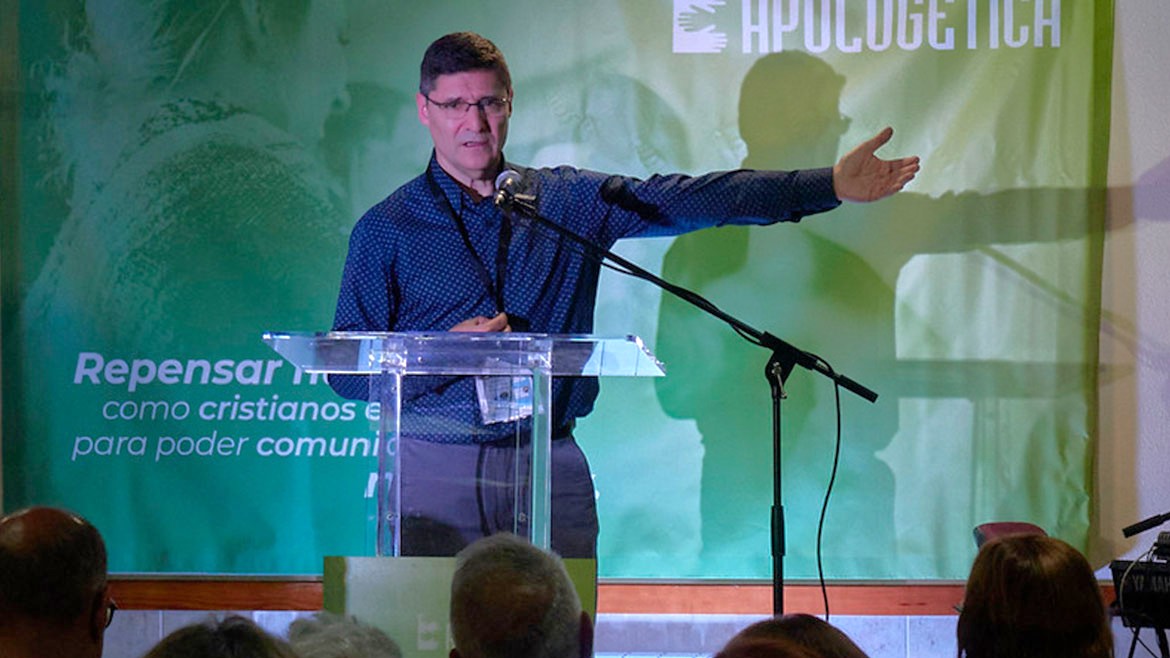
Spain's Apologetics Forum, which held its eighth edition with around 170 attendees in El Escorial (Madrid), featured on this occasion Peter J. Williams, director of Tyndale House in Cambridge, and Marcos Vidal, pastor of Salem Church in Madrid, who led the biblical expositions.
Despite their different approaches, both converged on a shared underlying idea that permeated the entire event: the most solid apologetics involves knowing and delving deeper into the Bible itself, so that we may develop a full Christian life, experience the transforming power of God, and thus be witnesses to the Gospel in our daily lives.
All Evangelical Focus news and opinion, on your WhatsApp.
The reliability of the Gospel
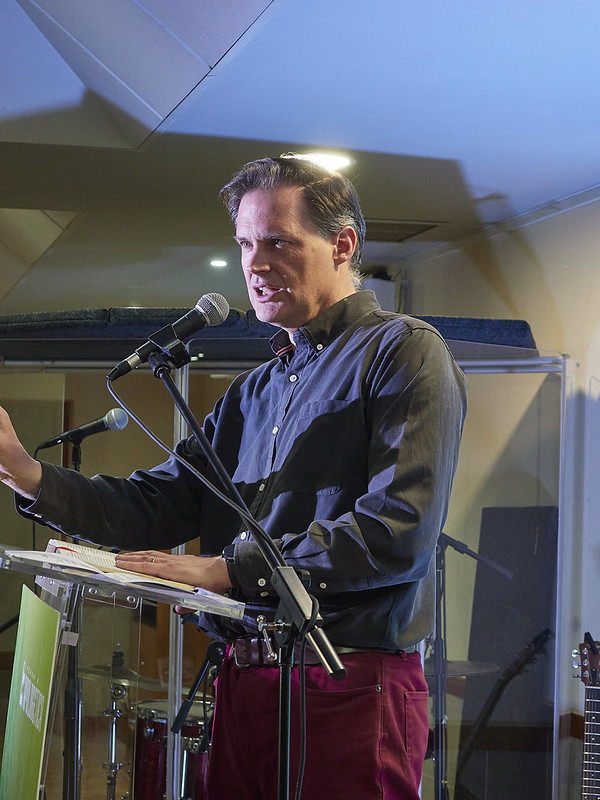
Peter J. Williams, internationally renowned for his work on New Testament manuscripts, presented an apologetic that does not require major archaeological discoveries to stand. His argument is that the Gospels themselves contain internal markers of historical authenticity that could hardly have been fabricated.
Among the examples he developed in detail: the geographical accuracy of the texts, which mention not only major cities but also specific villages with correct topographical details (“went up”, “went down” in the account of the Good Samaritan); the statistical distribution of personal names in the Gospels, which matches that found in historical documents from first-century Palestine; or the consistency of the tax system described in the texts with what we know of the period. All this, Williams noted, stands in stark contrast to the apocryphal Gospels, which are virtually devoid of precise geographical references.
For Williams, the starting point should not be to prove the Gospels, but to increase confidence in them. And one of the most compelling pieces of evidence he provided is that, despite the discovery of over a thousand new manuscripts since Erasmus’s time, no fundamentally new textual debate has emerged in 500 years. The evidence, far from eroding the text’s credibility, reinforces it.
In his second session, Williams delved into the parable of the prodigal son as an example of the creativity and coherence of Jesus’s mind. The story, he argued, has a narrative structure that cannot be explained as a later elaboration by the evangelists: it is too specific, too rooted in the culture and language of the first century, and too well constructed to be the product of an oral tradition that was gradually edited.
Williams showed that one of the finest stories ever told remains, for many, a source of richness and knowledge yet to be discovered. He highlighted the connections between this story and Genesis and the biblical narrative, and demonstrated how it is a parable that helps us discover the immense love of God, revealed in all its fullness in the work and person of Jesus.
The Gospel as a response to society and religion
Marcos Vidal’s two presentations covered Romans 1 and 2. Whilst the first showed why we can trust the biblical text, Vidal asked what to do with that text once we have it.
His reading of Romans 1 started from a clear premise: first-century society was not so different from today’s, and Paul’s response to that society was always the gospel, not judgement or cultural adaptation. “The Christian faith is not the best option; it’s the only option,” he said, adding that a Christian who prioritises fitting in will struggle to be a bearer of a message that, by its very nature, does not fit in.
Romans 2 turned the gaze inward. Mrcos Vidal pointed out the danger of turning faith into a platform for comparing ourselves with others, and reminded the audience that the inconsistency between what we say and how we live is one of the greatest obstacles to the gospel reaching those around us. “The great power of our witness is our life—how the gospel transforms us—not merely saying or defending what we believe.”
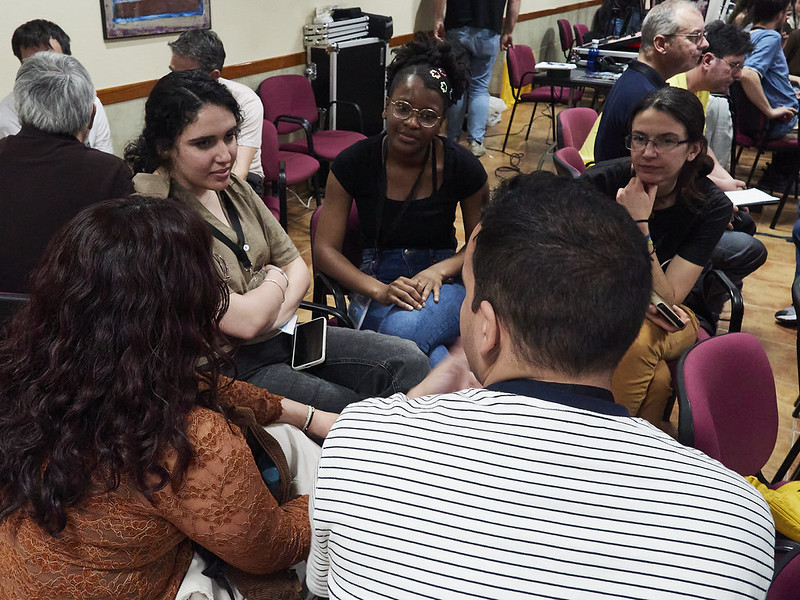
Small group discussion: making the ideas our own
One of the elements that set the tone for the event was the inclusion, following each talk, of a time for discussion in small groups, with questions designed to encourage conversation about what had been presented. Jaume Llenas, GBG’s national coordinator, explained the reasoning behind this decision: if ideas are not chewed over and processed, they are forgotten. By discussing them, they become more our own. This is no minor detail in an event of this nature: apologetics that are not internalised are rarely put into practice.
The workshops: applied apologetics
Alongside the plenary sessions, the Forum offered workshops dedicated to specific aspects of apologetics that complemented and brought to life what had been shared in the auditorium.
Zaza Lima, a missiologist with experience in the Middle East, spoke about the importance of approaching Muslims through dialogue and genuine encounter, not merely through confrontation over their beliefs.
Denis Suárez, a musician, explored how sceptics often express their deepest longings through the songs they listen to or the decisions they make, and how Christians can learn to connect the gospel with those broken areas of human experience.
Andy Wickham, director of Pontea, addressed the role of apologetics in the local church as a support for evangelism and discipleship. And Harry Bryans explained how to equip our children as disciples in the 21st century.
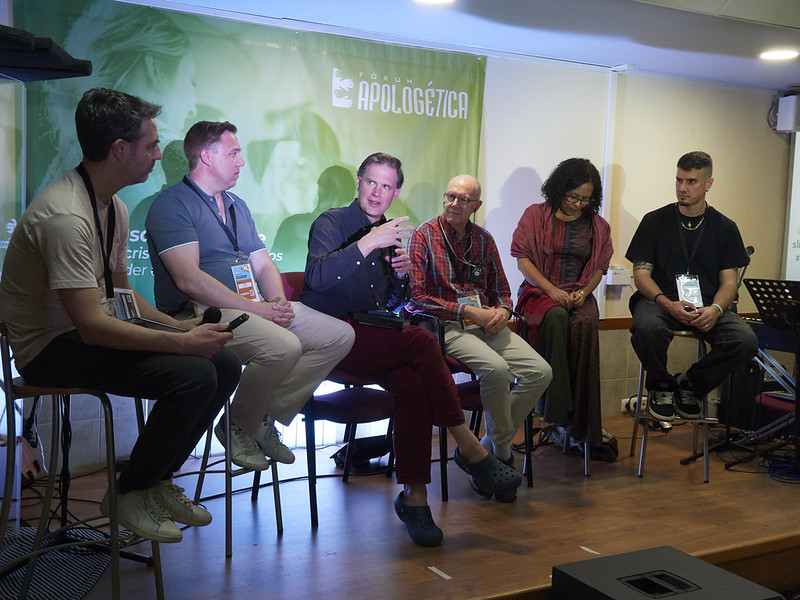
All of them, together with Peter J. Williams, took part in a panel discussion answering questions raised by attendees during Saturday’s final session, in a relaxed and friendly atmosphere that also served to address other aspects of contemporary apologetics.
Cross-cutting apologetics
Llenas closed the event with a useful image to help understand what apologetics is: a cross with four arms, encompassing both establishing positive arguments and exposing the weaknesses of other systems, as well as supporting evangelism and strengthening personal discipleship.
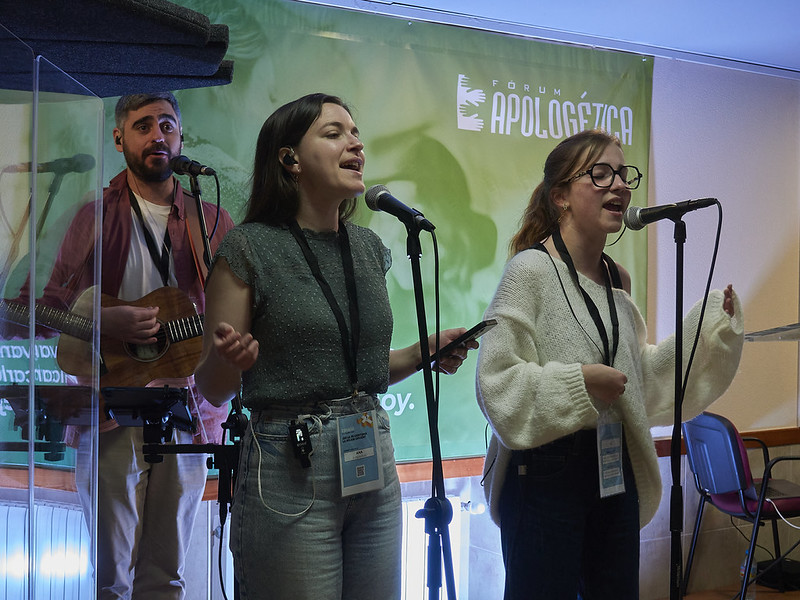
Throughout the event, the times of worship led by a group of excellent musicians and singers, supported by a full technical team for sound, video, projections and simultaneous translation, helped ensure that what was shared in the sessions did not remain merely on an intellectual level, but also found its way into the heart. Worshipping in unity, amidst an event of this nature, helped ensure that the focus on God’s greatness and goodness was never lost.
The Forum was co-organised by the Spanish Evangelical Alliance, GB Unidos and Pontea, three organisations that presented their work during the event and collaborate on various projects at a national level. Both the plenary sessions and the workshops were recorded and will be available to everyone in the coming weeks.
Perhaps the most striking idea shared was that apologetics is within the reach of any believer. Even when we do not always have the best answers, we can still articulate an effective defence of our faith when we live out what we believe. And there is no Christian spiritual life separate from the reliable and accurate testimony of the Bible. In that biblical richness, nourished by fellowship with our brothers and sisters in the faith, believers can find effective tools to show the beauty of the gospel to a world that needs to hear this message.
Do you see a need for this kind of journalism?
Through news, interviews, opinion and analysis, we seek to build bridges between evangelical churches and the societies in which they live.
As a non-profit entity, the big challenge is to be sustainable, month by month. We invite you to make a difference! Join the readers who make Evangelical Focus possible.
Published in: Evangelical Focus - europe - “The best apologetics is grounded in the Bible and points to Jesus”