
Evangelical federation sues newspaper ‘El País’ for defamation and calls on the media to avoid sensationalism when reporting on evangelicals
FEREDE says it has received in recent weeks “an avalanche of media enquiries” and recognises that the creation of “a public narrative that reflects the diversity of Spanish Protestantism” does not depend solely on its own efforts.
Protestante Digital · MADRID · 18 JUNE 2026 · 10:28 CET
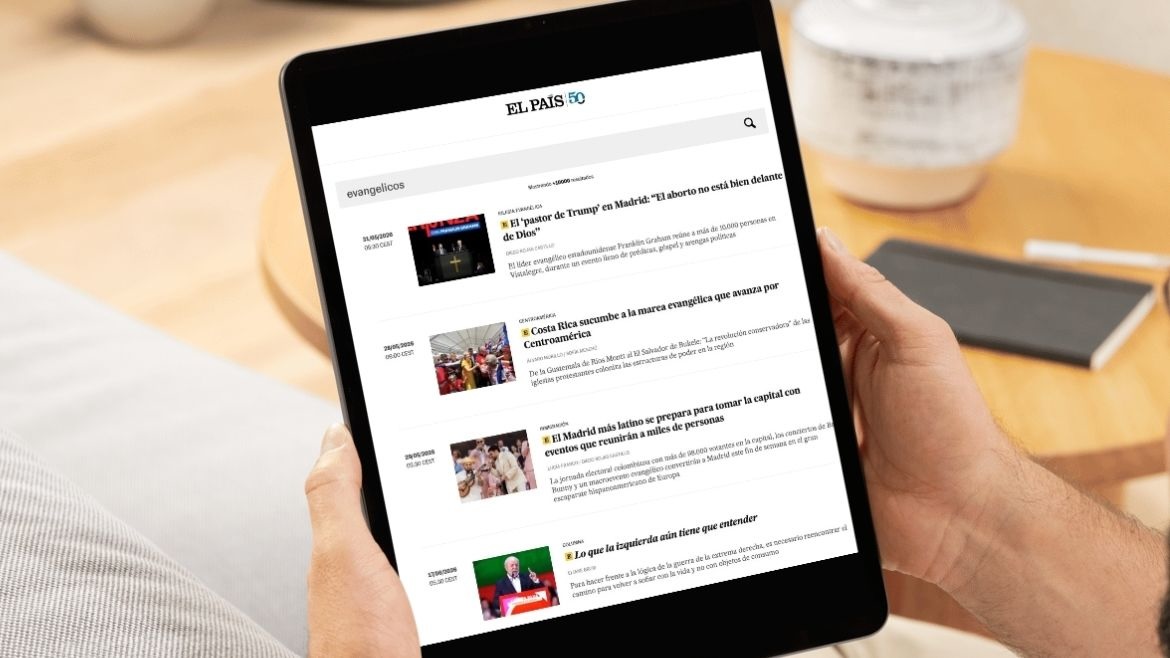
The Festival of Hope featuring Franklin Graham, The Change event at the Metropolitano stadium and the viral spread of videos of preachers on the Madrid metro have placed Spanish Evangelicals at the centre of unusually high media attention in May and June.
Christian news website Actualidad Evangélica cites an internal report from the press office of the Federation of Evangelical Religious Entities of Spain (FEREDE) which says evangelical federation of churches has tried to manage the media storm by applying a series of criteria, though not without tensions with several national media outlets.
All Evangelical Focus news and opinion, on your WhatsApp.
Legal action against ‘El País’
The most striking development is that FEREDE has initiated legal proceedings against the major Spanish newspaper ‘El País’ following the publication of what it describes as an “inaccurate and defamatory” article.
According to FEREDE, it sent two requests for a correction to the newspaper’s director without receiving a reply, which led the evangelical entity to take legal action as the only possible course of action. The proceedings are currently ongoing.
Beyond this specific case, FEREDE expresses a broader concern regarding the editorial direction of ‘El País’ on religious matters: whereas it previously perceived a “serious and specialised” treatment of Spanish Protestantism, it now notes an interest “focused almost exclusively on exceptional, controversial or contentious episodes, or political interpretations of the evangelical phenomenon”. The federation also criticises the fact that, in some reports, status as “experts” is granted to individuals with openly hostile views towards the evangelical community.
Limits on sensationalism
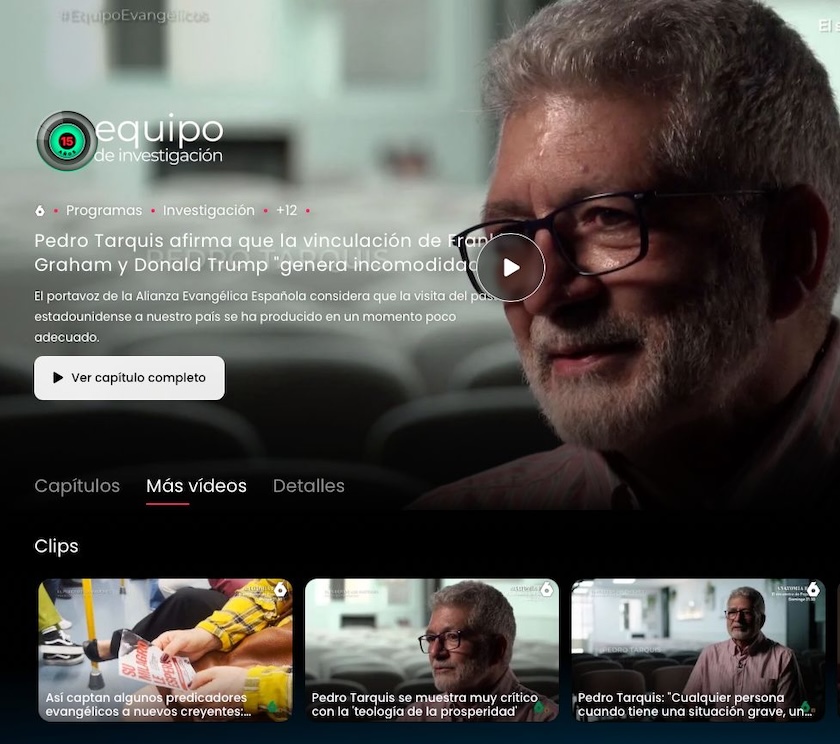
FEREDE also refers explicitly to two programmes on the national private TV broadcaster ‘La Sexta’: Más Vale Tarde and Equipo de Investigación. In both cases, the federation was contacted and responded in writing to the questions posed, but declined to take part in recorded interviews, arguing that this format is often edited in such a way that statements are taken out of context and used to “validate preconceived notions”.
In the case of Equipo de Investigación (Research Team, a prime time documentary show), the report “Evangelicals: The power of pastors” aired on 12 June, focused in particular on the “Miracles Crusade” the so-called apostle Guillermo Maldonado came to hold in Valencia.
Pedro Tarquis did take part in the programme as a spokesperson for the Spanish Evangelical Alliance, explaining that virtually all Spanish Evangelicals (“Pentecostals and non-Pentecostals”) are opposed to the prosperity gospel, and emphasising that the Evangelical community is diverse in its political views, without aligning itself with any specific ideological stance.
Tarquis was also critical of the way in which Maldonado and other preachers use the promotion of miracles and healings as the centrepiece of their message to attract attention or turn it into a source of income, which he considered, on the one hand, to be the closest thing to the sale of indulgences that the Protestant Reformation fought against, and, on the other, to be completely at odds with common evangelical practice (“an aberration”).
FEREDE acknowledges that it cannot act alone
In its report about the recent media portrayals of evangelical Christians in Spain, FEREDE acknowledges that the task of constructing a public narrative more in line with the reality of local evangelical churches and organisations working across the country cannot fall solely on them and its press office.
FEREDE calls therefore for the “joint commitment of churches, evangelical councils, pastoral fraternities and representative bodies across the country”, and emphasises the need to combine a reactive response to media crises with a more proactive strategy aimed at public opinion, in the hope that this work will bear positive fruit in the form of a more balanced view of evangelical history and reality in Spain.
Do you see a need for this kind of journalism?
Through news, interviews, opinion and analysis, we seek to build bridges between evangelical churches and the societies in which they live.
As a non-profit entity, the big challenge is to be sustainable, month by month. We invite you to make a difference! Join the readers who make Evangelical Focus possible.
Published in: Evangelical Focus - europe - Evangelical federation sues newspaper ‘El País’ for defamation and calls on the media to avoid sensationalism when reporting on evangelicals