
Young Dutch Christians seek direction, stability and meaning in the faith
MissieNederland releases a report about “how Christian young people experience their faith, and the challenges this presents for churches and organisations”.
Missie Nederland · AMSTERDAM · 19 JUNE 2026 · 15:55 CET
MissieNederland, the Dutch Evangelical Alliance, recently launched the Young people in search of their roots: Youth Trends 2026 report, which aims to “serve as inspiration for youth work organisations, churches and youth leaders”.
The report is the result of an extensive research among frontline youth workers; input from various Christian youth organisations; and a survey of over 700 young people aged 12 to 30 who are involved in Christian youth groups.
It analyses five trends that “illustrate how Christian young people experience their faith, and the opportunities and challenges this presents for churches and organisations”.
All Evangelical Focus news and opinion, on your WhatsApp.
“Every young person is unique. However, these trends can help us to understand today’s youth culture, and work together to engage young people with a relevant message. We hope to inspire them to reflect on who they are in relation to God, themselves and society”, stress the authors.
Right after the launching of the report, MissieNederland releases a Church toolkit with “practical tips, insights, and tools to better connect with the lives, questions, and challenges of Christian youth in the Netherlands”.
Young Generations Day
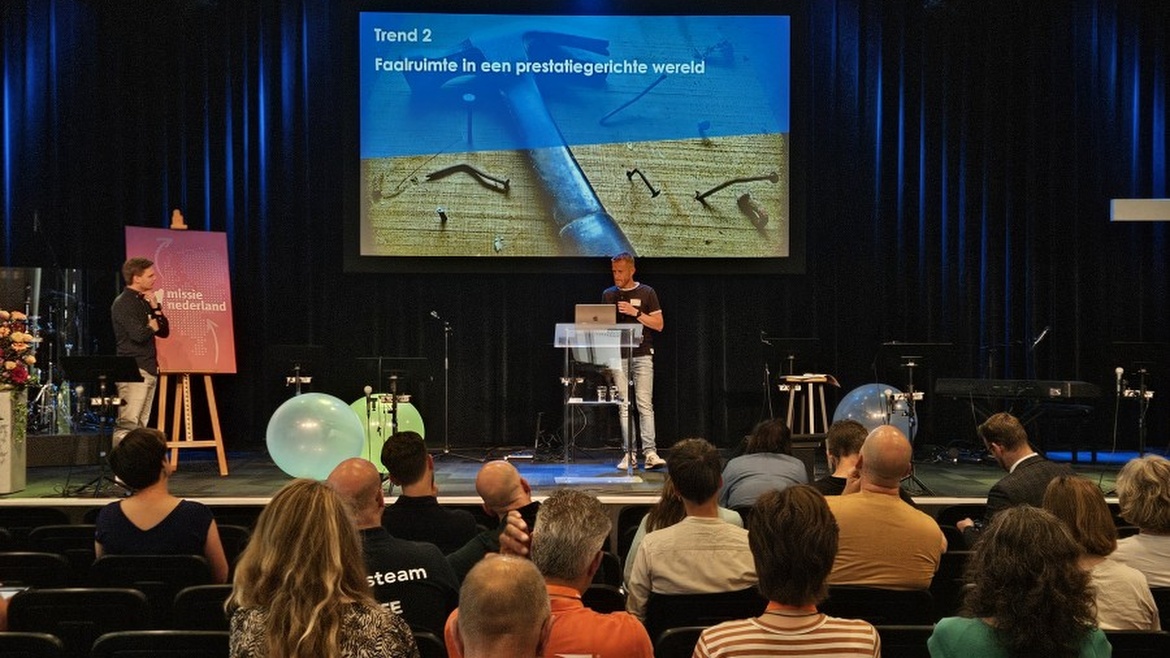
The report was presented on 29 May, during the first Young Generations Day organised by the Dutch Evangelical Alliance.
More than eighty youth work professionals, from over fifteen denominations attended the event to discuss the results.

Trend 1: Anchors in an uncertain life
The repor shows that many young people are concerned about housing, income, climate change, financial pressure and geopolitical tensions, and that “colours their vision of the future and reinforces the feeling that life ‘can’t really begin yet’”.
That is why they “are not primarily looking for ready-made answers, but for reliability, meaning and places where their lives are acknowledged without having to be ‘in order’ first”.
According to the report, “the church can embody a counter-narrative”, “not by focusing on idealised images of family and success, but through faithfulness; closeness; and practical love”.
Trend 2: Room for failure
The report reveals that pressure to perform among young people is high at all levels, so that “they are led to believe that they must shape their lives entirely by themselves, and are therefore responsible if things go wrong”.
When there is room to make mistakes, both within themselves and in their environment, young people “experience greater peace of mind and fewer negative feelings”.
For them, faith “not only offers comfort in difficult times, but can also be a source of stability in a world full of uncertainty. It is valuable, even when life is not going perfectly”.
Trend 3: Believing together in a fast-paced age
Like other studies around Europe, the Youth Trends 2026 confirms that young people are leaving the church, because “the story of faith means little to them or they do not identify with the culture of the congregation”.
However, at the same time, “a growing group of young people, often without a church background, are actively seeking faith, spirituality and meaning”. Most of them first discover faith through YouTube, social media, podcasts and influencers.
The report also points out that “it is not primarily trendy or innovative churches that attract young people, but rather traditional communities”, because “authenticity and depth are often more appealing than a superficial polishing of faith”.
Trend 4: Faith between distraction and connection
The majority of the young people surveyed view their mobile phones more as an obstacle to their faith life than as a support, because it is a distraction and many times a waste of time.
“The digital mission field is not a neutral space, but an environment that tends to put pressure on one’s spiritual life”, because “online engagement does not automatically lead to a deeper sense of belonging to a local faith community”, warns the report.
That is why, the authors recommend churches and youth leaders to “promote awareness and discipline among young people; recognise the digital sphere and maintain an online presence; and equip young people for the digital world”.
Trend 5: Seeking direction in the Christian faith
According to the report, “young people are not looking for rigid rules, but rather a path that helps them make choices, set boundaries and shape their lives”.
They often want to make their own choices, but not without direction, and “view faith less as a restriction on their freedom, and more as a source of meaning in which they can find a sense of belonging”. Furthermore, “they are not looking for more knowledge, but for more training”.
Taking that into account, the report recommends churches and youth leaders to “create space for in-depth discussions; re-evaluate ‘traditional’ religious practices; and make the rules of conduct clear”.
You can read the full report here (in Dutch).
Do you see a need for this kind of journalism?
Through news, interviews, opinion and analysis, we seek to build bridges between evangelical churches and the societies in which they live.
As a non-profit entity, the big challenge is to be sustainable, month by month. We invite you to make a difference! Join the readers who make Evangelical Focus possible.
Published in: Evangelical Focus - life & tech - Young Dutch Christians seek direction, stability and meaning in the faith