
Our global family at play
Football became so deeply rooted in British working-class communities because there were chapels, Sunday schools, parish rooms and young men looking for somewhere to belong, long before there were professional clubs, stadiums and television contracts.
29 JUNE 2026 · 09:41 CET
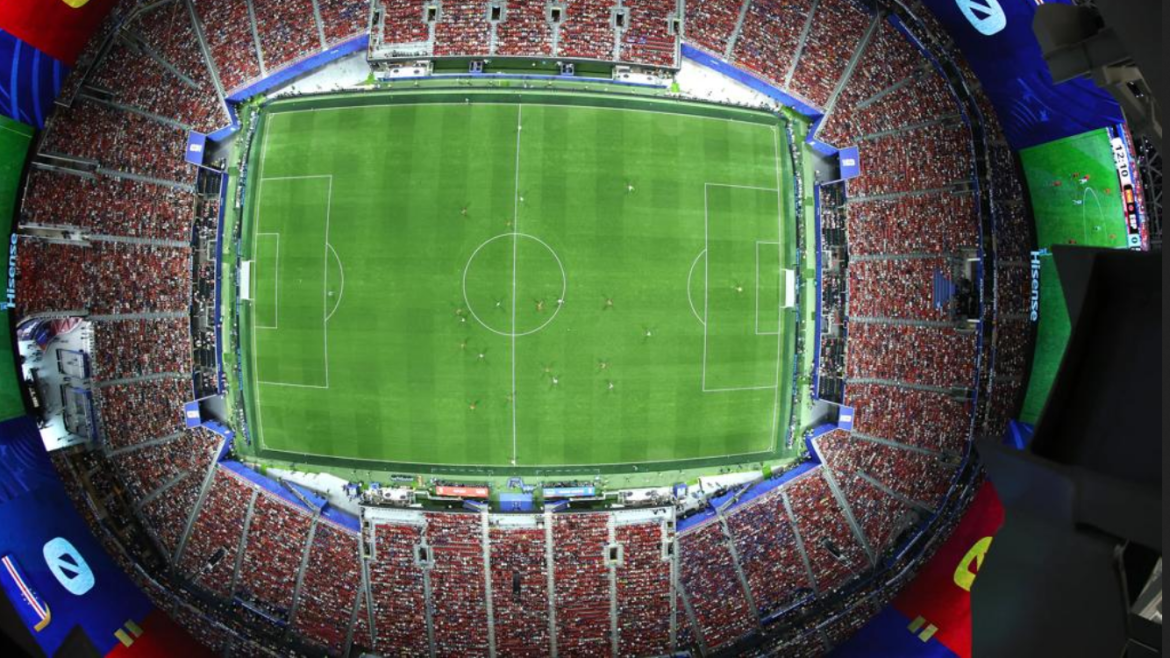
A miracle of global fraternity in our fractured, polarised, warring world has been created by one of humanity’s great shared languages: football.
Every four years billions of people watch the World Cup together. Families who seldom agree on politics cheer together. Children in remote villages without reliable electricity follow the scores on mobile phones. Nations clashing on the diplomatic stage shake hands before kick-off.
Non-fans among us may well be upset with television news dominated by stories of 22 men chasing a ball around a field a vast ocean away.
All Evangelical Focus news and opinion, on your WhatsApp.
Front pages fill with annoying match reports. Office conversations revolve around (missed) goals, players, referees and predictions, alienating those not interested.
There is something deeply uncomfortable when entertainment appears to eclipse human suffering
For there is something deeply uncomfortable when entertainment appears to eclipse human suffering. News organisations have a responsibility to report events that affect lives, especially those involving death, displacement and injustice.
Our compassion should not be determined by television ratings. If football crowds out concern for our neighbours, then our priorities have become distorted.
Wars in Ukraine and the Middle East continue. Refugees continue to flee unbearable conditions at home to seek a better future elsewhere. Natural disasters don’t wait for the finals to be over.
So, while it’s fair to question the priorities of the media, there is something else worth reflecting on: the power of football in particular to build bridges between cultures and peoples in a fractured world.
Hooliganism, racism, corruption and excessive nationalism are all too prevalent. Yet the game continually offers opportunities for reconciliation
National anthems are played. Hands are shaken. The contest begins, but within agreed rules. Victory is celebrated; defeat, ideally, accepted with dignity. Rivalry exists without war.
Not that football always lives up to this ideal. Hooliganism, racism, corruption and excessive nationalism are all too prevalent. Commercial interests can overwhelm sporting values.
Yet the game continually offers opportunities for reconciliation as well as competition.
A world without sport?
Imagine for a moment a world without organised sport: a world perhaps of gangs, political extremism, online communities built around resentment, street violence and destructive forms of thrill-seeking.
Societies have always needed ways to channel the impulse of young men to have higher levels of physical energy, competitiveness, risk-taking and desire for status.
This was known as ‘muscular Christianity’: the conviction that physical health, moral integrity and spiritual maturity belonged together
Team sports teach how to accept authority (the coach/referee), how to sacrifice personal glory for the team, how to lose without humiliation, how to compete without hatred, and how to respect an opponent.
As humans we need belonging, challenge, recognition, physical expression, shared stories, heroes and rituals. Sport has become one of the world’s most successful ways of meeting those needs.
Many of the founders of modern organised football were nineteenth-century Christian reformers in England. Leaders of the nation-wide Sunday School movement in particular saw how sport formed character.
They understood young people needed more than information and rules; they need communities where virtues are practised. This was known as ‘muscular Christianity’: the conviction that physical health, moral integrity and spiritual maturity belonged together. The football field became, in a sense, another classroom.
Christian roots
Aston Villa, for example, was founded in 1874 by members of the Villa Cross Wesleyan Chapel, Birmingham. Wolverhampton Wanderers F.C. began in 1877 connected with St Luke’s Church. Everton (1878) began out of St Domingo Methodist Church in Liverpool.
Tottenham Hotspur F.C started in 1882 associated with the Bible class of All Hallows Church in Tottenham
Football became so deeply rooted in British working-class communities because there were chapels, Sunday schools, parish rooms and young men looking for somewhere to belong, long before there were professional clubs, stadiums and television contracts.
Over time, those explicitly Christian roots gradually faded from public memory. Football became commercial, global and increasingly secular.
People from different backgrounds meet under shared rules and compete fiercely without becoming enemies
That is no small achievement.
We all long to belong. We seek identities that are bigger than ourselves—families, cities, nations and, ultimately, humanity itself.
International sport allows us to celebrate our distinctiveness while recognising our shared membership of the human family. It is one of the few global events in which billions of people willingly pay attention to the same story at the same time.
Which reminds us that we belong to one human family.
Jeff Fountain, Director of the Schuman Centre for European Studies. This article was first published on the author's blog, Weekly Word.
Do you see a need for this kind of journalism?
Through news, interviews, opinion and analysis, we seek to build bridges between evangelical churches and the societies in which they live.
As a non-profit entity, the big challenge is to be sustainable, month by month. We invite you to make a difference! Join the readers who make Evangelical Focus possible.
Published in: Evangelical Focus - Window on Europe - Our global family at play